Hey, let’s cut to the chase—if you’ve ever worked with process systems, power plants, chemical facilities, or even food and beverage manufacturing, you’ve probably glanced at a weird-looking valve and thought, “What the hell is that? That ain’t your average gate valve.” If you’re here because you’re trying to figure out what a special valve actually does (and why it’s worth ditching the off-the-shelf junk), stick around. I’ve been selling these things for 8 years now, and I’ve seen firsthand how regular valves break, cause headaches, and even cost people their jobs. Special valves? They’re the workhorses no one talks about until the whole line goes down. Special Valve
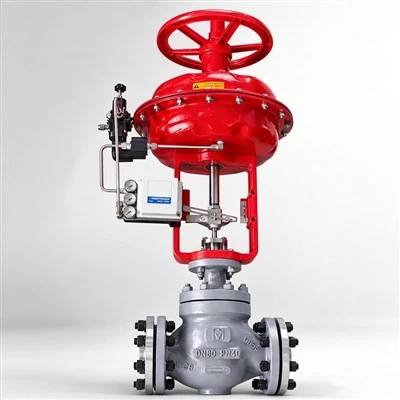
First off, let’s get one thing straight: a special valve isn’t some overpriced gimmick. It’s a custom-built (or purpose-engineered) valve made for scenarios where a standard ball, gate, or globe valve would straight-up fail. You see, run-of-the-mill valves are designed for “average” conditions—like mild water pressure, room temp, and non-corrosive stuff. But what if you’re moving super-heated steam that’s 1,000 degrees? Or toxic chemicals that eat through steel like acid? Or slurry mixed with rock chunks that would grind a standard valve seat to dust in 2 weeks? That’s where special valves earn their keep. Their whole purpose is simple: solve a problem standard valves can’t, full stop.
Let’s break down the core purposes, because it’s not one size fits all. First, safety. This is the big one no vendor will lead with, but it’s the reason I’ve sold more special valves than I can count to oil refineries and nuclear power plants. Back in 2018, I had a client at a mid-sized chemical plant that was using a regular butterfly valve to handle chlorine gas—worst call ever. Butterfly valves have that big rubber seat that rots when exposed to chlorine, and one day it leaked so bad they had to evacuate the whole unit. No injuries, but millions in lost production, OSHA fines, and a whole lot of panic. We swapped in a special metal-sealed butterfly valve rated for high-pressure chlorine, and they haven’t had a single leak since. Special valves are built to handle hazardous media and extreme operating conditions so you don’t get a toxic release, explosion, or environmental disaster. I’ve worked with food and beverage guys too—they need sanitary special valves that meet 3-A standards, no crevices where bacteria can hide. A standard valve would get gunked up, cause a food safety issue, and that’s a death sentence for a brand. Special valves prevent that by design—polished interiors, no dead zones, materials that don’t leach.
Next, reliability and uptime. Let’s be real: downtime costs money. Like, serious money. A power plant that goes down for an hour because a valve failed loses tens of thousands. A mining operation moving slurry? Same deal. Standard valves wear out fast in harsh environments. If you’re moving abrasive slurry, a standard gate valve’s soft seat will get chewed up in days, and you’re replacing it every week. We sell a special knife gate valve with a hardened chrome-plated edge and a urethane seat that’s engineered to resist abrasion—lasts 6 months minimum, often a year. That cuts replacement costs by 75% and means your line stays running, no more scheduling valve swaps on a Friday night when everyone’s tired. Another example: cryogenic applications, like liquid natural gas or medical oxygen. Standard valves get brittle at super-low temps, their seals crack, and they leak. A special cryogenic valve is made with materials like 316L stainless steel and seals that flex at -320°F, so it works when nothing else will. I’ve got a customer in the medical gas industry that used to go through 2 standard valves a month for their O2 lines—now they go 18 months between swaps, thanks to our custom cryo valves. That’s the kind of ROI you can’t get with off-the-shelf stuff.
Then there’s precision control, which is the forgotten purpose of a lot of special valves. If you just need open or closed, a standard valve works. But what if you need to control flow exactly? Like, a pharmaceutical plant making injectable drugs—they need flow rates so precise that even a 1% fluctuation ruins a batch. A standard globe valve can’t do that; it’s too jerky, too uneven. We sell special control valves with trim engineered for linear flow, so you can adjust flow at tiny increments, no surges, no batch waste. Or think about high-purity semiconductor manufacturing—they move ultra-pure water and gases, and even a tiny particle in the valve will ruin a $10,000 wafer. Special diaphragm valves, designed with a single diaphragm that separates the wetted parts from the actuator, have no crevices, no places for particles to hide. That’s non-negotiable for fabs that make computer chips. Standard valves would shed metal particles, contaminate the process, and cost them way more than a custom valve.
Wait, I should address the elephant in the room: why don’t people just use standard valves? Because most folks don’t realize their problem is “special” until it’s too late. I had a guy reach out last year from a municipal wastewater plant—they were using a standard valve for their sludge line, and it would clog every time the flow got high. We suggested a special eccentric plug valve, which has a design that cuts through sludge and keeps it from building up, plus a larger port for high-volume flow. He told me a month later that he stopped dealing with clogs, which saved him 4 hours a week of unclogging valves. That’s the thing about special valves: they’re tailored to your exact process, not the other way around. Standard valves make you adapt your process; special valves adapt to your process.
Now, let’s talk about the dirty little secret of special valves—they’re not just for big industrial guys. I’ve sold small batches to craft breweries that need special valves for their hot wort lines, to biotech startups that need custom valves for lab-scale processing, even to a guy who makes artisanal maple syrup and needed a valve that wouldn’t impart off-flavors to his syrup. Wait, that’s a fun one—his standard valve had a rubber seat that tasted like chemicals, so we sent him a special PTFE-lined valve that’s inert and doesn’t affect the syrup’s flavor. He said it made his product taste better, and he won a local award for it. That’s the flexibility of a special valve—you can get something built for your specific need, no matter how niche.
But let’s be clear: not every valve that’s labeled “special” is worth your money. There are vendors that slap a “special” sticker on a standard valve and jack up the price, and that’s a scam. A real special valve solves a real problem that standard valves can’t. If you’re just moving water at low pressure, a standard valve is fine, save your cash. But if you’re dealing with anything out of the ordinary—high temp, corrosive media, abrasives, hazardous stuff, precision flow—then a special valve isn’t a luxury, it’s a necessity.
I’ve been in this game long enough to know that a lot of engineers or plant managers wait until their valve fails before they call. Don’t do that. When you’re planning a new process, or upgrading an old one, ask yourself: what’s the stuff I’m moving? What’s the pressure? What’s the temperature? How often does this valve need to cycle? If any of those numbers are outside the range of a standard valve’s specs, you need a special valve. I can’t tell you how many times a client’s first line is, “I thought a standard valve would work, but it broke in 3 months,” and then we fix it with a custom special valve that lasts for years.
Another thing I love about special valves: they can be adapted, too. If your process changes down the line, we can tweak the valve to fit. Last year, a power plant that bought our special ball valve for coal ash slurry switched to a new slurry mix, so we just adjusted the hardness of the coating on the valve seat, no need to replace the whole valve. That’s a big difference from standard valves, which are one-and-done.
At the end of the day, the purpose of a special valve is simple: it’s the part that keeps your process running, safe, and profitable when nothing else will. It’s not a random fancy part—it’s engineered for your exact pain point. I’ve seen them stop leaks, cut downtime, save millions, and even help small businesses make better products.
If you’re sitting here thinking, “Hey, I have a problem with my valves that ain’t getting fixed by standard ones,” don’t waste another day fighting with subpar equipment. Reach out, tell me what you’re working with, and we can figure out the right special valve for your needs. No pushy sales talk, no overpriced gimmicks, just a solution that works for your process.
Solenoid Valve REFERENCES
Valve Engineering Magazine. (2021). Special Valves: A Guide to Application and Selection. Process Industry Practices. (2020). Safety Standards for Valves in Hazardous Fluid Services. International Organization for Standardization. (2019). ISO 10816: Valves for General Industrial Applications.
Shandong Yuhong Valve Co., Ltd.
Shandong Yuhong Valve Co., Ltd. is one of the most professional special valve manufacturers and suppliers in China. With abundant experience, we warmly welcome you to wholesale high quality special valve at competitive price from our factory. Good service and punctual delivery are available.
Address: Intersection of Chuangye Avenue and Huanghe Road, Zhangdian District, Zibo City, Shandong Province
E-mail: info@yuhong-valve.com
WebSite: https://www.yh-controlvalve.com/
