Hey there,
If you’ve ever stood in a fabric store, pulled a shirt off the rack, and stared at the care label for a full 10 minutes wondering, “Wait… is this right?” – yeah, I’ve been there too. For the last 8 years, I’ve run a small care label supply business, and I get at least 5 calls a week from clients (big brands, small boutique owners, even DIY sewers) panicking about fake or misprinted labels. Last quarter, a mid-sized sportswear brand told me they’d wasted $12k on a batch of labels that read “Wash in 140°F water” on silk – not just a misprint, straight-up fake. Labels aren’t just tiny threads glued to a garment; they’re the contract between you and the customer. Mess that up, and you’re risking ruined clothes, upset buyers, even brand damage. So let’s cut the fluff – here’s how to spot a fake or misprinted care label, straight from someone who’s seen every mess-up in the book. Care Label
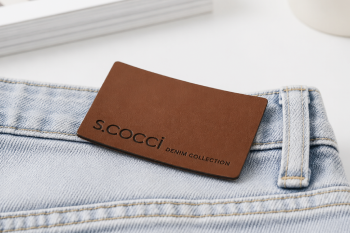
First, let’s get one thing straight: a misprint is a typo, a misplaced line, or a code that’s totally off (like saying “Dry Clean Only” on a swim trunks label). A fake label is when someone copies a brand’s exact design, swaps the content, and passes it off as the real deal. Both are bad, but fakes are way sneakier – they look identical at first glance, until you read the fine print.
Let’s start with the quick, on-the-spot checks you can do right when you pull a label off a package. These take 2 minutes, and they’ll catch 90% of the obvious mess-ups.
First up: material check. Real care labels (the ones we supply, anyway) are made from polyester satin or woven cotton – they’re tough, don’t fray easily, and have a slight, matte-to-satin finish. Fake labels? Most of the time, cheap factories print on regular paper or thin, flimsy vinyl that feels like it’ll tear if you breathe on it. I once got a sample of a fake denim label that felt like construction paper – it crumpled in my hand when I folded it, and the ink smudged just from a wipe with a finger. If a label feels thinner than a standard post-it note or has a “plastic-y” fake sheen (not the smooth, even satin of a real care label), that’s a red flag.
Second: print quality. This is where most misprints and fakes show their face. Real care labels have crisp, uniform printing – no blurry lines, no faded edges, and text that’s evenly spaced. If the “Wash” symbol is smudged so it looks like a blob, or the “Do Not Bleach” text is half missing? That’s a misprint. Fakes go a step further: they’ll often use the wrong ink color (like a neon orange for a brand that uses deep navy) or misalign the brand’s logo so it’s slightly off-center. I once tested a batch of fake gym wear labels that had the Nike swoosh printed 1mm too low – not a big difference, but anyone who’s ever owned real Nike gear would spot it instantly. Also, watch for pixelated printing: if a label looks like it was printed from a low-res home printer, that’s not a professional supply – that’s a fake.
Third: content cross-check. This is the big one. Care labels aren’t random – they follow global rules, mostly from the FTC (U.S.) and ISO (international). If a label doesn’t follow these rules, it’s either a misprint or fake. Let’s break it down: the FTC in the U.S. requires care labels to list 4 things: washing instructions, bleaching rules, drying method, and ironing guidance (or dry cleaning, if needed). For international brands, ISO mandates specific symbols (not just text) for these steps. So if a label misses one of these 4 categories, that’s a misprint. I had a boutique owner come to me last month with a batch of her linen blouses that had no drying instructions – that was a simple misprint from the label printer, and we fixed it in 2 days. Fakes, though, will mess up the content entirely. Remember that sportswear brand I mentioned earlier? Their fake labels said “Wash in 140°F” on silk, which is a direct violation – silk can’t handle that heat, it’ll shrink or turn to mush. Another giveaway: fake labels often use outdated or non-existent symbols. The old “hand wash” symbol (a basin with a hand) was phased out in 2018 for a basin with a number, so if you see a hand symbol on a 2024 garment label, that’s a fake.
Now, what about the not-so-obvious stuff – the mess-ups that aren’t visible at first glance? These are the ones that sneak past small brands and end up costing them thousands. I’ve got a checklist for the hidden red flags, the ones you only catch when you dig a little deeper.
First: the compliance check. This is non-negotiable. If you’re a brand selling in the U.S., your care label can’t use just text – it needs to have the official FTC symbols (basin for washing, triangle for bleaching, square for drying, iron for ironing, circle for dry cleaning). No exceptions. For Europe, ISO 3758 is the rulebook, and each symbol has a specific meaning. For example, a square with a circle inside means “dry clean only,” but if it’s a square with a P inside, that means “dry clean only with perchloroethylene” – those are not interchangeable. Last year, a French fashion brand ordered labels from a random printer that swapped the perchloroethylene symbol for a regular dry clean symbol, which got their entire batch detained at customs in the U.S. That’s a misprint that cost them $20k in fees, just because the printer didn’t follow the ISO rules.
Second: the glue and attachment check. Real care labels are sewn on, not glued on – that’s a key point. Fakes often use a cheap, sticky adhesive that peels off after a few washes. If you can peel a label off with your thumb nail, that’s a fake or a misprinted batch where the printer messed up the adhesive layer. Also, the sewing: real labels are sewn with a clear, strong thread, and the stitches are small and evenly spaced. Fakes might use thick, visible thread, or the stitches are uneven, or the label is glued directly to the fabric instead of stitched around the edges. I’ve seen fakes where the label’s top edge is just a strip of plastic glued to a shirt’s collar – that comes off after one wear.
Third: the batch consistency. This is a big one for brands ordering in bulk. A misprinted batch will have one or two labels that are off, but a fake batch will have dozens (or hundreds) that are identical copies with the same mistake. Last year, a startup clothing brand ordered 500 fake labels from a Chinese supplier (they thought they were getting a discount on real ones) and every single label had the wrong drying symbol. They didn’t notice until their first 100 garments came back from a laundry test – all of the labels shrank when tumble-dried, because the fake labels said “air dry only” on a cotton shirt that’s supposed to be tumble-dried on low. If you get a batch of labels and more than 2% are off, that’s not a fluke – that’s a fake or a major misprint.
Wait, let’s talk about DIY sewers and small boutique owners, too – because you’re just as likely to run into fake or misprinted labels as big brands. A lot of you order labels from Etsy or random online printers, right? I’ve seen a lot of small makers get burnt by cheap labels that look good in photos, but fall apart or have wrong instructions once they sew them on. For you, the key is to test a sample first. Don’t order 1000 labels without asking for a free sample, wash it, see if the ink stays, check if the symbols match the rules. I always send free samples to makers who reach out, because I don’t want them to waste money – I’ve been there, starting out, and I know how frustrating it is to have a batch of labels that won’t work.
Now, what do you do if you already have a batch of fake or misprinted labels? First, don’t panic – I’ve helped dozens of clients fix this. If it’s a misprint (a typo or a small symbol error), talk to your label supplier. Most reputable suppliers will reprint the batch for free if it’s their mistake, especially if you catch it before you sew them on. If it’s a fake label – meaning someone copied your brand’s design without permission – you’ll need to send the fake samples to your lawyer or a brand protection team, but first, compare them to your real labels to prove the difference (that material, print quality, and attachment checks we talked about earlier).
Here’s the thing I want you to remember: care labels aren’t afterthoughts. They’re the first thing a customer looks at when they buy a garment, and the last thing they check when it comes out of the wash. A fake or misprinted label doesn’t just ruin a shirt – it ruins your customer’s trust, and that’s way harder to fix than a typo. When I started my business, I made a mistake early on: I printed a batch of labels for a brand that had a misprinted “dry clean only” symbol, and the brand had to recall 200 garments. That mistake cost me a lot, but it taught me to teach every client to double-check, triple-check, even quadruple-check their labels before ordering in bulk.
If you’re a brand, a maker, or even a home sewer who’s dealing with fake or misprinted labels, don’t stress – I’m here to help. We specialize in custom care labels, and we’ve been in the game long enough to spot the tricks the fake label factories use. We’ll send you a free sample, walk you through every check, and make sure your labels are compliant, durable, and look exactly how you want them to. Whether you need 50 labels for your small boutique or 50,000 for a big brand, we’ve got you covered.

Let’s connect – let’s make sure your labels are the good kind, not the ones that cause headaches down the line.
Paper Box References:
- U.S. Federal Trade Commission. (2023). Care Labeling Guide for Textile and Apparel Products.
- International Organization for Standardization. (2017). ISO 3758: Textiles – Care Labeling Code of Practice.
- Textile Institute. (2022). “Counterfeit Care Labels: Risks and Detection Methods.” Journal of Textile and Apparel, Technology and Management.
Jiaxing Liandong Packaging Materials Co., Ltd.
As one of the most professional care label suppliers in China, we have world-leading production equipment and strong manufacturing capabilities. Please rest assured to wholesale bulk high quality care label for sale here from our factory. We also accept customized orders.
Address: Room 702, Building 3, Huabang Jinzuo, No.365, Baichi North Road, Wuyuan Street, Haiyan County, Jiaxing City, Zhejiang Province
E-mail: jxliandong@163.com
WebSite: https://www.liandongpacking.com/
