Hey everyone, if you’ve ever fumbled around in a panic trying to find the circuit breaker box mid-power outage, you know how frustrating it can be. Whether you’re moving into a new apartment, renting a house, or just trying to reset a tripped breaker at 2 a.m., knowing where that box is (and how to spot it fast) is such a basic home skill—way more useful than I thought before I worked in the circuit breaker box supply game. For the last three years, I’ve helped folks outfitting everything from tiny studio apartments to big commercial buildings with reliable breaker panels, so I’ve seen all the silly, desperate texts people send when they can’t find theirs. Today, I’m breaking down exactly how to identify that sneaky (and critical) box, no more wandering around in the dark or guessing. Circuit Breaker Box

First off, let’s get the basics straight: a circuit breaker box—sometimes called a breaker panel, load center, or distribution board— is basically the nerve center of a building’s electricity. It splits the main power coming from the utility company into individual circuits for outlets, lights, appliances, and more. It’s not a random metal closet, though, and it’s definitely not the same as that little gray box your neighbor’s tree is growing over. Most of the time, it’s somewhere you’d never guess… until you learn the common hiding spots.
Wait, quick disclaimer before we dive in: always prioritize safety here. If you think you found the box but it’s behind a locked door, or you see smoke, frayed wires, or water leaking around it? Do NOT mess with it. Call a licensed electrician immediately—way better safe than sorry. That’s something I drill into every customer I work with, because bad breaker panel access leads to so many avoidable issues.
Now, let’s start with the most common spots, because 90% of residential breaker boxes are in one of these three places. First up: the basement, utility room, or crawl space. This is the big one, but people still miss it all the time. I’ve had customers tell me “we don’t have a basement breaker box” only to find it tucked behind a laundry machine or stacked storage boxes, or covered by a half-finished shelf someone built last year. Pro tip here: look for a metal door—usually gray, black, or white, about 12×18 inches to 20×30 inches—with little switches (those are your breakers) behind it. Sometimes it’s mounted on a wall near your water heater or HVAC unit, but if you have a concrete basement, it might be slightly recessed into the wall. If it’s a crawl space, it might be low to the ground, not up high like in a basement. Don’t forget to check behind washer/dryer hookups or next to the furnace—those are the worst hidden spots, but super common.
Second common spot: the garage. A lot of people, especially newer homeowners, don’t think about the garage, but that’s where 20% of residential panels go. Again, it’s usually a metal door, but sometimes it’s tucked next to the garage door opener motor, or on the wall near your carport entrance. I recently worked with a guy who moved into a house where the breaker panel was behind his workbench in the garage—he’d been running extension cords everywhere for three months before finding it. If your garage has a small closet or a wall nook, check there; we also see a lot of outdoor breaker panels for garages, especially in areas with mild weather, so don’t forget to check the side of your garage if you don’t see one inside.
Third, the attic or upper floor closet. This is more common in older homes, like those built before the 1990s, when some builders tucked panels in less accessible spots to save space on main floors. If you have a pull-down attic stairs, head up there—look for that same metal door, often near the center of the attic floor, sometimes with a small vent or cover around it. For upper-floor apartments or small homes, it might be in a hallway closet, usually near the front door or the bedrooms. I once helped a renter in Chicago find theirs in the back of a linen closet on the second floor—they’d been using flashlights for every room because the living room circuit kept tripped, and they had no idea the panel was right behind their towels.
Okay, those are the residential hotspots, but what about commercial buildings? If you’re in an office, store, or restaurant, the breaker box is going to be way bigger—think 3 feet tall or more, not the small residential ones. It’s almost never out in the open, though. Most commercial panels are in a mechanical room, a back storage closet, or even the basement near the electrical meter banks. Restaurants have extra-large panels because of all the heavy appliances (ovens, refrigerators, dishwashers), so they might even have a secondary sub-panel in the kitchen. If you’re in a multi-story building, there might be a main panel on the ground floor and smaller sub-panels on each floor—check the hallway utility closets, not just your individual office.
Now, what if you’ve checked all those spots and still can’t find it? Let’s talk about the dead giveaways that’ll help you spot it faster, even if it’s hidden. First, look for utility markings. The local power company usually marks where the main power line comes into your building—follow that wire, and it’ll end at the breaker box. I can’t tell you how many times a customer has traced the big gray power line from the street to their garage, then found the panel right there. Another clue: electrical meters. If you have an outdoor digital or analog meter box (usually near the front of the house), the main breaker panel is almost never more than 10 feet away from that—power doesn’t run very far from the meter without a panel. So if your meter is on the side of the house, check that wall next to it for a metal door.
What about telltale signs when you do get close? If you hear a faint hum, that’s the panel energized, so that’s a big hint. You might also see faint wires running along the baseboard or up the wall leading to it. And if you have a breaker that tripped (lights out in one room, for example), the switch that flipped is on that panel—if you can find the room with the dead circuit, that’ll narrow down where the panel is nearby. That’s a trick I learned when I first started in the breaker box supply business, and it’s saved so many people hours of hunting.
Wait, let’s cover the weird edge cases too, because I’ve seen them all. In apartments, especially newer complexes, the breaker panel is often in a hall closet, but sometimes it’s in the stairwell landing—like, the little door at the end of the hall where the mailboxes are? That’s a common spot in small apartment buildings. For very old homes (pre-1950s), you might not have a “breaker box” at all—you might have fuses, instead. Fuses look like small glass cylinders with a metal end, not the switches we have now, and they’re usually in a similar metal box, though a bit smaller. If you see fuses, that’s not a problem—we still supply panels to people upgrading from fuses, so keep that in mind if your home is older.
Another thing to note: don’t confuse the breaker box with a fuse box, a junction box, or a generator transfer switch. A junction box is a small, plastic or metal box with wires sticking out, used for connecting individual wires, not distributing power for the whole building. A generator transfer switch is a separate box that connects your generator to the panel during outages—usually mounted near the main panel, but it has a different label. Fuse boxes, like I said, have glass fuses instead of switches, so that’s easy to tell apart once you look closely.
Now, a quick tip for new homeowners or renters: once you find the box, take a picture of the breaker labels. Most panels have stickers where you can write what each circuit controls (“living room lights,” “kitchen outlets,” “washing machine”), but if they’re blank, grab a Sharpie and label them. I can’t tell you how many customers come to me saying they need a new breaker for their kitchen, but they have no idea which switch that is—saves so much time if you label it when you first find it.
Also, if you’re upgrading your breaker panel (many older homes have undersized panels that can’t handle modern appliances like air conditioners, EV chargers, or multiple TVs), that’s where I come in. We supply all types of breaker panels for residential and commercial use, from compact 10-circuit panels for small studios to large 100+ circuit panels for big office buildings. Every unit we sell is tested for safety and reliability, so you don’t have to worry about tripped breakers or fire hazards.
If you’re still stuck and can’t find your breaker box after checking all these spots, the easiest thing to do is call a local licensed electrician. They’re trained to locate panels fast, and they’ll make sure it’s safe to access before you touch anything. Don’t try to pry open a locked electrical door or force a panel open—those doors are there for a reason, to keep water and debris out, and to keep you safe.
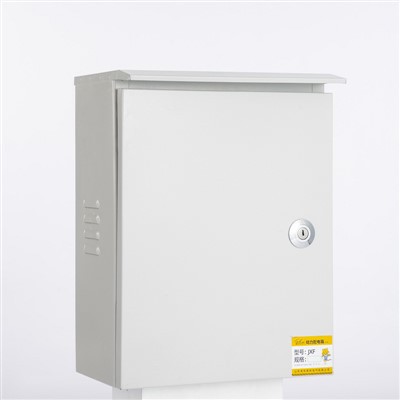
At the end of the day, identifying your circuit breaker box isn’t rocket science—just look in the common spots (basement, garage, attic, utility closet), follow the power line from the meter, and watch for that gray metal door with switches inside. And if you need help with a new panel, a replacement, or just have questions about breaker boxes, feel free to reach out for a chat. We’re here to help you keep your space powered safely, no more late-night power outages spent wandering the halls.
Metal Distribution Cabinet References:
- U.S. Consumer Product Safety Commission. Electrical Safety in the Home.
- National Electrical Manufacturers Association. Load Center Selection and Installation Guidelines.
- Electrical Safety Foundation International. Locating and Maintaining Your Electrical Panel.
Shandong Qinghua Yike Electric Co., Ltd.
As one of the most experienced circuit breaker box manufacturers in China, we also support customized service. We warmly welcome you to buy durable circuit breaker box for sale here from our factory. If you have any enquiry about cooperation, please feel free to email us.
Address: No. 378 Taozhuang Village, Zaoyuan Town, Lanshan District, Linyi City, Shandong Province
E-mail: admin@sd-qhyk.com
WebSite: https://www.qhecobox.com/
