If you’ve ever walked through a heavy machine shop—whether you’re a seasoned machinist, a production supervisor, or someone researching large-scale turning equipment—you’ve probably spotted a vertical lathe towering over a work piece, its massive table rotating parts that weigh tens of thousands of pounds. But when it comes time to pick the right vertical lathe for your operations, one of the most common (and most critical) decisions is choosing between two core types: hydraulic vertical lathes and mechanical vertical lathes. As a vertical lathe supplier with 18 years of on-the-floor experience, I’ve talked shop with hundreds of operators, maintenance teams, and production managers who’ve stumbled over this exact question. Many assume they’re interchangeable, but skip the small differences that end up costing them time, money, and downtime long-term. Today, I’m breaking down exactly how these two machines differ, so you can make a choice that fits your shop’s needs—no guesswork required. Vertical Lathe
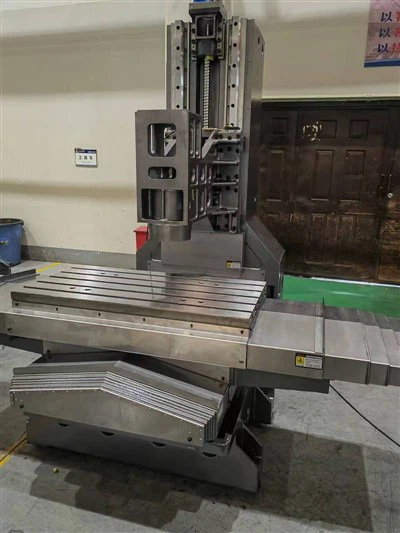
Let’s start with the basics, just to make sure we’re all on the same page. A vertical lathe, or VTL, is designed for turning large, heavy, axisymmetric parts that are too big or awkward to handle on a horizontal lathe. Think engine blocks, turbine casings, large gears, or railroad wheel assemblies. Unlike horizontal lathes, which have a horizontal spindle holding a part, VTLs have a vertical, rotating work table at the bottom of the machine. The cutting tool moves along vertical and horizontal axes (and sometimes rotational axes, for complex parts) to shape the work piece. That vertical orientation distributes the work piece’s weight evenly over the table, so even 100,000-pound parts stay stable during cutting.
Now, the two main drive systems that power that rotating table—mechanical and hydraulic—are where everything changes. Let’s dive into mechanical vertical lathes first. A mechanical VTL uses a system of gears, belts, and shafts connected directly to an electric motor to power the work table. It’s a straightforward, old-school design that’s been around for over a century, perfected in early 20th-century machine shops that needed reliable heavy turning for early industrial machinery. The motor turns the gear train, which spins the table at a set range of speeds—usually lower, consistent speeds, with less fine-tuning than other systems.
At first glance, that simplicity sounds like a plus, right? Fewer moving parts mean less can go wrong, or so people think. But here’s what actually makes mechanical VTLs unique: their power delivery is rigid and linear. There’s almost no “give” in the system, which means every bit of the motor’s power is transferred directly to the table. That makes them ideal for high-torque, heavy-duty cutting jobs—like roughing out a thick steel forging where you need to remove a lot of material fast. If you’re turning a solid block of cast iron into a gear blank, a mechanical VTL can handle that kind of constant, heavy load without slipping or stalling. It’s also got a track record for durability. I’ve seen mechanical VTLs we sold in the 1990s still running three shifts a day in a mining equipment shop, with only a single gear replacement in 28 years. No fancy electronics, just a motor and gears doing their job.
But mechanical VTLs have downsides, too, and they’re not small ones. First, their speed control is limited. Since they rely on fixed gear ratios, you can only adjust the table speed in set increments. If you need a really slow, precise speed for fine finishing work on a delicate part—like a small turbine blade that needs a smooth surface finish—you might not have that option. Most mechanical VTLs top out at around 100 RPM, and their slowest speed is often a few RPM, with nothing in between for precision finishing. Second, they’re not great for variable loads. If your work piece’s weight changes mid-job (say, you’re machining a large ring and the metal shifts a little as you cut), the rigid gear system can cause vibrations. Those vibrations lead to a rough surface finish, and over time, they put extra stress on the gears, leading to more frequent maintenance. Last, they’re less energy efficient. A mechanical VTL only uses power for the exact speed it’s set at, but if you’re working at a lower speed, that power is transferred through more gears, leading to friction and wasted energy.
Now, hydraulic vertical lathes. A hydraulic VTL swaps the gear-and-motor system for a hydraulic pump, which pushes pressurized fluid through cylinders to power the work table. Think of it like a power steering system for a giant lathe—instead of a gear turning the wheel, fluid pressure creates motion. This design is newer than mechanical VTLs, gaining popularity in the 1970s as shops started needing more flexibility for both roughing and finishing work.
Where hydraulic VTLs shine is their adjustability. The pressurized fluid can be tuned to deliver a huge range of speeds and torque levels, no gear changes required. You can spin the work table at 0.5 RPM for delicate finishing, bump it up to 500 RPM for lighter cuts, and adjust torque on the fly if your load changes mid-job. That flexibility makes hydraulic VTLs workhorses for mixed-production shops that do everything from heavy roughing on large forgings to fine finishing on precision parts like aerospace components and medical equipment parts. The hydraulic system also absorbs vibrations way better than gears do, because the fluid can give a little as cuts change. That leads to a smoother surface finish, fewer defects, and less wear on the cutting tools. I had a customer last year who switched from a mechanical VTL to a hydraulic one for their job machining railroad wheels—they cut tool change time by 30% because the smoother cuts meant tools lasted longer, and they reduced finishing steps by one per part.
But hydraulic VTLs aren’t perfect, and their design creates a different set of challenges. First, maintenance is more complex. Hydraulic systems have hoses, seals, pumps, and fluid reservoirs that need regular checks. A small leak in a hydraulic hose can cause pressure drops, leading to slow table movement or even full downtime. If you don’t change the hydraulic fluid on schedule, contaminants can build up, clog the system, and damage the pump. I’ve heard horror stories from shops that skipped $200 annual fluid changes and ended up paying $15,000 for a new pump. Second, their power density is less consistent at very high torque levels. When you’re doing heavy roughing—cutting through 2-inch thick steel—hydraulic systems can deliver enough torque, but they often struggle to maintain that constant power at maximum load for long periods. Mechanical VTLs, with their direct gear connection, are more consistent under heavy, sustained loads. And finally, hydraulic systems have more moving parts that rely on electronics these days, so if the control system malfunctions, the whole machine can go down until a technician diagnoses the issue.
Wait, but there’s more to the difference than just drive systems, right? Let’s talk about application use cases—because that’s what it all comes down to. If you run a job shop that does mostly heavy, rough turning: mining parts, large construction equipment components, oil and gas valves that need to remove a lot of material fast, a mechanical VTL is probably your best bet. They’re cheaper upfront, require less specialized maintenance, and can handle the constant, high-torque load without failing. We sold 12 mechanical VTLs last year to a company that only machines large gear blanks for wind turbines, and they told me they save about $5,000 a year per machine in maintenance compared to their old hydraulic models.
But if you do a mix of heavy roughing and precision finishing, or your parts are more varied: aerospace casings, medical implants, small turbine parts, or custom job work where you need to switch between jobs quickly, a hydraulic VTL is the way to go. The flexibility pays for itself in less setup time, better finish quality, and longer tool life. I had a customer in the aerospace industry who switched from all mechanical VTLs to half hydraulic, a couple years back. They do both large engine casings (heavy roughing) and small control components (fine finishing), and the hydraulic VTLs cut their total production time by 22% because they didn’t have to set up separate machines for each job.
Another big difference is upfront cost and total cost of ownership. Mechanical VTLs are usually 20-30% cheaper than comparable hydraulic VTLs. But that’s just the purchase price. Over 10 years, hydraulic VTLs often have lower operating costs if you’re doing mixed work, because you don’t have to handle multiple machines for different jobs, and tool life is longer. But if your work is only heavy, rough turning, the mechanical VTL’s lower maintenance costs and simpler design make it the cheaper long-term investment.
I should also mention common myths I hear all the time. A lot of machinists I talk to say “hydraulic is always more precise.” But that’s not true—precision depends on the machine’s frame, its control system, and the tooling, not just the drive. A well-built mechanical VTL with a modern CNC control can produce as precise a part as a hydraulic VTL, as long as it’s set up correctly. The only real precision difference is for super fine finishing, where the hydraulic’s vibration absorption gives it a slight edge. Another myth: mechanical VTLs are obsolete. They’re not—thousands of them are still running in shops across the world, because for specific jobs, there’s no better option.
At the end of the day, the choice between hydraulic and mechanical vertical lathes comes down to three key questions: What kind of parts do you machine? What’s your production volume and mix? And what’s your tolerance for maintenance and upfront cost? If you only machine large, heavy, consistent parts that require high-torque roughing, mechanical is a no-brainer. If you need flexibility for mixed jobs, precision finishing, or variable load sizes, hydraulic is the smarter call.
As a vertical lathe supplier, my number one goal isn’t to sell you a machine—it’s to sell you a machine that works for your specific needs. I’ve had shop owners come to me insisting they need a hydraulic VTL, only to realize their work is 90% heavy roughing, and a mechanical would serve them better and save them $50,000 in the first year. Other times, we’ve sold a hydraulic VTL to a shop that thought they “had to” go mechanical, and it’s transformed their production.
If you’re in the market for a vertical lathe and still not sure which drive system fits your operations, don’t guess. Reach out to us, tell me about your typical parts, your production schedule, and your pain points, and I can help you narrow down the right option. No sales pitch, no pushy upsell—just 18 years of experience helping shops pick the right equipment to get the job done.
Box Way Vertical Machining Center References:
- Kalpakjian, S., & Schmid, S. R. (2020). Manufacturing Processes for Engineering Materials (7th ed.). Pearson.
- American Society of Mechanical Engineers (ASME). (2019). Machine Tool Standards: Vertical Turning Lathes. ASME International.
- Todd, R. H., Allen, D. K., & Alting, L. (1994). Manufacturing Processes Reference Guide. Industrial Press Inc.
- Machinery’s Handbook. (2020). Vertical Lathe Drive Systems: Design, Operation, and Maintenance (31st ed.). Industrial Press Inc.
- National Institute of Standards and Technology (NIST). (2018). Machine Tool Performance: Hydraulic vs. Mechanical Drive Accuracy in Heavy Turning Operations. NIST Technical Note 1965.
Smartech Machinery & Equipment Co., Ltd.
As one of the most professional vertical lathe manufacturers and suppliers in China, we also support customized service. Please rest assured to buy bulk vertical lathe made in China here from our factory. Contact us for more details.
Address: Room 2832, Changping Commercial Mansion, Shihua Road, Futian Free Trade Zone, Shenzhen, China
E-mail: smartech@smartechcnc.cn
WebSite: https://www.smartech-cnc.com/
