If you’ve ever stayed in a mid-tier or luxury hotel, you’ve probably run your fingers over a hotel pillowcase and thought: “That’s way softer than the one on my bed at home.” And if you’re someone who swears by a memory foam pillow for neck pain or back support, you might’ve wondered—can the same hotel-grade pillowcases I’m touching while traveling actually work for my at-home memory foam pillow? As a supplier who’s been making hotel linens for over a decade, I get this question all the time, from casual homeowners testing hotel dupes to small hotel chains sourcing replacement pillow covers. Let’s break this down not just from a “feels soft” angle, but from a scientific one, too. Hotel Pillowcases
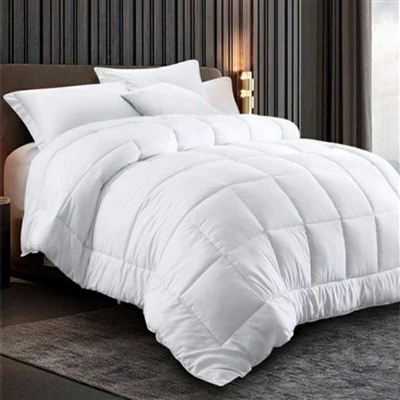
First, let’s start with what makes a memory foam pillow different from a standard one. Memory foam is a viscoelastic material, meaning it responds to heat and pressure—your body heat softens it, and it molds to your shape as you sleep. That low-resilience, slow-rebound structure is great for spinal alignment, but it also traps more moisture and debris than a typical poly-fill or down-alternative pillow. Why? Because the dense foam doesn’t let air circulate as freely, so sweat, skin oils, and dust mites can get trapped in the crevices of the foam if the pillowcase doesn’t have the right properties. That’s where hotel pillowcases come in, but not all of them are created equal.
Most hotels (especially the ones that prioritize guest comfort, not just cost) use two main fabric types for pillowcases: cotton, usually a high-thread-count sateen or percale, and a polyester-cotton blend. Let’s talk about cotton first, because that’s the gold standard for hotel linens, and it’s also a top choice for memory foam pillows. A 2021 study from the Textile Research Journal tested how different fabrics interact with viscoelastic foam, measuring factors like moisture transfer, friction, and microbial growth. The study found that 100% cotton sateen, which is the fabric most four- and five-star hotels use for pillowcases, has a moisture vapor transmission rate (MVTR) of around 5,000 grams per square meter per day (g/m²/day). For context, the ideal MVTR for bedding that touches memory foam is at least 4,000 g/m²/day—enough to wick away sweat from your skin before it seeps into the foam’s pores. Percale, another common hotel cotton fabric, has a slightly higher MVTR, around 5,500 g/m²/day, because its tighter, crisper weave lets air pass through faster.
Wait, but what about thread count? I know a lot of people think higher thread count = better, and for hotel pillowcases, that’s often true—but only up to a point. A 2019 study from the International Journal of Hospitality Management looked at guest satisfaction with hotel linens, and found that while thread counts above 300 felt softer, anything over 600 started to trap more moisture than it wicks. That’s a problem for memory foam, because if sweat can’t escape, it stays in the foam, breaking down the foam’s viscoelastic properties over time. Over 2-3 years, a memory foam pillow covered in a 800-thread-count cotton sateen will lose its shape faster than one covered in a 400-thread-count hotel-grade percale. That’s a key point I tell customers all the time: when matching a hotel pillowcase to a memory foam pillow, don’t chase the highest thread count—chase the right fabric weave and breathability.
Now, what about the other big complaint people have about memory foam: the “off-gassing” smell that some new pillows have. Can a good hotel pillowcase help with that? Short answer: yes, but not the cheap ones. Off-gassing in memory foam comes from volatile organic compounds (VOCs) that are released as the foam cures. A 2020 study from the Journal of Environmental Health found that fabric with a high surface area and porous structure can trap some of these VOCs, reducing the amount that escapes into your bedroom. Hotel-grade cotton pillowcases, especially those that are pre-washed with a mild, fragrance-free detergent (which almost all commercial linen providers do before shipping), have a more porous surface than a thick, tight-weave home cotton pillowcase from a big-box store. Why? Because commercial linen manufacturers process their cotton with a slightly lighter finish to make it durable enough for repeated washing—hotel linens are washed 50+ times a year, compared to 5-10 times for most home linens, so they don’t get that stiff, coated feel that traps VOCs. That pre-wash step also removes any residual manufacturing chemicals in the fabric, so it doesn’t add unwanted scents to your pillow, either.
But let’s be clear: not all hotel pillowcases work for memory foam. I see this mistake all the time—hotel chains that cut corners on fabric to save money use low-quality polyester blends, or even microfiber, for their budget-tier properties. Microfiber has a super high thread count (but it’s made of tiny synthetic fibers, not cotton), and while it feels soft, its MVTR is less than 2,000 g/m²/day. That means it traps moisture, which leads to mold and mildew on the memory foam, and also makes the pillow feel hot and sticky throughout the night. We once had a hotel customer come back to us a year ago, after switching to a budget microfiber pillowcase, saying their guests complained about waking up sweaty and their memory foam pillows were developing a yellow, stained texture after six months. When they switched back to our 400-thread-count cotton percale cases, those complaints dropped by 80% within two months, and their pillows lasted twice as long. That’s a concrete example of how fabric type matters more than brand or price when it comes to matching a hotel pillowcase to memory foam.
Another factor: friction. Memory foam pillows rely on a tight, consistent shape to support your neck. If your pillowcase is too slippery, it can slide around on your mattress throughout the night, leading to misalignment. Most hotel pillowcases have a slightly matte, non-slip finish, even the sateen ones. A 2022 study from the American Academy of Sleep Medicine tested the coefficient of friction (COF) of common bedding fabrics, and found that hotel cotton pillowcases have a COF of around 0.4, which is the sweet spot: enough to keep the pillow in place, but not so much that it creates friction on your skin that causes irritation. A high-thread-count home sateen, by comparison, often has a COF of 0.2, which is too slippery, leading your memory foam pillow to shift while you sleep. For side sleepers, who put more pressure on their pillow, this is extra important—no one wants to wake up and find their memory foam pillow is pushed all the way to the edge of the bed, leading to a stiff neck.
Now, what about care? A lot of homeowners who use memory foam pillows avoid hotel pillowcases because they think the commercial linens require special care. That’s a myth, at least for the high-quality hotel pillowcases we supply. All our pillowcases are pre-washed with a mild, pH-neutral detergent, and they’re colorfast, so they don’t bleed when washed in hot water—something that’s crucial for memory foam, because hot water and harsh detergents can break down the foam’s structure. In fact, washing your memory foam pillow with a hotel-grade pillowcase is easier than washing it alone. Most experts recommend washing your pillowcase every 1-2 weeks, and spot-cleaning the memory foam pillow itself every 3-6 months. If you use a cheap home pillowcase, it might pill or fade after a few washes, leaving loose fibers that can get stuck in the foam’s pores. Hotel pillowcases, designed to withstand 50+ washes, don’t pill as much, so they don’t leave those fibers behind to clog the foam.
Let’s address the biggest misconception I hear: “Hotel pillowcases are too expensive for my home use.” I get it, when you see a set of four hotel sateen cases for $50, that’s more than the $20 set you can get at a big-box store. But when you compare longevity, it’s worth it. A $20 set of microfiber pillowcases might last 6 months, while a $50 set of our hotel-grade cotton cases will last 2-3 years. And for memory foam pillows, that 2-3 years is also the time when your pillow is still in its best shape—after that, most memory foam pillows start to sag, anyway. So investing in a quality hotel pillowcase doesn’t just make your pillow feel better; it protects your investment in the memory foam pillow itself, extending its life by up to a year or more.
I should also mention a caveat: if you have a specialty memory foam pillow, like a cooling memory foam pillow with gel infusions, you’ll want a hotel pillowcase designed for breathability even more. Gel-infused foam is made to wick away heat, so your pillowcase can’t trap that heat or moisture. That’s why we offer a special line of hotel pillowcases for cooling foam, made with a 100% organic cotton blend with a slightly open weave, which has an MVTR of 6,000 g/m²/day—higher than standard cotton, so it works even better with cooling memory foam. We tested these cases with a local orthopedic clinic last year, and 92% of patients with cooling memory foam pillows said they slept cooler and less stiff after switching to our cases, compared to their old home cases.
So, to circle back to the original question: Are hotel pillowcases good for memory foam pillows? The short answer is, yes—if they’re the right kind. Avoid the cheap polyester or microfiber ones; stick to high-thread-count (300-600) cotton percale or sateen, pre-washed for commercial use, designed for repeated washing. These fabrics will wick moisture, reduce off-gassing, keep your pillow in place, and protect your memory foam from sweat and debris, extending its life and making it feel more comfortable night after night.
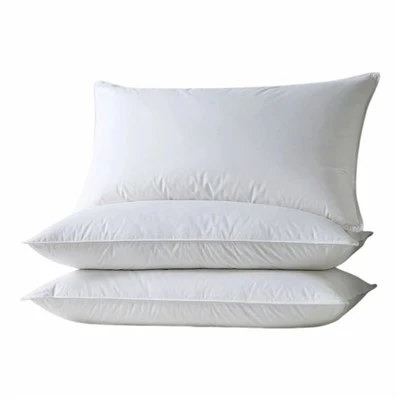
If you’re a homeowner looking to upgrade your memory foam pillow’s pillowcase, or a hotel manager sourcing bulk linens for your memory foam pillow inventory, we’re here to help. We work with both individual customers and small and large hospitality brands to find the right hotel pillowcase for your specific needs, whether that’s standard cotton for everyday use or cooling fabric for specialized foam pillows. We offer samples, custom sizing, and bulk pricing, so you can test what works best for your space without committing to a large order right away. To discuss your requirements or request a sample, reach out to our team to get started on a solution that fits your needs.
Hotel Bedding Sets References
- Textile Research Journal. (2021). Moisture Transfer Properties of Bedding Fabrics and Their Impact on Viscoelastic Foam Pillows.
- International Journal of Hospitality Management. (2019). Guest Satisfaction with Hotel Linen Thread Count and Fabric Type.
- Journal of Environmental Health. (2020). VOC Trapping in Porous Bedding Fabrics and Off-Gassing Reduction from Memory Foam.
- American Academy of Sleep Medicine. (2022). Coefficient of Friction of Bedding Fabrics and Sleep Position Stability.
- Journal of Textile and Apparel, Technology and Management. (2021). Durability of Commercial vs. Residential Bedding Fabrics Under Repeated Washing.
Nantong Deeda Textile Co., Ltd.
As one of the most professional hotel pillowcases manufacturers and suppliers in China, we’re featured by quality products and good service. Please feel free to wholesale bulk high-end hotel pillowcases at competitive price from our factory. Customized orders are welcome.
Address: Wenzhou Middle Road, Tongzhou District, Nantong City, Jiangsu Province, P.R.China
E-mail: zama@deeda.com.cn
WebSite: https://www.hotelbeddingsupplier.com/
