If you’ve ever walked into a lab and wondered what makes formulations mix fast, consistently, and without leaving lumps or inconsistencies, you’re probably glimpsing a laboratory high speed mixer at work. As a supplier who’s worked alongside labs for over a decade, I’ve seen this equipment transform processes for everything from pharmaceutical creams to battery electrode slurries, and it’s far more than just a “faster version of a regular mixer.” Let me break down what it is, how it works, and why it’s become an indispensable tool for modern R&D teams. High Speed Mixer
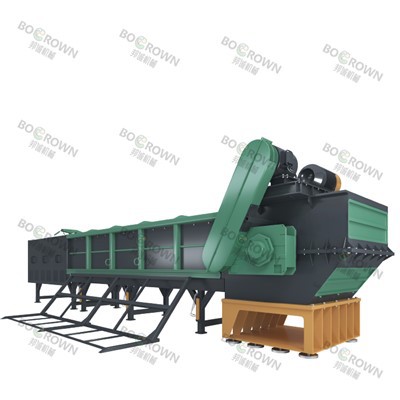
First, let’s start with the basics: what defines a lab high speed mixer (sometimes called a high shear lab mixer, a term I’ve used interchangeably over the years, depending on the industry I’m working with)? Unlike standard lab mixers that spin at slow to moderate speeds, typically 100 to 1,000 RPM, a high speed mixer operates at speeds ranging from 3,000 to over 15,000 RPM. That speed isn’t random—it’s calibrated to generate extreme shear force, which is the key to its superpower: breaking down agglomerates, dispersing powders into liquids evenly, and emulsifying immiscible materials in a fraction of the time of traditional methods.
But speed alone doesn’t make it a high speed mixer. The design is just as critical. Most lab units use a three-bladed rotor (often called a “impeller”) shaped to create a high-velocity vortex in the mixing vessel. As the rotor spins, it pulls the bulk material down from the surface, then accelerates it outward at high pressure against the vessel’s walls, where a stationary “stator” ring with small, precision-cut slots or holes shears the material into tiny, uniform particles. Some models, especially those used for viscous formulations, have a dual-shaft design: one high-speed shaft for shear and a low-speed anchor shaft to scrape the vessel walls, preventing material from sticking or settling during mixing. I’ve watched teams switch from manual stirring to this setup and cut their mixing time from 2 hours to 15 minutes—That’s not just efficiency, that’s a game-changer for tight project timelines.
Now, where do you find lab high speed mixers in action? The applications are as diverse as the industries that use them, and I’ve seen first-hand how each field tweaks the mixer to fit its needs. In pharmaceutical labs, for example, these mixers are used to make topical creams, oral suspensions, and injectable drugs. A few years back, a client in biopharma was struggling with a new gel formulation where the active pharmaceutical ingredient (API) kept agglomerating, leading to inconsistent dosing. They tried a standard overhead mixer, but the agglomerates remained large enough to cause irritation in clinical trials. We worked with them to adjust the impeller speed and vessel size on our lab-scale high speed mixer, and within three test runs, they got a uniform dispersion with particles small enough to meet FDA guidelines. That’s the kind of problem-solving this equipment enables.
In cosmetics, it’s all about texture. A small beauty brand we partner with was developing a luxury facial serum that combined silicone oils, hyaluronic acid powder, and natural plant extracts. Their old mixer left streaks of undispersed hyaluronic acid, making the serum feel gritty. With a high speed mixer, they could create a micro-emulsion with particles under 1 micron, resulting in a silky, smooth texture that stood out on store shelves. And in the energy sector, battery research labs use high speed mixers to mix electrode slurries, which are combinations of active materials, binders, and solvents. Even a tiny inconsistency in the slurry can cause a battery to fail, so the precise shear from a high speed mixer ensures every electrode is uniform, directly impacting battery performance and lifespan.
I often get asked: what’s the difference between a lab high speed mixer and an industrial one? The short answer is scale, but the nuances matter a lot for researchers. Lab models are smaller—usually with vessel capacities from 100 milliliters to 10 liters—designed for small-batch R&D, prototyping, and quality control testing. They’re built to be flexible, too: most have interchangeable impellers and stators, so you can test different mixing geometries for a new formulation without buying a whole new unit. Industrial mixers, by contrast, are built for 100+ liter batches, but lab teams need that agility. I’ve seen grad students and formulators adjust speed, temperature, and mixing time in a single lab run, which is impossible with industrial equipment. That adaptability is why lab high speed mixers are a staple at universities, contract research organizations (CROs), and small startup labs—teams need to test multiple variables quickly, and this tool lets them do that.
Another common misconception: high speed mixers are only for low-viscosity materials like oils or solutions. That’s not true. We supply lab models that can handle materials with viscosities up to 1,000,000 cP—thick enough to resemble butter or toothpaste. These are called high-viscosity high speed mixers, and they use a different rotor design, often a screw or anchor impeller combined with a high-speed disperser, to move thick materials without dead zones. A food tech client of ours was developing a plant-based cheese, and they needed to mix thick protein pastes, fats, and flavorings. Their old mixer would leave chunks of undispersed protein, but the high-viscosity unit got them a smooth, spreadable cheese that was ready for taste testing in just 10 minutes.
What should you look for when choosing a lab high speed mixer? After 12 years in this business, I’ve learned that it’s not just about RPM and price. First, check the vessel material: glass is great for visual monitoring of mixing, which is critical for new formulations, while stainless steel is durable, easy to sanitize, and better for high-temperature processes. Then, consider control systems: some entry-level models have simple dial controls, but if you’re working with complex formulations that require precise temperature, speed, and timing, a digital controller with data logging is worth the investment. I’ve had clients save months of troubleshooting by being able to replicate exact mixing parameters from one run to the next. Safety is another big one: lab mixers spin fast, so look for models with torque limiting, lid interlocks, and overload protection to prevent accidents. Finally, think about scalability: if you’re planning to move to industrial production in the future, choose a lab mixer that’s compatible with larger industrial models from the same brand, so your R&D process translates smoothly.
Over the years, I’ve also seen how lab high speed mixers have evolved. Ten years ago, most units were basic, with manual controls and limited capacity. Now, we have models that can integrate with lab automation systems, so you can set up a mixing run, walk away, and get a full report once it’s done. There are also specialized units for sterile processing, designed for pharmaceutical or biotech labs that need to avoid contamination, with sealed vessels and sanitizable parts. One trend I’m excited about is the rise of sustainable formulation—lab teams are using high speed mixers to reduce solvent use by mixing powders and liquids more efficiently, cutting waste and energy consumption. That’s a big win for both the environment and lab budgets.
At the end of the day, a lab high speed mixer isn’t just a piece of equipment—it’s a partner in innovation. I’ve talked to researchers who’ve spent months trying to solve a mixing problem, only to get it right on their first run with the right high speed mixer. For startups, it’s the tool that turns a lab prototype into a product that can be tested and scaled. For established companies, it’s the way to speed up R&D and bring new products to market faster.
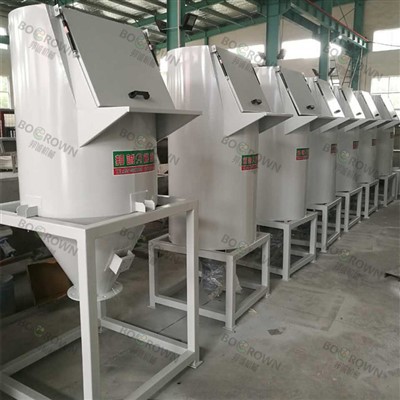
If you’re a lab manager, formulator, or research lead who’s tired of inconsistent mixing, long process times, or formulations that just don’t perform as well as they should, let’s talk. We can help you assess your specific needs, whether that’s a small 100ml unit for grad student projects or a high-viscosity model for food or battery formulations, and find a solution that fits your lab and budget. Don’t waste another run on a mixer that can’t keep up with your work—connect with us today to discuss your requirements and find the right lab high speed mixer for your team.
High Speed Mixer References
- Paul, E. L., Atiemo-Obeng, V. A., & Kresta, S. M. (2004). Handbook of Industrial Mixing: Science and Practice. John Wiley & Sons.
- Davies, J. T. (1985). Turbulence Phenomena in Mixing. Academic Press.
- Rosenzweig, M. (2005. Emulsions and Emulsion Technology. CRC Press.
ZJG BC Machinery Co., Ltd.
As one of the most professional high speed mixer manufacturers and suppliers in China, we’re featured by quality products and good price. Please rest assured to buy cost-efficient high speed mixer for sale here from our factory. Contact us for custom service and OEM service.
Address: No.8 Lexi Road, Leyu Town, Zhangjiagang City
E-mail: sales@bcextruder.com
WebSite: https://www.bcextruder.com/
