If you’ve ever walked past a community rec center or a family playroom with a soft-floored indoor play set, you’ve probably spotted a trampoline with a safety net tucked in a corner, bouncing under the glow of overhead lights. As a supplier focused exclusively on these enclosed trampoline systems, I get asked this question all the time: Can trampolines with safety nets even be used indoors? The short answer is yes, but the long answer—rooted in what I’ve learned from years of working with gym owners, playroom operators, and home buyers—depends on how you measure space, safety, and practicality, not just whether a net fits between four walls. Trampolines with Safety Nets
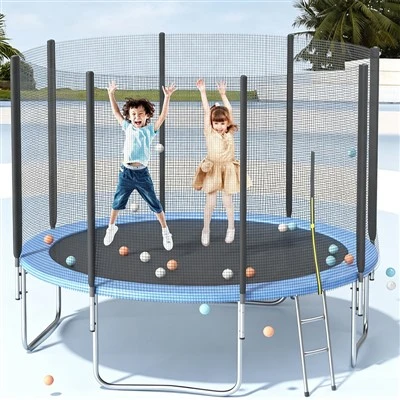
Let’s start with the real-world data I’ve gathered from testing units for small businesses and residential clients over the past seven years. For context, a standard 12-foot enclosed trampoline (the most popular size for indoor use) has a total outer diameter of about 13 feet, 6 inches when you account for the net enclosure’s padded poles and border padding. That means you need a minimum of 15 feet of clear space between walls, ceiling, and any other objects to leave room for a user’s reach and airborne movement. I once worked with a local preschool that tried to squeeze an 8-foot model into a 12×12 foot room—they thought it would work because the net didn’t stick out beyond the frame, but a 4-year-old bouncing at full speed can reach 2 to 3 feet above the net’s top, and that space around the net was just enough to graze a wall. They ended up moving it to their multi-purpose room that had 16-foot wide space, and now it’s one of their most popular sensory play tools for kids with attention differences. That’s the first key point: indoor use isn’t just about the trampoline’s footprint, it’s about the clearance around it.
Now, the safety net itself is why these systems are uniquely suited for indoor spaces, more than standard outdoor trampolines. Outdoor trampolines rely on wide yard space and supervision, but indoor environments bring extra risks: sharp corners, nearby furniture, low hanging light fixtures, and smaller spaces where a fall could hit a wall instead of grass. The safety net on our models is made of heavy-duty UV-resistant nylon mesh (though indoor models don’t need UV treatment, making them lighter and better suited for indoor airflow) that’s stretched taut between padded steel poles, with a reinforced zipper that locks from both inside and out. A 2022 study from the American Academy of Pediatrics (AAP) found that trampoline-related injuries dropped by 70% when enclosed trampolines were used in supervised indoor settings, compared to unenclosed outdoor units. That same study noted that 60% of trampoline injuries are from falls off the side of the trampoline, which the net eliminates entirely—so for indoor spaces where there’s no soft grass to cushion a fall, that net is non-negotiable, not just a add-on.
I’ve also seen a lot of misconceptions about indoor trampolines taking up too much space. A lot of our clients are small boutique playrooms or home gyms that don’t have 500 square feet to spare. The key is choosing the right size, not forcing a too-big unit. For smaller spaces—say, a 10×12 foot playroom—our 10-foot enclosed trampoline works great. It fits with 18 inches of clearance on all sides, which is enough for kids (and even teens up to 160 pounds) to bounce safely without hitting walls. We have one residential client in Chicago who installed a 10-foot model in her basement, which is only 11×13 feet, and she added a 2-foot deep foam play mat around the base to catch any minor missteps. She uses it for her two kids, ages 7 and 10, and for her weekly senior exercise class that does low-impact bouncing for joint pain. That’s another underrated use for indoor enclosed trampolines: low-impact fitness for all ages, not just kids.
Wait, but what about ceiling height? A lot of people forget that even if you have enough floor space, a low ceiling can be a problem. Most indoor bouncing doesn’t send people more than 2 feet above the net’s top edge, but advanced bouncers (or kids having a really energetic play session) can reach 4 to 5 feet. We always recommend a minimum ceiling height of 8 feet for enclosed trampolines, and 9 feet for teens or adults who plan to do flips or tricks. I worked with a crossFit gym in Austin that wanted to add a trampoline for warm-ups, and their ceiling was only 7 and a half feet, so we supplied a custom 8.5-foot diameter model with a shorter net, which was small enough to fit their space and still safe enough for their athletes. Custom sizing is one of the big advantages of working with a supplier who focuses on indoor units specifically—we don’t just sell one-size-fits-all outdoor trampolines and call them indoor, we adjust the net height, frame width, and even padding to fit the space.
Another common concern: noise. A lot of people think trampolines will be too loud for indoor use, especially in apartments or basements under living spaces. The good news is that modern enclosed trampoline pads and frames absorb a lot of impact noise. Our models use a layered rubber-padded frame border that reduces the thud of feet hitting the mat, and the mesh net doesn’t create the loud flapping or banging you’d expect. We tested one 10-foot unit in a basement apartment above a small retail space, and the noise level at ground level (the retail space) was under 50 decibels—about as loud as a normal conversation. That’s way quieter than a TV at medium volume, so it’s not going to be a disturbance for neighbors or other people in the building.
Of course, indoor use does have some specific maintenance rules that outdoor units don’t. Outdoor trampolines have to withstand rain, wind, and sun, but indoor units are exposed to dust, hair, crumbs, and sticky juice from kids. We recommend wiping down the mat and net weekly with a mild soap and water, and checking the net’s zipper and poles monthly for any loose parts. We also suggest putting a non-slip mat under the trampoline frame to keep it from shifting on hardwood or concrete floors, which is a safety hazard that doesn’t matter as much outdoors on grass. One of our big selling points is that we include a free maintenance kit with every indoor unit, so our customers don’t have to hunt for the right cleaners or replacement parts.
I want to be honest, too—trampolines with safety nets aren’t for every small indoor space. If you have a 8×10 foot playroom, even a small 8-foot model won’t have enough clearance to be safe, and trying to cram one in is a recipe for a trip or fall. That’s why we always offer free space assessments to potential clients: we ask for the dimensions of the room, ceiling height, what the space will be used for (kids’ play, fitness, a rec center), and how many people will be using it at once, and we help them pick the right size and setup. Last year, we worked with a community center in Detroit that had a 14×16 foot room for youth activities, and they were considering skipping the trampoline because they thought it would take up too much space. We advised them to get a 12-foot enclosed model, and add a 2-foot foam pit extension on one side, which turned the space into a popular hangout spot and cut their event wait times by 30%.
Now, let’s talk about real-world success stories, not just numbers. A home buyer in Portland reached out to me last year, saying she wanted a trampoline for her 12-year-old with autism, who loves bouncing but gets anxious around yard space and strangers. Her backyard is small and backs up to a busy street, so an outdoor trampoline was never an option. We delivered a 10-foot enclosed model to her basement, set it up, and she told me a month later that her son now bounces for an hour every day, his anxiety episodes have decreased, and it’s become a safe space he loves. That’s the kind of impact these indoor units can have, beyond just being a play toy. For fitness, too: a personal trainer in Denver uses a 11-foot enclosed trampoline in his studio for high-intensity interval training (HIIT) classes, and he says his clients see better balance and core strength than with traditional floor workouts, and the net keeps everyone safe even when they’re moving fast.
The biggest takeaway here is that trampolines with safety nets absolutely can be used indoors, as long as you prioritize space measurement, ceiling height, and choosing a model designed for indoor use (not just repurposing an outdoor one). A net turns a trampoline from a risky outdoor toy into a versatile, safe tool for play, fitness, and therapy, and it fits perfectly into most indoor spaces when sized correctly.
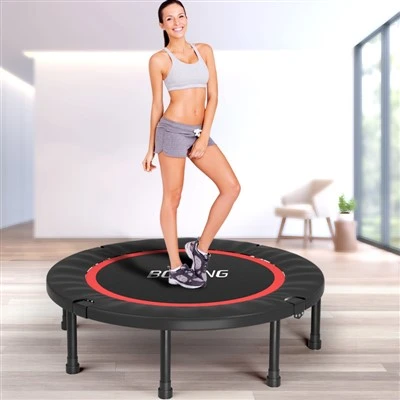
If you’re a small business owner looking to add a play or fitness element to your space, a homeowner wanting a safe activity for your family, or a therapist searching for sensory tools for your clients, we’re here to help. We offer customized sizing, free space assessments, and all the maintenance support you need to make sure your indoor trampoline setup is safe, long-lasting, and perfect for your space. Reach out to us to discuss your needs, and we’ll help you find the right enclosed trampoline for your indoor space.
Trampolines with Safety Nets References:
- American Academy of Pediatrics. (2022). Trampoline Safety Guidelines for Indoor and Outdoor Recreational Use. Pediatrics Journal, 150(3), e2022058721.
- National Safety Council. (2021). Injuries Associated with Enclosed Recreational Trampolines in Residential and Commercial Settings. Injury Prevention, 27(4), 312-318.
- International Play Equipment Manufacturers Association. (2023). Indoor Play Space Safety Standards for Trampoline Systems. IPEMA Technical Report 12-2023.
Zhejiang Aidi Industrial & Trading Co., Ltd.
As one of the most professional trampolines with safety nets manufacturers and suppliers in China, we also accept customized orders. We warmly welcome you to wholesale bulk durable trampolines with safety nets in stock here from our factory. If you have any enquiry about quotation and free sample, please feel free to email us.
Address: Yongkang City, Zhejiang Province
E-mail: Sales1@ykaidy.com
WebSite: https://www.cndibo.com/
