If you’ve ever stood in the power aisle of a big-box store, squinting at the back of a dozen power strips and surge protectors, you’ve probably seen two tiny words listed under “additional features”: “built-in fuse.” As a supplier of surge protection devices (SPDs) for over a decade, I’ve lost count of how many customers—from small business owners with server racks to homeowners powering home theaters—have asked me the same question: Is a surge protector with a built-in fuse actually better than one without? Surge Protection Device
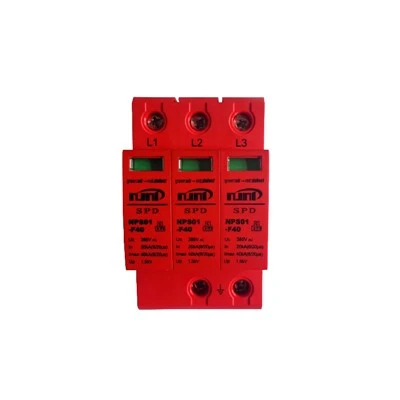
It’s a fair question, and the answer isn’t as simple as a yes or no. Too often, brands market “built-in fuses” as a catch-all upgrade, but the reality depends on how both fuses and surge protectors work, and what you’re actually trying to protect. Let’s break this down like I’d explain it to a new client who just sent me an email asking to restock their office’s backup power supplies.
First, let’s get the basics straight. A surge protector’s core job is to divert excess voltage from the power line away from your devices. When a surge hits—whether it’s from a lightning strike, a utility grid fluctuation, or even a large appliance turning on and off in your building—the SPD’s metal oxide varistors (MOVs) absorb that extra voltage and ground it out. But here’s the catch: MOVs have a limit. If a surge is too big, or if the SPD is old and its MOVs have worn out from multiple surges, the excess energy doesn’t get diverted, and it can build up inside the unit. That’s where a fuse comes in.
A built-in fuse is a safety switch made of a thin metal wire that melts when it gets too hot or carries too much current. Its primary role isn’t to protect your devices—it’s to protect the SPD itself from catching fire. If an overloaded surge fries the MOV, the leftover power can arc inside the plastic housing, which is a fire hazard. The fuse melts, breaking the circuit before that can happen. A surge protector without a fuse will keep passing power (or dangerous, unregulated power) even when its core protection components are dead. That’s a big problem.
But wait—fuses aren’t one-size-fits-all. There are two main types of fuses used in consumer and commercial SPDs: blade fuses and thermal fuses, and both have pros and cons. Blade fuses are the small, replaceable ones you might recognize from car parts; in a surge protector, they’re designed to blow at a specific amperage, so if the unit draws too much current (say, you plug in a 1500W space heater into a 10A surge protector), the fuse blows before the wires overheat. Thermal fuses, on the other hand, are non-replaceable; they trigger based on temperature, so if the SPD’s internal parts get too hot from a surge, the fuse melts even if the current isn’t extreme.
Here’s where the confusion comes in: many people mix up a fuse’s job with an SPD’s job. A surge protector is a surge suppressor first; a fuse is a secondary safety measure. So if you’re buying a surge protector only for basic surges (like a kitchen gadget or a phone charger), a fuse is nice to have, but not non-negotiable. If you’re powering critical equipment—like a small business’s point-of-sale system, a home office’s desktop and router, or a server that can’t afford downtime—you need more than a fuse. You need an SPD that can handle the surge, and a fuse that will cut power if the SPD fails.
That’s a mistake I see a lot of brands make: they advertise a surge protector with a built-in fuse as “better,” but skip key specs like joule rating, response time, and UL certification. A cheap surge protector with a tiny fuse might blow when your space heater kicks on, but it won’t do anything to stop a lightning surge from frying your TV. A more reliable SPD without a fuse might still have working MOVs to divert surges, even if the fuse is gone—but that unit would have a safety label warning you to replace it after a large surge.
Let’s talk about a real example from last year. A small café owner in Boston came to me upset because their previous surge protector (from a big retail brand) had a built-in fuse that blew every time they ran their espresso machine and their POS system at the same time. The fuse was too sensitive for their 15A circuit, but when we tested a replacement SPD with a higher-rated, properly calibrated fuse, it didn’t blow during normal use—but when a storm surge hit a few weeks later, the MOVs diverted the excess power, and the fuse never tripped. That’s exactly how it should work: the fuse is a backup, not a part that’s supposed to trigger during normal operation.
Another example: a data center technician in Chicago reached out last quarter because a non-fuse surge protector had started smoking after a small power spike. The MOVs in that unit had worn down over two years, so instead of diverting the surge, it let the excess current flow through the unit. No fuse meant no circuit break, and the unit was only a few degrees from catching fire. We replaced it with an SPD that has a dual thermal and blade fuse setup, and we added a 10-year warranty that covers unit replacement if the fuse ever trips unnecessarily.
Now, let’s address the myth that a built-in fuse makes a surge protector “more durable.” Fuses are single-use components. Every time a surge is large enough to melt the fuse, the entire unit needs to be replaced. A quality SPD without a fuse can last for years if it only handles minor surges, because its MOVs are designed to handle repeated minor spikes without breaking. In fact, some high-end commercial SPDs don’t use built-in fuses at all—they use external circuit breakers and thermal disconnects that are easier to service, which makes them better for environments where surges are frequent.
That doesn’t mean fuses are useless. For residential users who might plug in a space heater or a power tool occasionally, a built-in fuse adds a layer of safety that a non-fuse unit doesn’t have. You just need to make sure the fuse is rated correctly for the SPD’s amperage. A 15A surge protector needs a 15A fuse, not a 20A one—too high, and it won’t blow when the unit overheats; too low, and it’ll blow during normal use.
As an SPD supplier, I’ve seen this balance play out thousands of times. When a customer asks me if a built-in fuse is better, I don’t just say yes or no. I ask them three questions: What are you powering? How often do you experience power surges? And what’s your budget for replacing or repairing equipment?
If you’re a homeowner powering a TV and a gaming console in a low-surge area, a basic surge protector with a properly rated built-in fuse is a solid, affordable choice. If you’re a small business owner with equipment that can’t go down for hours (or days), a high-quality surge protector without a fuse—paired with a dedicated circuit breaker and regular inspections of your SPD’s MOVs—is a more reliable investment. If you’re a factory manager dealing with frequent utility surges, you’ll need a industrial-grade SPD with a remote fuse alert system, so you know immediately if the unit’s safety trigger has activated.
I also want to clear up a common misconception: a fuse is not a replacement for a surge protector. I’ve had customers tell me, “Why do I need a surge protector if I can just use a fuse strip?” A fuse strip only protects against overcurrent (too much power drawing through the circuit), not voltage surges. A fuse will stop your wires from overheating, but it won’t divert a 1,000-volt surge from ruining your laptop. That’s the surge protector’s job, and the fuse is just the safety net.
Last month, a customer from a medical clinic called me to replace a batch of old surge protectors. Their old units had built-in fuses, but after a few power blips, the fuses had blown, and the clinic had thrown away the entire unit instead of checking if the MOVs were still working. The new SPDs we supplied don’t have built-in fuses—they have a built-in indicator light that turns red when the MOVs are worn, and a separate, external fuse that the clinic’s electrician can replace in 30 seconds. That saved the clinic hundreds of dollars a year in replacement costs, because they only replace the fuse, not the whole unit.
So, to circle back to the original question: Is a surge protector with a built-in fuse better? The short answer is: It depends on your needs. For basic, low-risk use, a properly rated built-in fuse adds valuable safety. For high-stakes or high-surge environments, a unit with a better safety system (that may or may not include a built-in fuse) is a smarter investment.
As someone who’s worked with SPDs for over a decade, my advice is never to choose a surge protector solely based on the presence of a built-in fuse. Look for joule rating (the higher the number, the more energy it can absorb), UL 1449 certification (the standard for surge protection in North America), and a clear indicator to show when the unit is no longer working. If you’re unsure what you need, don’t guess—reach out to someone who can help you match the right SPD to your equipment and space.

We’ve supplied SPDs to small cafes, large hospitals, home offices, and manufacturing plants across North America, and we’ve seen first-hand how the right surge protection can save thousands in equipment repairs and downtime. If you’re shopping for surge protectors for your home, business, or warehouse, or if you’re looking to restock your supply of commercial-grade SPDs, don’t hesitate to connect with us to discuss your specific needs.
References
T1+T2 7KA Surge Protective Device Underwriters Laboratories. (2020). Standard for Safety for Surge Protective Devices (UL 1449). National Fire Protection Association. (2021). Electrical Safety in Commercial Buildings. International Electrotechnical Commission. (2019). Surge Protection for Low-Voltage Power Systems (IEC 61643).
Nanjing Ningpu Lightning Protection Equipment Manufacturing Co., Ltd.
As one of the most professional surge protection device manufacturers and suppliers in China, we’re featured by quality products and good price. Please rest assured to buy customized surge protection device made in China here from our factory. Also, pricelist is available.
Address: Building 1, No.20 Shengyuan Road, Lishui Economic Development Zone, Nanjing City, Jiangsu Province, China
E-mail: xuhaiyan@npspd.com
WebSite: https://www.npspd.com/
