If you’re working in electronics manufacturing, printed circuit boards (PCBs), or flexible electronics, copper foil is far from just a basic metal component. It’s the unsung foundation that carries signals, powers devices, and determines how well your end product holds up under pressure. As a supplier of standard RA copper foil, I get asked this question constantly: what sets standard RA copper foil apart from high-temperature RA copper foil? The answer isn’t just about temperature tolerance—it’s about how each foil is processed, its performance limits, and which one fits your specific application. Let’s break this down in plain, practical terms, not just industry jargon. Standard RA Copper Foil
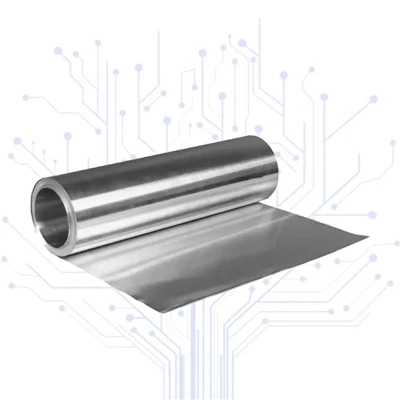
First, let’s start with a quick recap of what RA copper foil even is. RA stands for “rolled annealed,” which means the foil is made by rolling pure copper ingots down to thin sheets, then annealing them (heating and cooling) to relieve stress and improve flexibility. That’s different from electrodeposited (ED) copper foil, which is grown from a chemical bath. RA foil is known for its superb ductility, thermal stability, and consistent grain structure—traits that make it ideal for flexible PCBs, radio frequency (RF) applications, and any part that needs to bend or flex repeatedly. But not all RA foil is created equal. That’s where the standard vs. high-temperature distinction comes in.
Let’s start with standard RA copper foil. For most of the applications I supply, standard RA foil is the workhorse. It’s processed to meet baseline industry specifications, typically with a maximum continuous operating temperature of around 150°C (302°F), and a peak (short-term) temperature rating of about 200°C (392°F). Why does that matter? For your average consumer electronics device—like a smartphone, tablet, or wearable that sees occasional temperature spikes from charging or use—this is more than enough. Standard RA foil has a uniform, fine grain structure that comes from the rolling and annealing process, which gives it excellent peel strength against dielectric materials (the insulating layer in PCBs) and resistance to thermal fatigue. Thermal fatigue is what happens when a part gets hot and cold over and over again; if the foil is too brittle, it cracks, breaks circuits, or loses conductivity. Standard RA foil handles that everyday thermal cycling perfectly. It’s also more cost-effective than its high-temperature counterpart, which makes it the go-to for high-volume applications where cost efficiency matters as much as performance.
Now, high-temperature RA copper foil. This isn’t a “better” version of standard RA—it’s a specialized variant designed for extreme operating conditions. The key difference here is in the processing. To boost temperature resistance, high-temperature RA foil undergoes an extra annealing step, often at a higher temperature (around 800°C instead of the standard 400–500°C for standard RA) and for a longer duration. This deep annealing refines the copper’s grain structure even further, eliminating internal stress that can cause degradation at high temperatures. Additionally, some manufacturers add trace alloying elements (like chromium or zirconium) to high-temperature RA foil, which boost its melting point and resistance to oxidation. As a result, high-temperature RA foil can operate continuously at up to 200–220°C (392–428°F), with peak tolerance up to 250°C (482°F) or more. That’s a huge jump from standard RA.
So what does that mean in the real world? High-temperature RA foil is non-negotiable for applications that regularly run hot. Think of industrial electronics, automotive under-hood systems, aerospace components, or power electronics (like inverters or electric vehicle chargers). These parts don’t just see occasional temperature spikes—they operate at high heat for hours on end. If you used standard RA foil in an under-hood sensor, for example, the constant heat from the engine bay would cause the foil’s grain structure to break down over time, leading to conductivity loss or even failure. High-temperature RA foil can withstand that sustained heat without degrading, and it also has better resistance to thermal shock—sudden temperature changes, like when a cold engine starts up after being shut off. That’s critical for parts that have to survive extreme temperature swings.
Another big difference is in performance characteristics beyond temperature. Let’s talk about conductivity first. Pure copper is already one of the best conductors of electricity, but the processing of each type affects how much current it can carry. High-temperature RA foil, with its refined grain structure, actually has slightly higher conductivity than standard RA—because there are fewer grain boundaries that impede electron flow. That makes it ideal for high-frequency applications, like 5G antennas or RF circuits, where signal loss can be a major issue. Standard RA foil is still more than conductive enough for most consumer electronics, but high-temperature’s edge here makes it the choice for cutting-edge RF tech.
Flexibility is another key point. Both standard and high-temperature RA foil are flexible, but high-temperature is often more ductile because of the deeper annealing process. That means it can bend more times without cracking—something that’s perfect for flexible PCBs that are used in devices like foldable phones or wearable sensors. Wait, you might be thinking, if high-temperature is more flexible, why not use it everywhere? The tradeoff is cost. High-temperature RA foil takes longer to process, uses more energy for the extra annealing step, and the alloying elements add to the material cost. For applications that don’t need that extreme temperature resistance, it’s a waste of budget. Standard RA foil delivers all the flexibility and performance you need at a fraction of the cost, which is why it’s still the majority of what I supply.
Let’s clear up a common misconception: some people think RA foil is just “thicker” than ED foil, but that’s not the case. Both standard and high-temperature RA foil are available in a range of thicknesses, from very thin (12 microns) for flexible electronics to thicker (100+ microns) for power applications. The thickness affects conductivity and mechanical strength, but the temperature rating is purely a function of processing. Another myth: high-temperature RA foil is just “standard RA that can handle more heat.” No—it’s a different grade, designed from the start for extreme conditions, with a different manufacturing process and material properties.
Let’s look at real-world use cases to make this concrete. If you’re assembling a smart watch, the PCB inside it will see mild temperature changes from wrist skin, charging, and normal use. Standard RA foil is more than sufficient here. Its fine grain structure ensures the foil adheres well to the PCB’s dielectric layer, it’s flexible enough to bend to fit the watch’s small form factor, and it won’t degrade from the occasional 10–15°C temperature spike. Now, if you’re working on an electric vehicle’s battery management system (BMS), which is mounted near the car’s battery pack and can run at 180°C during fast charging, high-temperature RA foil is a must. If you used standard RA here, after a few hundred charge cycles, the heat would cause the foil to crack, leading to a BMS failure that could put the whole vehicle at risk.
So how do you choose between the two? It comes down to three questions: what’s the maximum operating temperature your application will see, how many thermal cycles it will go through, and what’s your budget. For most low-to-moderate temperature applications (consumer electronics, wearables, small electronics), standard RA copper foil is the right choice. It balances performance, flexibility, and cost. For applications that operate above 150°C, require long-term thermal stability, or need to handle extreme thermal shock, high-temperature RA is the only safe option.
As a standard RA copper foil supplier, I don’t just sell a product—I help my customers pick the right one. A lot of manufacturers, especially smaller ones, don’t realize that using the wrong foil can lead to costly failures down the line. I’ve seen it time and time again: someone uses ED foil in a flexible PCB, and it cracks after a few bends. Or they use standard RA in an under-hood sensor, and it fails after a year of high heat. That’s why I make it a point to walk through each customer’s specific application with them, explain the pros and cons of each foil type, and help them choose what fits their needs. If you’re working on a project and you’re not sure which foil is right for you, I’m here to help you navigate the options.

At the end of the day, the difference between standard and high-temperature RA copper foil boils down to processing, performance, and use case. Standard RA is the workhorse for everyday electronics, delivering consistent performance at a cost that works for high-volume production. High-temperature RA is a specialized, high-performance option for extreme environments, designed to withstand heat and stress that would break down standard materials. Whether you’re a manufacturer looking for a reliable supplier of standard RA copper foil, or you’re ready to discuss a custom project that requires specialized foil, I’m here to connect. Let’s talk through your needs and find the right solution for your next project.
Ra Copper Foils References:
Electronics Materials Handbook, 2nd Edition, McGraw-Hill, 2018.
Copper Foil Technology for Flexible Printed Circuits, J. Wiley & Sons, 2020.
Automotive Electronics Materials and Reliability, SAE International, 2021.
Civen Metal Material (Shanghai) Co., Ltd.
Civen Metal Material (Shanghai) Co., Ltd. is one of the most professional standard ra copper foil manufacturers and suppliers in China. With abundant experience, we warmly welcome you to wholesale bulk high quality standard ra copper foil made in China here from our factory. Good service and reasonable price are available.
Address: Workshop 2-2, No.1888 Xiechun Road, Jiading District, Shanghai, 201804, P.R.China
E-mail: sales@civen.cn
WebSite: https://www.civenmetal.com/
