Hey there, if you’ve ever spent time shopping for air compressors—whether for your auto shop, construction crew, fabrication business, or even a big manufacturing line—you’ve definitely run into two main types out there: single-stage and two-stage. I’ve been selling these bad boys for over 12 years now, and I can’t tell you how many times a customer’s gone into the store or messaged me like, “Dude, what’s the actual difference here? I don’t need to sound like a textbook during my purchase—just tell me what works for me.” Fair enough, right? Let’s break this down like I’m chatting with you over a coffee, no stuffy jargon, no extra fluff, just real talk from a supplier who’s seen both work for their fair share of jobs. Air Compressor
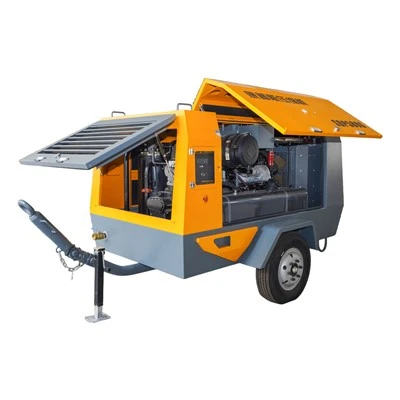
First off, let’s start with the basics because if you don’t get the core, the rest is just noise. Air compressors basically do one thing: they take outside air, cram it way smaller (that’s pressure, measured in PSI, by the way—pounds per square inch, for anyone who doesn’t use that daily), and store it so you can power your tools, blow out dust, run spray guns, whatever. That compression process is where single vs two stage gets totally different. Single-stage, name says it all, right? It compresses air in one single step. One piston, one cylinder, one quick squeeze. Two-stage? It’s two separate steps. First piston/cylinder cranks the air down to a medium pressure, then sends that already squished air to a second, smaller cylinder that squeezes it even harder. Simple. But don’t let that “simple” label make single-stage sound bad—they’re both built for different jobs, not one “better” than the other. Let’s get into the real, practical differences that actually matter for your wallet, your tools, and your work.
Let’s talk about how they perform under pressure first, because that’s the big one. Single-stage units top out at around 125 to 150 PSI max, right? That’s more than enough for most small-to-medium jobs. If you’re running a nail gun for framing, a paint sprayer for house trim, a die grinder for metal work, or even blowing out shop dust after a long week—125 PSI is your sweet spot. But here’s the catch with single-stage: that one cylinder has to do all the heavy lifting every time. Every time it pulls in air, it’s shoving it straight from ambient pressure to max PSI in one go. That means way more heat builds up fast, and the piston and cylinder have to work way harder, over and over. For light, occasional use? No big deal. But if you’re running tools nonstop—like a body shop spraying cars all day, or a construction crew using a jackhammer or impact wrench for 8 hours straight—single-stage will get tired fast. You’ll notice it cycling on and off every few minutes to cool down, and it might even overheat if you push it too hard too long. That’s where two-stage comes in. The two-step compression means each cylinder is only handling part of the load. First stage cranks it to, say, 100 PSI, second stage kicks that up to 175 or even 200 PSI max. Not only is that higher pressure great for heavy-duty tools, but splitting the work between two cylinders means way less heat per step. It runs cooler, so it can keep cranking without quitting every 10 minutes. I’ve had a customer with a single-stage unit try to run a sandblaster all day—by lunchtime, it was tripping the thermal overload and he was stuck waiting for it to cool. Switched to a two-stage, never had that problem again. That’s the performance difference, plain and simple.
Next up is size, weight, and portability—super important if you’re not working in a fixed shop. Single-stage units are way smaller and lighter, right? Because they only have one cylinder, not two, plus they don’t need the same kind of robust frame to handle that constant heavy load. You can get 5, 10, or even 20-gallon single-stage compressors that roll around on a small wheel kit, fit in the back of a pickup, or even set up on a workbench. That’s perfect for contractors who bounce between job sites, or hobbyists who work out of their garage on weekends. Two-stage? They’re way bigger and heavier, for two reasons: two cylinders obviously take up more space, and they’re built with way sturdier parts. Think 60, 80, 120-gallon tanks—way bulkier. You’re not throwing a two-stage into a pickup for a quick house call; these are mostly for fixed locations: big garages, manufacturing plants, fabrication shops. I once had a local auto repair shop buy a 80-gallon two-stage because it’s bolted to their shop floor, runs all day, and never has to move. That’s their setup. Now, don’t get me wrong—there are some portable two-stage units out there for guys who need to haul heavy-duty equipment, but they’re still way bigger and heavier than their single-stage counterparts. So if portability is a top priority, single-stage is the no-brainer pick. If you’re keeping it in one spot and running big tools, two-stage is the way to go.
Let’s chat about maintenance and cost, because that’s what every business owner cares about. Upfront cost first: single-stage units are way cheaper. A small 20-gallon single-stage will run you like $300 to $600, depending on the brand. A comparable 60-gallon two-stage? That’s $1,000 to $2,500 easy. Way bigger sticker shock, right? But wait—what about long-term? Let’s talk maintenance. Single-stage has a simpler design: one cylinder, one piston, one set of valves. Less parts to go wrong, easier to fix when something does break. I’ve had guys come in with a single-stage that’s been running for 10 years, only needing a new filter or a valve adjust every couple of years. Two-stage has more parts: two cylinders, two sets of valves, sometimes an intercooler between the stages to cool the air between compression steps. That’s more parts that can wear out, so maintenance is a bit more involved, and parts might cost a touch more. But here’s the catch: if you push a single-stage way beyond what it’s designed for—running it nonstop on a heavy tool—that extra strain will wear it out way faster. I’ve seen a guy run a single-stage 24/7 to power a conveyor belt, and it died in 18 months. A two-stage doing the exact same job? Still going strong after 5 years, with only routine oil changes and filter swaps. So it’s not just about upfront cost; it’s about how you’re using it. If you need it for light, occasional use, single-stage is cheap up front, low maintenance. If you need it for heavy, continuous use, two-stage might cost more now, but it’ll save you money on replacements and repairs down the line.
Wait, I should also mention something a lot of people miss: duty cycle. That’s the amount of time a compressor can run in a 10-minute cycle before it needs to cool down. Single-stage units usually have a lower duty cycle—like 50% or 60%—meaning if it runs 5 minutes, it needs 5 minutes to cool. Two-stage? Duty cycles are way higher, often 80% or more. That’s why they can run all day on heavy tools without taking breaks. I had a painting contractor a few years back who bought a single-stage for a small residential job, and when he got a big commercial contract, he upgraded to a two-stage. He told me he was saving 2 hours a day now because he didn’t have to wait for his compressor to cool between paint coats. That’s the real, on-the-job impact.
Let’s clear up some common misconceptions too, because I hear these all the time. First: “Two-stage is always better.” No, it’s not. If you’re just inflating tires, running a brad nailer, or blowing out your shop once a week? A two-stage is overkill. You’ll pay more upfront, have a heavier unit you don’t need, and it’ll be wasting energy when a single-stage works just fine. Second: “Single-stage will never work for my job.” If your job runs tools nonstop, yeah, but if you’re a hobbyist who uses air tools once a month? Single-stage is perfect. Third: “Two-stage is way less efficient.” Wait, no—when you’re running at full capacity, two-stage is more efficient because splitting the compression reduces heat, which means less energy wasted on heating air. Single-stage wastes energy on all that extra heat from one-step compression, which is why it cycles on and off more. But when you’re only using small amounts of air, single-stage is actually more efficient because it’s simpler and doesn’t have the extra parts of a two-stage. Efficiency depends on how you’re using it, not the unit itself.
Now, let’s tie this all together so you can pick the right one for you. Let’s make a quick cheat sheet, yeah? If you’re a hobbyist, or you run small jobs: residential nail guns, paint for a garage, tire inflation, occasional dust blowing—go single-stage. It’s cheap, portable, easy to use, does exactly what you need, no extra junk. If you’re a contractor, shop owner, or you run heavy tools all day: body shops, sandblasters, jackhammers, large spray guns, continuous use—go two-stage. It’s built for that heavy load, runs longer, lasts way more.
At the end of the day, the worst thing you can do is buy the wrong one for your needs. I’ve had so many customers come back because they bought the cheapest single-stage and it died after a few months, or they bought a fancy two-stage they didn’t need and wasted $1,000 for no reason. That’s why I always chat with everyone one-on-one before they buy: ask them what tools they use, how often they use ’em, if they need to move it around, how big their shop is. No pressure, no sales gimmicks, just helping them get the right unit that’ll work for their job for years.
If you’re not sure which one fits your setup, just reach out. We can walk through all the specs, answer any questions you have, even point you toward different sizes or brands depending on your budget. No hidden fees, no pushy sales talk—just honest advice from someone who’s been in the air compressor game long enough to know what works for real jobs. Now’s the time to get the right compressor, so you don’t get stuck mid-job with a unit that can’t keep up. Hit us up to chat through your needs, and we’ll make sure you leave with something that works for you.
Electric Air Compressor References:
- Compressed Air Gas Machinery Association. (2021). "Single vs. Two-Stage Compressors: Performance and Application Differences." Industry Technical Report.
- Gardner Denver. (2022). Air Compressor Basics: Selection Guide for Commercial and Residential Use. Product Support Documentation.
- Occupational Safety and Health Administration (OSHA). (2020). "Compressor Use and Maintenance Best Practices." Safety and Health Guidelines for Workshops.
- Ingersoll Rand. (2021). Understanding Compressor Duty Cycle and Pressure Ratings. Technical Resource for End Users.
Comps Compressor (Shijiazhuang) Co., Ltd.
As one of the most professional air compressor manufacturers and suppliers in China, we’re featured by quality products and good price. Please rest assured to buy customized air compressor made in China here from our factory. Also, pricelist is available.
Address: No.172, Nanche Road, Shijiazhuang Equipment Manufacturing Industrial Park, Luancheng District, Shijiazhuang City, Hebei Province
E-mail: kpswmb@kangpusi.com
WebSite: https://www.comps-compressor.com/
