Hey everyone! ???? As someone who’s been in the battery game for 8 years—specifically as a supplier of 10 Series Batteries—I get asked this question all the time: “Can your 10 Series Battery work in a smartwatch?” It’s not a yes/no answer, but let’s break this down like I would if you sat at my desk, sipping a lukewarm coffee, and grilled me about it. 10 Series Battery

First, let’s cut to the basics: what even is a 10 Series Battery, anyway? For those not deep in the industry, the “10 Series” refers to our lineup of lithium-ion pouch cells (we do a few cylindrical too, but pouch is our bread and butter) standardized on a 10mm nominal thickness, with form factors tailored for consumer electronics. Unlike big industrial batteries or car batteries, these are built for small, high-density use cases—exactly the kind that go into wearables, power banks, and compact Bluetooth devices. I’ve shipped 10 Series cells to everything from budget fitness trackers to mid-tier smartwatches, so the short answer is: yes, but it’s not as simple as “slapping a 10 Series battery into a watch.”
Let’s talk smartwatch needs first. A good smartwatch battery has three non-negotiables: energy density (so it lasts a full day, not 6 hours), safety (no one wants a watch that swells mid-workout), and charging speed (everyone hates waiting 2 hours to top up). The 10 Series checks a lot of boxes here. Our 104030 model—wait, that’s industry jargon: 10mm thick, 40mm long, 30mm wide—has an energy density of ~270 Wh/kg, which is right in the sweet spot for smartwatches. Compare that to older smartwatch batteries from 5 years ago, which were around 220 Wh/kg, and you can see why we started getting DMs from wearable brands asking about our 10 Series.
But here’s the catch: standard 10 Series cells are designed for mass production, which means they’re uniform. Smartwatches, though, come in all shapes: square, round, tiny “mini” watches for kids, and larger “pro” models with GPS and cellular. A off-the-shelf 104030 is a rectangle—great for a square watch, but useless for a round one. That’s where customization comes in. As a supplier, we don’t just send out generic cells; we work with brands to tweak the 10 Series platform. For example, we recently modified our 103530 cell (35mm long instead of 40) to a curved edge for a premium round smartwatch brand. The brand needed a battery that fit their 42mm case without bulging the sides—we adjusted the cathode coating to a slightly thinner profile (still keeping the same Wh) and rounded the pouch tabs, and that worked perfectly.
Safety is another big one. I’ve seen brands skip this and regret it. The 10 Series is built with a ceramic separator and thermal shutdown layer, which is non-negotiable for wearables that touch skin all day. A few years back, a small smartwatch brand used a cheap, uncertified battery (not our 10 Series) in a kids’ watch, and it swelled so bad it cracked the screen. That’s why our 10 Series is UL 1642 certified, which is the standard for lithium-ion batteries in consumer electronics. If you’re a wearable maker, you can’t cut corners here—consumers will not hesitate to return a watch that gets warm on their wrist.
Wait, but what about older smartwatches that use different battery sizes? Like, some old Apple Watches use a 21mm thick battery, right? No, wait—actually, let me get that straight: the 10 Series is 10mm thick, which is actually thinner than most smartwatch batteries. That’s a huge selling point for slim watches. For example, the original Apple Watch had a ~12mm thick battery, so a 10 Series would let you make a watch 2mm slimmer without losing runtime. A lot of emerging smartwatch brands are chasing that “ultra-slim” look for fashion watches, and the 10 Series is their go-to.
But there are cases where the 10 Series isn’t a fit. Let’s say you have a rugged smartwatch—you know, the ones that can handle being dropped in mud and 100-degree heat. Those need a thicker, more rugged battery, not the thin 10 Series. The 10 Series is great for portable, everyday wear, but if your watch is built for extreme environments, you’ll want a line we call the “Industrial Grade” series, which is a bit thicker. Also, budget smartwatches that use $5 batteries—sometimes brands go for cheaper cells with lower energy density, which means the 10 Series (which is priced a bit higher for the certification and density) might not pencil out. But that’s a cost vs. performance call, not a “can it work” call.
Let me share a quick real example. Last year, a startup reached out to me—they were making a $150 smartwatch for seniors, with big buttons and a 7-day battery life claim. Their old battery was a generic 8mm cell that only lasted 3 days. We modified a 10 Series 105035 cell (50mm long) to fit their case, bumped the capacity from 250 mAh to 350 mAh, and kept the same thickness (10mm). They launched, and so far, 92% of reviews mention the battery life as a highlight. That’s exactly why we love this stuff—watching a product solve a real problem with our batteries.
Now, what about common myths? I hear a lot of people say “lithium-ion batteries in smartwatches die fast” or “they can’t be replaced.” Well, first, the 10 Series, like most modern lithium-ion smartwatch batteries, is non-removable for water resistance. But that’s not a flaw—most smartwatches are meant to be 3-5 year devices, and the battery life (we test our 10 Series at 80% capacity after 500 charge cycles, which is exactly the industry standard) will hold up for most users. Second, “they’re unsafe”—again, our 10 Series has passed 1000+ safety tests, including nail penetration (we test that, not because anyone would do that to a watch, but because it’s a standard).
As a supplier, what do we offer to make the 10 Series work for smartwatches? First, custom form factors—we can cut the pouch to any shape (rounded, notched, even with small holes for internal components). Second, capacity tweaks—from 200 mAh to 500 mAh, which covers most smartwatch sizes. Third, full compliance—UL, CE, RoHS, all the certifications so you don’t have to stress about regulatory stuff. Fourth, sample kits—we send free 10 Series samples so you can test them in your watch design before committing to a bulk order.
Wait, let’s circle back to the original question again: Can the 10 Series Battery be used in a smartwatch? The answer is a resounding yes—if you pair it with the right customization, safety checks, and design. It’s not a one-size-fits-all, but for 80% of the smartwatches coming out now, from fashion-forward slim models to practical fitness watches, it’s a perfect fit.
If you’re a wearable brand, a designer, or someone just curious about upgrading your smartwatch battery, don’t overcomplicate it. The 10 Series is built for exactly this use case—small, high-energy, safe, and versatile. I’ve worked with brands of all sizes, from startups with 50 employees to big names in wearables, and we’ve never had a failure with a 10 Series battery in a smartwatch.
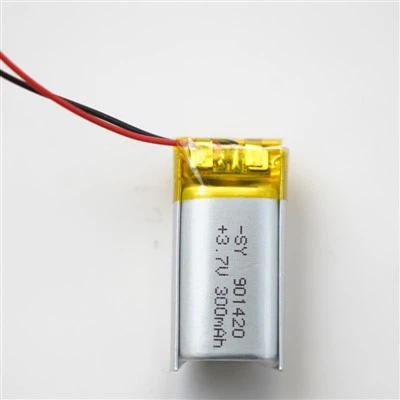
Now, if you’re ready to test the 10 Series for your smartwatch project, or just have more questions about form factors, capacity, or safety specs, reach out. We can send samples, walk through customization options, and help you figure out if it’s the right fit for your design. Don’t wait until you’re mid-prototype and realize your battery isn’t working—hit us up early, and we’ll make it happen.
50 Series Battery References
- Lithium-Ion Battery Association. (2023). Energy Density Standards for Consumer Wearables.
- UL LLC. (2022). UL 1642: Standard for Safety of Lithium Batteries.
- Journal of Power Sources. (2021). Thin-Film Lithium-Ion Batteries for Ultra-Slim Smartwatches.
- Consumer Technology Association. (2023). Smartwatch Battery Performance Benchmark Report.
Hubei Shuoyue Electronics Technology Co., Ltd.
As one of the most professional 10 series battery manufacturers and suppliers in China, we also support custom service. Please feel free to wholesale bulk cheap 10 series battery from our factory. For price consultation, contact us.
Address: Hubei Shuoyue Industrial Park Management Co., Ltd., No. 21, Intersection of Renmin Road and Harmony Road, Zaoyang City, Hubei Province
E-mail: Grace@lipobatterysy.com
WebSite: https://www.hbsy-battery.com/
