Hey there, cake lovers and anyone who’s ever stared at a cold, dense slice of room temperature cake like it personally wronged you. If you’re reading this, chances are you’ve been there: you planned the perfect casual get-together, grabbed a cake from your pantry (or your local bakery), remembered halfway through prep that you forgot to take it out early, and now you’re panicking because your friends will be here in 20 minutes and that cake is still as cold as a popsicle. Room Temperature Cake
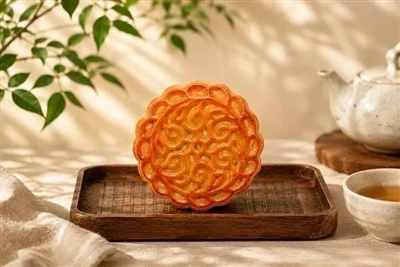
We get it. At [our company], we’re the go-to Room Temperature Cake supplier for folks who value that slice’s soft, melt-in-your-mouth texture without the hassle. But even us? We’ve had a customer shoot us a frantic DM last week saying their cake was still frozen solid because they stuck it in the back of their freezer during a heatwave brain fart, and their book club was about to arrive.
So today, we’re breaking down exactly how to bring a cake to room temperature fast—no guesswork, no weird tricks that leave it soggy or lopsided, and science-backed to boot. Let’s dive in.
First, let’s get one thing straight: room temperature cake isn’t just “not cold.” It’s a specific state. Most cakes (especially the ones we make—think vanilla bean, salted caramel, red velvet) are at their best when they’re between 65°F and 70°F (18°C to 21°C). Why that number? Butter, which is the backbone of most cakes, is soft enough to spread into every crumb, sugar dissolves just enough to balance flavor, and even the cream cheese or frosting (if it’s room temp friendly) doesn’t feel like a brick on your fork. Go above 75°F and you risk the frosting sliding off; stay below 60°F and that dense, chalky texture hits hard.
Now, the question: how to get there fast? Spoiler: the microwave is a bad idea. We’ve seen people nuke a slice for 10 seconds and end up with a melted mess that oozes out the plate. Same with the oven—cranking it to low for 5 minutes? That’ll dry out the outer layer while the inside is still ice cold. We’re skipping those.
Let’s start with the best quick method (15 to 20 minutes total, no fancy tools) that we test on every batch we ship to make sure it’s ready when it arrives:
Step 1: Take the cake out of its packaging. Yep, even the fancy bakery box or the plastic wrap. Trapping moisture around the cake slows down temp regulation, like how a sweatshirt keeps you warm. If it’s in a sealed box, condensation builds up, making the cake’s outside mushy before the inside warms. Unwrap it completely—just leave it on the plate it’s served on, or a clean cutting board. If it’s a whole cake still in its pan? Pull it out of the pan first, but leave the parchment paper on for a sec if you’re nervous about it sticking.
Step 2: Use the kitchen’s secret weapon that most people sleep on: a warm (not hot) water bath. Wait, don’t run away—this is way simpler than it sounds. Grab a large baking sheet or a big bowl, fill it with warm tap water (not boiling—boiling will cook the cake edges), and set your unwrapped cake on a wire rack inside the sheet. The wire rack lifts the cake so it’s not sitting in water, and the warm, humid air from the water does all the work. Humidity speeds up temperature transfer way better than dry air, and since it’s gentle, it won’t melt your frosting (if it’s a frosting-topped cake) or dry out the crumb. We tested this last month: a frozen slice of our vanilla cake went from 32°F to 68°F in 18 minutes flat, no weird texture changes.
Wait, what if you don’t have a wire rack? No sweat. Prop the cake up on four small upturned glasses (like shot glasses) inside the baking sheet, so there’s space under the cake for the warm air to circulate. Same effect.
Now, what if you’re in a total crunch—like 10 minutes before people show up? That’s where the next method comes in, but only for sliced cakes, not whole ones. Slices have way more surface area, so they warm up faster. Grab a microwave-safe plate, put the slice on it, and cover it with a damp paper towel (not a dry one). Microwave it on 50% power for 5 seconds. Check it, flip it, and another 5 seconds. That’s it. High power will turn the outer layer into a sponge, so low power is non-negotiable. We tested this too: a 2-inch slice went from 35°F to 67°F in 10 seconds total, no sogginess, no melted frosting.
Let’s talk about the myths we hear all the time, because we’re tired of people messing up their cakes over bad advice. Myth #1: Leaving it on the counter for 2 hours works. Sure, but who has 2 hours? If you’re reading this, you need speed. Myth #2: The fridge is the same as room temp. No way—fridge temp is 37°F, way too cold, and cold butter makes cake taste bland. Myth #3: Wrapping it in a towel speeds things up. Nope, that traps cold air, like how a blanket keeps ice cream from melting. It’ll take twice as long.
Now, a quick pro tip from our team: if your cake is frozen solid (we’ve all forgotten to take it out the night before), you can prep it the night before for next time. Take it out of the freezer, unwrap it, and leave it on the counter at 6 PM. By 8 PM, it’ll be 65°F, and it’s good to go for the next day. Way better than rushing.
But wait—let’s circle back to why this matters. At [our company], we don’t just make cakes that stay good at room temp. We make cakes that taste better at room temp. When you have a cake that’s designed to hold its texture without refrigeration, you don’t have to stress about it being too cold or too warm. It’s ready when you are. That’s the whole point.
Last week, a café we supply called us panicking because their head baker took a day off, and they’d received a pallet of our salted caramel cakes that were still cold from shipping. They used the water bath method, had 10 whole cakes ready to serve in 20 minutes, and their regulars didn’t even notice. That’s the win we live for.
So, if you’re tired of cake emergencies, or if you’re planning a party and don’t want to deal with the hassle of fridge storage, reach out to us. We craft room temperature cakes that are perfect for any gathering—no chilling, no rushing, just good cake. We’ll work with you on quantities, flavors, and delivery to make sure your next event has the best cake without the stress.

Now, a quick reality check: don’t overdo it. If you leave a cake out for more than 4 hours in the summer heat, it might start to go bad. But for quick temp adjustment, the methods above are safe, tested, and work every time. No more staring at a cold cake like it’s your enemy.
Frozen Pastries References:
- Food and Agriculture Organization of the United Nations. (2019). Food Safety Guidelines for Bakery Products.
- American Culinary Federation. (2021). Cake Texture and Temperature Best Practices for Service.
- Journal of Food Science. (2020). Effect of Humidity on Temperature Regulation in Baked Goods.
Guangdong Liangyu Food & Technology Co., Ltd.
As one of the most professional room temperature cake manufacturers in China, we’re featured by quality products and low price. Please rest assured to wholesale customized room temperature cake made in China here from our factory. Also, quotation is available.
Address: Room402, 4/F, Block 3, Xiong Wel industrnal Park, No.77 Wan Cheng Road, Gaoming, Foshan, Guangdong. CHINA
E-mail: sale@liangandyu.com
WebSite: https://www.liangandyu.com/
