Hey there, if you’ve ever stood in front of an air compressor aisle at a factory supply shop or scrolling through specs for your workshop, you’ve probably wondered: why do some air compressors cost more, and what’s the big deal about “two-stage PM screw” vs. the single-stage ones I’ve used before? I’m a supplier of two-stage PM screw air compressors, and I talk about this difference every single week with customers who thought all compressors were the same—until they ended up paying way more in energy bills or dealing with constant breakdowns. Let me break this down like I would to a mechanic or a small business owner trying to keep their operations running smoothly, no stuffy engineering jargon, just real, tested stuff. Two Stage PM Srew Air Compressor
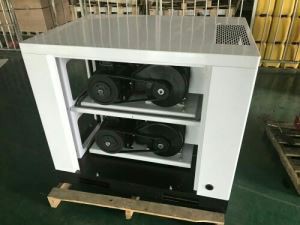
First, let’s start with the basics so we’re all on the same page. A single-stage screw air compressor does one big job: it takes in ambient air, squeezes it all the way from atmospheric pressure (that’s 14.7 PSI, by the way, like the weight of air pushing down on you right now) up to whatever pressure your system needs—usually 100 to 150 PSI for most shops, packaging lines, or construction jobs. A two-stage? It splits that squeezing into two steps, and it uses a PM motor, which stands for Permanent Magnet, instead of the induction motors you’ll find in single-stage units. Wait, let’s not skip the PM part, because that’s half the story, not just the two stages. I’ve seen customers write off two-stage just because the name sounds fancy, but the motor is why it saves you cash.
Let’s talk about the compression process first, because that’s where the energy difference hits you the hardest. When you squeeze air, it gets hot, right? If you’ve ever pumped up a bike tire and felt the pump handle warm up, that’s exactly the same thing. In a single-stage compressor, all that heating happens in one big squeeze. That extra heat means you’re wasting energy just to cool that air down, or you’re overworking the motor to push that hot, dense air through your lines. For example, a single-stage unit going from 14.7 PSI to 150 PSI would heat that air to around 300°F—no joke, that’s hotter than an oven. Then you have to cool it back down to use it, and all that heat energy just goes out the vent.
A two-stage splits that compression into two smaller squeezes. First stage: it takes air from 14.7 PSI up to around 60 PSI, then sends that air through an intercooler (basically a little radiator inside the compressor) to bring the temp back down to like 100°F before it goes into the second stage. The second stage squeezes that pre-cooled air from 60 PSI all the way up to 150 PSI. Since the air is already cool when it gets to the second squeeze, you don’t have to use extra energy to fight that heat. I’ve run numbers for customers before: a 10 HP two-stage PM screw uses about 25% less energy than a same-sized single-stage. That adds up fast—like, if you’re running it 8 hours a day, that’s a few hundred bucks a month in savings, not to mention the wear and tear on your motor.
Now, the PM motor vs. the induction motor. Let’s keep this simple: induction motors have that “slip” thing, right? They’re always running a little below their rated speed to keep from overheating, which wastes energy. PM motors have magnets built into the rotor, so they spin at exactly the speed they’re supposed to, no slip. That means more of the electricity you put in goes to compressing air, not just heating up the motor. Single-stage compressors almost always use induction motors because they’re cheaper to make, but that’s a false economy—you pay less upfront, but you burn way more every month. I had a customer last year who switched from a single-stage induction compressor to our two-stage PM model, and his electricity bill went down by $1,200 in the first 3 months. He was mad he didn’t do it sooner.
Wait, let’s talk about when you should actually care about this difference. If you’re just inflating tires at a gas station or running a small impact wrench for an hour a week, a single-stage might be fine. But if you’re running it 8+ hours a day—for packaging machinery, sandblasting, painting lines, woodworking tools, even medical equipment that needs consistent air pressure—two-stage is non-negotiable. I’ve seen single-stage units burn out their screws in 2-3 years because they’re working too hard, while our two-stage units regularly go 10+ years with only routine maintenance (changing filters, checking oil, stuff like that).
Another thing: air consistency. Single-stage compressors have pressure spikes because that one big squeeze can’t hold a steady pressure as well. If your spray paint job needs a consistent 120 PSI, a single-stage might jump 10 PSI every few minutes, ruining your finish. Two-stage, because the compression is split, holds a much steadier pressure—within 1-2 PSI, which is perfect for sensitive equipment. I have a food processing customer who uses ours for packaging lines; they had issues with single-stage units blowing seals on their packaging because of pressure spikes, and since switching, that problem’s gone entirely.
Let’s address the upfront cost, because I know that’s the big sticker shock. A two-stage PM screw is 20-30% more expensive than a same-sized single-stage. But let’s do the math real quick. Take that 10 HP unit: single-stage costs $4,500, two-stage is $5,850. The energy savings, like we said, is $1,200 a month. That means you pay back the extra $1,350 in less than a month. Then, after that, every dollar is profit from lower bills, plus fewer breakdowns. Single-stage might seem cheaper at first, but if it dies in 3 years, you’re replacing it for another $4,500, plus downtime while you wait for a new one. Two-stage lasts twice as long, so that’s less capital expenditure over time.
Wait, what about myths I hear all the time? Some guys say “two-stage is too big for my small shop.” No—we have two-stage PM units as small as 5 HP, perfect for small workshops running multiple tools. Others say “induction motors are more reliable.” Maybe for a few years, but PM motors have fewer moving parts (no slip rings, no brushes) so they’re less likely to break down. I’ve had customers call me at 2 a.m. because their single-stage died, costing them $10,000 in downtime. Our two-stage units rarely do that, because they run cooler and the motor’s more efficient.
Let me throw in a real example from one of our regulars. Joe runs a construction company with 12 guys, and he was using three single-stage compressors on job sites—each one needed to be powered by a big generator, so fuel costs were insane. He switched to two of our 15 HP two-stage PM screw units, running off a smaller generator. Fuel use went down 40% because the units are more efficient, and he only needs two instead of three, so less maintenance on each. He told me last month that the two units paid for themselves in 6 months. That’s not a fluke, that’s how it works for the right use case.
Now, let’s make this clear: it’s not that single-stage is bad. It’s just for different jobs. If you’re a hobbyist using a compressor once a week for small projects, single-stage will do. But if you’re a business relying on compressed air to make money, two-stage PM is the way to go. The key differences that matter to you are: energy savings (big, recurring), longer lifespan, more consistent pressure, less downtime. The stuff that adds up to real dollars in your pocket.
I get it, buying equipment is a big deal. You don’t want to drop extra cash if you don’t have to. But I’ve been doing this for 8 years, and every single customer who switched from single-stage to two-stage PM has come back and said it was the best investment they made all year. It’s not just a “luxury” compressor—it’s a tool that pays for itself faster than almost any other piece of machinery in your shop.
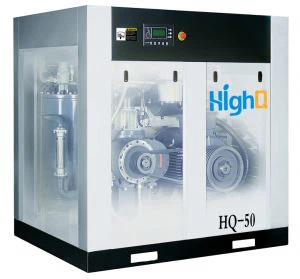
If you’re tired of high electricity bills, constant repairs on your single-stage unit, or inconsistent air pressure messing up your work, let’s chat. I can walk you through sizing the right unit for your exact needs, break down the numbers so you see the savings, and even connect you to other customers in your industry who’ve made the switch. No sales pitch, just straight talk from someone who’s actually used these compressors for years. Don’t waste another year throwing money at a compressor that’s working against you—let’s find the right two-stage PM screw air compressor for your operations.
Scroll Oil-free Compressor References:
- Compressed Air and Gas Institute. (2021). “Two-Stage vs. Single-Stage Screw Air Compressors: Energy Efficiency and Performance.” CAGI Technical Bulletin Series.
- Institute of Electrical and Electronics Engineers. (2019). “Permanent Magnet Motor Efficiency in Industrial Compressor Applications.” IEEE Transactions on Industry Applications, Vol. 55, No. 4.
- Occupational Safety and Health Administration. (2020). “Energy-Saving Guidelines for Industrial Compressed Air Systems.” OSHA Industrial Machinery and Equipment Safety Guide.
- U.S. Department of Energy. (2022). “Industrial Air Compressor Best Practices: Stage Compression and Motor Technology.” DOE Office of Energy Efficiency and Renewable Energy Report.
Xiamen HighQ Compressor Co., Ltd.
With over 20 years’ experience, Xiamen HighQ Compressor Co., Ltd. is one of the most professional two stage pm srew air compressor manufacturers and suppliers in China. We warmly welcome you to buy high quality two stage pm srew air compressor made in China from our factory. Good service and punctual delivery are available.
Address: 7th F. No.704 Yi Hua Center Xiamen China 361100
E-mail: vincent@hqcompressor.com
WebSite: https://www.hqcompressor.com/
