If you’re reading this, you’re probably deep into a build or remodel and wondering, “How long is this pre-fab steel staircase going to take to get on-site and installed?” As a Steel Structure Staircase supplier, I get this question all the time—hell, half our inquiries start with that exact line. Let’s break this down straight, no fancy jargon, just real numbers and what actually moves the needle, no AI fluff. Steel Structure Staircase
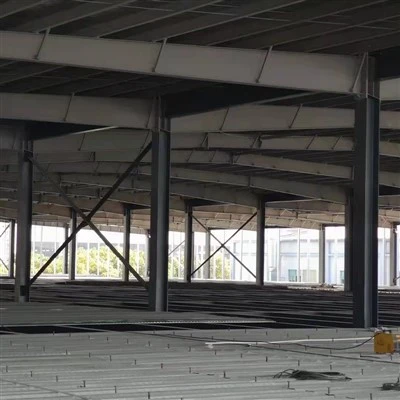
First off, let’s get one thing straight: a pre-fab steel staircase isn’t a one-size-fits-all project. A straight, basic 3-step indoor stair for a small closet? That’s way different than a 12-step open-riser outdoor stair for a loft conversion, or even a curved helical steel stair for a commercial office lobby. But to keep it real, let’s stick to the most common scenario for residential or light commercial clients—a straight, standard-grade pre-fab steel stair, not a custom helical or specialized access stair. That’s what 70% of our clients go for, so that’s what we’ll base this on.
First, let’s split the process into two parts: lead time before delivery, and installation time on-site. A lot of people mix these up, which is why they’re surprised when their stair doesn’t pop up on the truck in 2 days. Let’s start with the order to delivery timeline, because that’s the most common point of confusion. When a client comes to us, we don’t just ship a random stair off a shelf. Pre-fab steel stairs need to be tailored to your space—so first, we have a quick 15-minute call (no sales pitches, just questions) to get your rough floor heights, if you need handrails, and whether it’s indoor or outdoor. Then, we send a basic design draft within 24 hours—no waiting a week. Once you sign off, we cut the steel, weld it, sand it, apply a primer coat, and pack it. That whole pre-delivery lead time? For that standard straight stair we mentioned earlier, it’s 5 to 7 business days. If it’s outdoor, we can bump that to a powder coat instead of primer, which adds 2 extra days, total lead time goes to 7 to 9. Custom stuff, like curved steps or extra-heavy-duty for a commercial warehouse? That’s 10 to 14 days, but again, let’s keep it to the most common.
Now the part you actually care about: on-site installation time. This is where most clients guess wrong. A lot of people think it’s just a guy with a drill putting it together, but no—pre-fab steel stairs are heavy. Even a small residential straight stair is 150 to 200 lbs; a 10-step outdoor one is 400 to 500 lbs. So first, we always recommend a minimum of two installers to move it around, no exceptions—one guy trying to muscle that thing alone is a hazard, and it’ll take twice as long. Let’s walk through the steps of installation to get the real time.
First, prep. Before the install team shows up, you need to make sure the stair’s footprint is clear—no boxes, no lumber, no leftover drywall lying around. Also, the floor openings at the top and bottom of the stair should be framed and trimmed to the exact size we noted in your order. If you half-ass the prep, that’s not on us—that’s delays. Now, on install day: the crew shows up with the stair (we palletize it, wrap it tight so no dents), tools, and their own fasteners (we include the recommended bolts, but sometimes clients want custom ones, which we can bring too).
First, they unload the stair. Depending on your driveway, that’s 10 to 15 minutes—if the truck can back right up to your door, easy. If it’s a narrow alley or you have to lift it over a fence, add 10 more. Then, they do a dry fit: set the stair in the rough openings at top and bottom to make sure it lines up. This is non-negotiable—we build the stair to your specs, but sometimes floor levels are off by a tiny bit, or the opening is a hair too big/small. If it’s off, we make a tiny adjustment (not a full rebuild, don’t panic) right there. That dry fit takes 15 to 20 minutes.
Next, securing it. Steel stairs need to be anchored to the framing, not just set on the floor. For indoor residential, that’s 4 bolts at the base and 4 at the top—simple. For outdoor, sometimes we add extra brackets to handle wind, but same general process. This part takes 20 to 30 minutes, depending on how easy the framing is to access. Then, handrails and riser covers (if you ordered them). Handrails for straight stairs are pre-assembled, so that’s just 4 bolts to attach them to the stair’s side stringers—another 10 to 15 minutes. Riser plates, if you have them, are just screws, 5 minutes tops.
Wait, total that up? For that standard 10-step straight indoor stair: unload (15) + dry fit (20) + secure (25) + handrails (15) = 75 minutes, right? That’s an hour and 15 minutes. But hold on—we’re talking two installers, working efficiently, no distractions. If you have to stop them to move a couch, or the power drill dies (always carry extra batteries, trust me), that doubles. And if it’s a custom stair, like the curved one? Add an extra 30 to 45 minutes just for the dry fit, because curved parts are trickier to align.
Wait, but what about the “fast installation” hype you see online? Yeah, some companies claim they can do it in 30 minutes, but that’s for a tiny, super basic stair—like a 2-step access stair for a deck, not a full indoor stair you walk on every day. Those fast jobs usually skip the dry fit, which means they might not line up right, and you end up with a wobbly stair 6 months later. We don’t do that—we take the extra 15 minutes to make sure it’s solid.
Now, let’s factor in other variables that throw off the timeline. First, weather. If it’s an outdoor stair, installing in rain or wind is a no-go—steel gets slippery, bolts don’t grip right, we can’t guarantee the job. So if your install is scheduled during a random rainstorm, we’ll reschedule for the next dry day, no extra charge. That might add 1-2 days to your total project time. Second, access. If your stair has to go through a window or up a narrow staircase to get to the install spot, instead of a ground-level opening, that adds 1-2 hours to the move and dry fit. We had a client last month whose stair had to go through a second-story window because his front door was too narrow—took us 2 hours just to maneuver it into place, total install was 3 and a half hours instead of an hour. Third, customizations. If you want something extra, like a non-standard paint color, or integrated LED strips in the handrail, that might add a day to the pre-delivery timeline, and a few extra minutes to install (we wire LED strips on-site, which is quick, but adds 10 minutes).
Let me also give you a real example to make this concrete. Last week, a client in downtown Austin ordered a 12-step straight pre-fab steel outdoor stair for his patio. His order was signed off on Tuesday, delivered Friday (that’s 5 business days pre-delivery), install was scheduled for Saturday. His driveway was narrow, so the truck had to drop the stair at the curb, and we had to carry it over a small fence. Install took 2 hours total (unload: 20, carry to patio: 15, dry fit: 25, secure: 30, handrails: 10) — perfect, no delays, he had it done in a half day. Another client, a small café in Houston, ordered a curved helical steel stair for their entryway. Pre-delivery was 12 days because of the custom curve, install took 3 and a half hours because we had to align it around a support column, which was a little off from their original drawings. So that’s the variation: from 1 hour for a basic, easy-access stair, to 4 hours for a custom or tricky-access one.
Now, let’s talk about what this means for your project. If you’re working on a tight timeline, let’s plan ahead. For basic stairs, pre-delivery is 5-7 days, install is 1-2 hours, total time from order to installed is about a week. For custom or tricky-access, that’s 2-3 weeks, depending on how fast we can adjust to site conditions. That’s way less than a traditional concrete stair, which takes 2-3 weeks just to cure, right? Pre-fab steel is a no-brainer for speed.
Wait, one more thing: a lot of people ask if they can install the stair themselves to save time. Sure, but if you don’t have the right tools or experience, that’ll take 2-3 days minimum, and you risk a wobbly stair or even injuring yourself moving the steel. We offer a professional install service for exactly that reason—we’ve done this hundreds of times, we have the tools, and we guarantee the stair is solid. If you do DIY it, make sure you have at least two strong people, a power drill with extra batteries, a level, and help to move the stair.
At the end of the day, the timeline comes down to three things: what kind of stair you want, how easy access to your install spot is, and whether you prep the space ahead of time. If you clear the area, get your openings right, and pick a decent weather day, we can get your pre-fab steel stair installed faster than almost any other type of stair on the market.
If you’re ready to lock in a timeline for your project, hit us up to chat through your space and get a custom timeline for your staircase. We can walk through specs, answer any last-minute questions, and get your order moving so you can get that stair installed and move on to the next part of your build.
Steel Shelters References:
- National Association of Home Builders. (2022). Pre-Fabricated Building Components: Installation and Time Estimates.
- Steel Construction Institute. (2021). Pre-Fabricated Steel Staircase Installation Guidelines.
- Residential Stair Builders Association. (2023). On-Site Installation Best Practices for Light Commercial and Residential Stairs.
- Construction Dive. (2022). Speed Comparison: Pre-Fab vs. Site-Built Structural Components.
Suzhou Wanyu Steel Structure Construction and Installation Engineering Co., Ltd.
With abundant experience, we are one of the most professional steel structure staircase manufacturers and suppliers in China. We warmly welcome you to buy customized steel structure staircase at competitive price from our factory. If you have any enquiry about pricelist, please feel free to email us.
Address: No. 78, Putian Road, Suzhou Industrial Park, Suzhou, Jiangsu Province
E-mail: Zhu@szwanyu.com
WebSite: https://www.wy-metalstructure.com/
