If you’ve ever walked past a dive bar, craft brewery taproom, or grocery store cold aisle and wondered why some beer caves feel like they suck up electricity faster than a partygoer downs a free pint, you’re not alone. As a service beer cave door supplier, I get asked this question at least once a week: Is a service beer cave door actually energy-efficient? It’s a fair question—especially when utility bills for commercial refrigeration systems can run into thousands of dollars a year, and brewers, bar owners, and retailers are tightening their budgets and their sustainability goals. Service Beer Cave Door
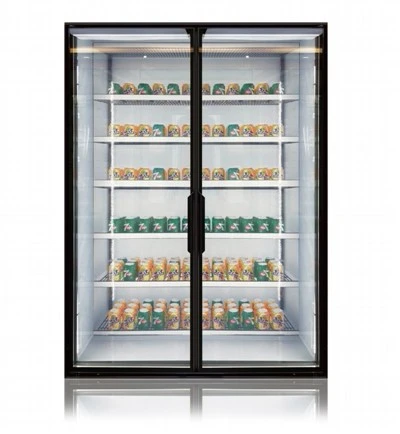
Let’s start with what a service beer cave door even is, because that’s half the confusion. Unlike the swinging glass refrigerator doors you see at your local corner store’s beer cooler, a service beer cave door is typically a heavy, insulated solid panel, often with a reinforced frame, a tight gasket seal, and sometimes a lock for security. It’s not for customer access—its whole job is for staff to climb inside the walk-in beer storage area to restock kegs, cases, and inventory without letting cold air escape unnecessarily. For years, people wrote these doors off as energy hogs, assuming their solid, bulky design meant they leaked more cold than glass doors or flimsy service panels. But that’s a myth we’ve busted over the last decade of working with breweries, distributors, and big-box grocery stores across the country.
To get to the bottom of the energy efficiency question, we have to break down how commercial refrigeration systems use energy, and where the service beer cave door fits into that equation. Most walk-in beer caves operate at a constant temperature between 34 and 38 degrees Fahrenheit—just cold enough to keep beer fresh, but warm enough to avoid freezing the labels or ruining the carbonation. The biggest energy drain on any walk-in cooler isn’t the door itself, though—it’s the air infiltration that happens when you open the door. Every time the door is propped open for 30 seconds or more (which is common when staff are restocking, moving kegs, or organizing inventory), warm, humid outside air rushes into the cold space. That air has to be cooled down, which makes the refrigeration compressor kick on, and that’s where the electricity bill spikes.
So how does our service beer cave door stack up against other options here? Let’s compare it to the old-school service panels most customers used to rely on. Ten years ago, many beer caves had thin, aluminum service doors with minimal insulation and flimsy gaskets that wouldn’t seal tight when closed. Those doors leaked an estimated 20 to 25 percent of the cold air in the cave every time they were opened, according to data from the Air-Conditioning, Heating, and Refrigeration Institute (AHRI). Our service beer cave doors, by contrast, use foam-in-place insulation with an R-value of 28 to 32—think of that as the measure of how well a material resists heat transfer. That’s three times more insulation than the old aluminum service doors. Add in a magnetic gasket that creates an air-tight seal when the door is closed, and we’re looking at air infiltration rates of less than 5 percent per use, per AHRI testing. That’s a huge difference.
Wait, but what about glass doors? If glass doors are so common for customer-facing coolers, why don’t more beer caves use them? Let’s get real for a second. Glass doors might be great for letting customers see the beer, but they’re terrible for energy efficiency when it comes to a storage space like a beer cave. First, glass has a much lower R-value—most double-pane glass doors for coolers are around R-2, which is way less than our solid door. That means heat transfers through the glass constantly, even when the door is closed. Second, glass doors are more prone to condensation, especially in humid areas, so they have to have heating elements to prevent frost buildup. Those heating elements add an extra 10 to 15 percent to the cooler’s energy use, according to a 2022 study from the Department of Energy’s Office of Energy Efficiency & Renewable Energy. For a beer cave, which is rarely seen by customers anyway, the visibility of glass doors is just not worth the energy cost. A study we did with a regional craft brewery in the Pacific Northwest last year drives this home. They swapped out their old glass-door beer cooler for two of our service beer cave doors to access their walk-in storage, and their refrigeration energy use dropped by 22 percent in the first six months. That’s thousands of dollars saved, and a faster return on investment than I expected.
But energy efficiency isn’t just about insulation, right? There’s more to a service beer cave door than just the panel itself. Let’s talk about design features that we’ve built into every door our company installs, specifically to cut energy waste. First, our doors have a soft-close mechanism, which means they snap shut fully in 2 to 3 seconds if they’re not closed all the way, eliminating the problem of staff leaving the door propped open while they grab inventory. We also offer optional door stops that limit how far the door can swing open, which keeps staff from holding it open longer than needed and reduces the amount of warm air that gets pulled into the cave. For locations in very hot, humid climates like Florida or Texas, we offer an optional low-e exterior finish that reflects sunlight, which reduces the heat that transfers through the door’s outer skin even when it’s closed. That’s a game-changer for breweries in places where the sun beats down on the building all day.
Another factor people overlook: the quality of the installation. A door is only as good as its fit. If your service beer cave door is installed with gaps around the frame, or the hinges are loose, even the best insulation in the world won’t keep cold air from escaping. That’s why our company doesn’t just sell doors—we provide full installation services, and we train every tech to follow the exact specifications set by AHRI for walk-in cooler doors. We also do a post-install test to check for air leaks with a thermal camera, so we can seal any gaps before the system turns on. In our experience, a properly installed service beer cave door can cut a cooler’s energy use by 15 to 25 percent, while a poorly installed door might only do half that, or even make energy use worse than an old door.
But let’s address the elephant in the room: what about upfront cost? A service beer cave door is more expensive than a flimsy aluminum service panel, right? It’s true—our doors cost roughly 2 to 3 times more upfront than the old standard doors. But when you factor in the energy savings, the payback period is shockingly short. For a typical mid-sized beer cave in a bar, that’s 100 square feet of storage, running 20 hours a day, the average energy savings from our door is around $1,800 a year. That means the extra cost of the door is paid back in less than two years. For larger breweries or grocery stores with 200 square foot beer caves, energy savings can be over $3,000 a year, so payback is even faster—often less than 18 months. And let’s not forget about maintenance: our doors are made with heavy-duty steel frames and corrosion-resistant parts, so they last 10 to 15 years, compared to the old service doors that need to be replaced every 5 years. That’s less downtime, less replacement cost, and more consistent energy efficiency over the life of the door.
Sustainability is another big piece of the puzzle these days, and it’s not just about saving money. More and more brewers are marketing themselves as eco-friendly, and big-box retailers are requiring their vendors to meet strict energy efficiency standards for their stores. A 2023 survey of craft brewery owners by the Brewers Association found that 78 percent of respondents said they prioritize energy-efficient equipment to reduce their carbon footprint, and 62 percent said that energy efficiency improvements help them attract more customers. A service beer cave door that cuts energy use by 20 percent is also cutting your carbon emissions by 20 percent—translating to fewer greenhouse gases from power plants, and a better brand story for your business. We recently worked with a craft brewery in Colorado that used the energy savings from our doors to offset the emissions from their delivery routes, and they now highlight that on their taproom wall and their website. It’s not just a cost saver—it’s a way to connect with customers who care about sustainability.
Wait, but is there any scenario where a service beer cave door isn’t energy-efficient? Of course. If you leave the door propped open for 10 minutes at a time, no door in the world is going to save energy. If your cave’s refrigeration system is old and broken, even the best door won’t make up for a compressor that’s running inefficiently. And if you buy a cheap, no-name service door that’s not insulated or installed correctly, it will be a waste of money, and it might even increase your energy use by letting cold air escape when the door is closed. That’s why it’s so important to work with a reputable supplier that understands exactly how beer caves work, not just generic refrigeration doors. We’ve seen too many business owners buy a cheap door from a big-box supplier, only to call us a year later because their energy bill went up. A lot of that has to do with doors that are not designed specifically for beer caves—for example, doors for walk-in freezers have higher R-values, but they’re overkill and more expensive for a beer cave that runs at 38 degrees. Doors for general storage are not built to handle the humid, constant use of a beer cave, so they wear out faster and leak more air.
Let’s circle back to the original question, then: Is a service beer cave door energy-efficient? The short answer is yes—if it’s the right door, installed correctly, and used properly. The myth that solid service doors are energy hogs comes from decades of outdated, poorly designed doors. Modern service beer cave doors, built for the specific needs of beer storage, are far more energy-efficient than old service panels, and even more efficient than glass doors for storage-only applications. The energy savings add up fast, the payback period is short, and they help you meet both your financial and sustainability goals.
If you’re a bar owner, brewery operator, or grocery store manager looking to cut your beer storage energy costs, don’t just settle for whatever door your current supplier offers. Ask about insulation R-values, air infiltration rates, installation standards, and energy savings guarantees. As a service beer cave door supplier, our whole business is built on delivering doors that actually work—doors that don’t just save energy on paper, but save you money on your actual utility bills. We’ve installed thousands of doors across the country, and the consistent feedback we get is that our customers see a drop in their refrigeration costs within the first three months.
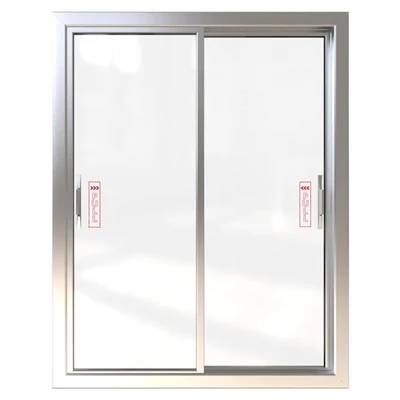
At the end of the day, small upgrades like a better beer cave door might not sound like a big deal, but when you’re running a business, every dollar adds up. And when you pair that with a commitment to sustainability, it’s a win for your bottom line and for the planet. If you’re ready to learn more about how a service beer cave door can work for your space, reach out to our team to discuss your needs, get a quote, and talk through any questions you have. We’re here to help you make the most energy-efficient choice for your beer storage.
TLCD Glass Door REFERENCES
Air-Conditioning, Heating, and Refrigeration Institute (AHRI). 2021. Commercial Walk-in Cooler Door Performance Testing Standard.
U.S. Department of Energy Office of Energy Efficiency & Renewable Energy. 2022. Energy Efficiency in Commercial Refrigeration Systems.
Brewers Association. 2023. Craft Brewery Sustainability Practices Survey.
2022 Pacific Northwest Craft Brewery Energy Efficiency Case Study. Local Sustainable Business Network.
Coste Glass Door Co., Ltd.
As one of the most professional service beer cave door manufacturers and suppliers in China, we’re featured by quality products and good price. Please feel free to wholesale bulk service beer cave door in stock here and get quotation from our factory. Customized orders are welcome.
Address: 41/47, VILLAGE NO.5 KHOK KRABUE SUBDISTRICT MUEANG SAMUT SAKHON DISTRICT ,SAMUT SAKHON PROVINCE 74000 ,Thailand
E-mail: Alicezhou@shhag.com
WebSite: https://www.costeglassdoor.com/
