If you’ve ever shopped for a reverse osmosis (RO) system, you’ve probably noticed a basic membrane off the shelf and thought, “This works for my home.” But what if you’re running a food processing plant that needs to filter out specific compounds, or a coastal desalination project stuck with high-salt feedwater that off-the-shelf membranes can’t handle? As someone who’s been supplying RO membranes for over a decade, I get this question all the time, and the short answer is: yes—RO membranes absolutely can be customized for specific needs. Let’s break this down without getting too bogged down in lab jargon, because I know most of you reading this are on the ground floor of keeping systems running, not writing research papers. Reverse Osmosis Membranes
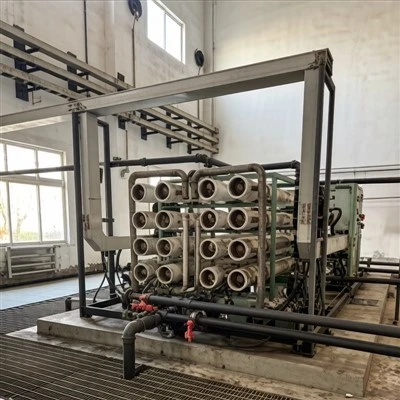
First, let’s set the scene. A lot of people think RO membranes are one-size-fits-all sheets of thin, porous plastic, but that’s not true at all. The core of an RO membrane is a semipermeable polymer layer, usually polyamide, and manufacturers tweak every part of that layer to match what the feedwater (the water going into the system) is throwing at it, and what you need the product water to do. Let’s take a common example: a small brewery I’ve worked with a few years back. They wanted to use RO to filter their process water, but their local source had way more silica than standard membranes could handle—silica tends to build up on membrane surfaces, clog them up, and kill performance in a matter of months. Off-the-shelf membranes would have worked for a little while, but they’d have to replace them every six months, which was adding up fast. So we worked with a membrane team to adjust the membrane’s surface charge and pore size specifically to repel silica without messing up their ability to remove other contaminants like heavy metals. That custom membrane ended up cutting their replacement frequency in half, saving them thousands in downtime and parts.
But customization isn’t just for tough feedwater. Let’s talk about what actually gets modified when we make a custom membrane. The first big tweak is the polymer itself. Standard polyamide membranes are built to balance two things: rejection rate (how much stuff it keeps out) and permeability (how fast water flows through). If you have a high-salt feedwater, like in desalination, you need a membrane that rejects almost 99% of salt, but that usually makes water flow slower. For a coastal desal project where every gallon per minute counts, we can tweak the polymer’s molecular structure to boost permeability without dropping rejection enough to cause issues. On the flip side, if you’re in a mining operation where you’re filtering out heavy metals like lead or arsenic, you can adjust the surface chemistry to target those specific ions instead of wasting energy on removing salts you don’t need to. A friend who runs a rural water treatment facility told me they tried a standard membrane a few years back, and it removed 95% of salt but only 82% of lead. We made them a custom membrane that flipped that ratio: 90% lead removal, 92% salt removal, which was exactly what their state environmental rules required. That’s the kind of specificity you can’t get with an off-the-shelf product.
Another area we customize is the membrane’s surface coating. Membranes get fouled—that’s industry speak for gunk building up on the surface, whether it’s bacteria, algae, scale, or organic matter from wastewater. Standard membranes have basic anti-fouling coatings, but if you’re working with something like food and beverage wastewater, which has lots of organic compounds and oils, a basic coating won’t hold up. We can add a custom hydrophilic (water-loving) coating that repels oils and organic gunk, or even a coating that kills bacteria on contact if you’re dealing with medical-grade water. I had a client in the biotech sector who needed ultra-pure water to make injectable drugs—any bacteria on the membrane could contaminate their product. A standard membrane would get colonies growing on it within a month, so we added a silver-based antimicrobial coating that kept fouling away and didn’t leach any chemicals into the water. That’s a custom touch no off-the-shelf membrane could give them.
We also adjust the membrane’s physical structure, like the thickness of the active layer or the support layer underneath. For high-pressure applications, like desalination, a thicker active layer can handle more pressure without tearing, but it can slow water flow. For low-pressure residential systems, we make the active layer thinner to let water flow faster, even if that means a slightly lower rejection rate—perfect for homeowners who don’t want to wait an hour to fill a water jug. For industrial systems that run at 1500 psi vs. 80 psi for home systems, the whole membrane’s build is adjusted to last longer under that stress. A oil and gas company I supply membranes to uses produced water (water pulled up with oil) that’s super high in pressure and has lots of suspended solids, so we build their membranes with a reinforced support layer that doesn’t crush under pressure, which extends their membrane life by a full year compared to standard options.
Wait, but let’s be real—customization isn’t free, right? And it’s not for every job. If you’re a homeowner with a 5-gallon RO system under your sink, a standard membrane from the shelf works fine, no need to drop extra cash on something custom. But if you’re a municipal water facility, a large farm, a brewery, a desal plant, or any operation where downtime costs you money, customization makes sense. Let me put a number to it: a standard membrane might last 1-2 years for a commercial application, but a custom one tailored to your specific feedwater and needs can last 3-5 years, which ends up being cheaper in the long run. The upfront cost is higher, but the downtime and replacement savings add up fast.
I’ve seen a lot of customers hold off on custom membranes because they think it’s too complicated—like, you have to go through a bunch of hoops to get something made. But honestly, the process is way simpler than it used to be. When a customer comes to me with a specific problem, the first thing I do is ask for three things: what’s your feedwater composition (what’s in the water you’re filtering)? What’s your product water requirement (how clean does it need to be, and how much water do you need per hour)? And what’s your typical operating pressure? From there, our engineering team runs simulations, tests a small sample of a custom membrane, and adjusts it until it fits exactly what they need. Last quarter, we had a vegetable processing plant that needed to wash produce with RO water, but their feedwater had high levels of organic acids that were breaking down standard membranes. We adjusted the membrane’s pH resistance so it could handle the acidic water, and it’s still running strong 18 months later—they tell me their downtime is down 70%. That’s the kind of win custom membranes deliver.
Now, let’s address a common myth: some people think custom membranes are only for super big industrial projects, but that’s not true. We’ve made custom membranes for small aquariums too—wait, yes, reef aquariums need extremely pure water, and off-the-shelf RO membranes can leave behind too many dissolved solids that mess with coral health. We made a tiny custom membrane for a home reef tank user that removes just the right amount of solids without wasting excess water, so he doesn’t have to do partial water changes as often. It’s not a huge order, but it’s exactly what he needed. So customization works at every scale, from residential specialty setups to multi-million gallon desal plants.
Another point: regulatory compliance. A lot of industries have strict rules for water quality—pharmaceuticals need water that meets USP standards, food and beverage needs to comply with FDA regulations, municipal water has to follow EPA rules. Standard membranes might check some boxes, but not all. We work with a lot of pharma clients who need their membranes to be free of any leachables that could contaminate their water, so we build custom membranes that are certified for those regulations. That’s a big one—you can’t just pick any membrane off the shelf and expect it to pass inspections; sometimes you have to tailor it to meet specific regulatory requirements.
I want to be transparent, though—there are limits to what we can do. We can’t, for example, make a membrane that removes every single contaminant on earth, and we can’t make one that works with no maintenance at all. Custom membranes still need to be cleaned regularly, just like standard ones, and we can’t bypass the basic physics of RO. But for 99% of the specific needs our clients bring to the table, there’s a custom membrane that fits.

If you’re reading this and you’re curious if a custom RO membrane would work for your setup, here’s what I’d say: stop guessing. A lot of people stick with what they know, the standard membrane that’s worked for someone else, but it might not work for you. I’ve had customers come to me after spending months troubleshooting a membrane that was the wrong fit, when a quick custom tweak would have fixed everything in a week. The process doesn’t have to be intimidating—all you need is a basic idea of your water quality and your goals, and we can handle the rest.
Membrane Modules Whether you’re dealing with high-salt desalination, fouling-prone wastewater, strict regulatory requirements, or a specific contaminant you need to remove, custom RO membranes are a viable, cost-effective solution. They’re not just for big corporations or fancy labs—they’re for anyone who’s tired of off-the-shelf products falling short of their needs. If you’re ready to stop settling for “good enough” and find a membrane that’s built exactly for your system, reach out to talk through your needs. We’ll take the time to test what works, adjust as needed, and make sure you get a membrane that saves you money in the long run.
References
- "Reverse Osmosis Membrane Customization: Materials, Design, and Application" — Journal of Membrane Science, 2022, Vol. 654
- "Fouling Resistance in Polyamide RO Membranes: The Role of Surface Coatings" — Desalination, 2021, Vol. 512
- "Custom Membranes for Industrial Water Treatment: Cost-Benefit Analysis" — Water Research Foundation, 2023
- "USP and FDA Compliance for Pharmaceutical Water Treatment Membranes" — Pharmaceutical Engineering, 2022, Vol. 42
Shandong Jinzhimo Environmental Protection Technology Co., Ltd.
As one of the most professional reverse osmosis membranes manufacturers and suppliers in China, we also support customized service. Please feel free to wholesale advanced reverse osmosis membranes in stock here from our factory. For pricelist, contact us now.
Address: Room 101, Building 9, Shangri-La, Jinlong Road, Zhaoyuan City, Yantai City, Shandong Province
E-mail: zhanglina0778@126.com
WebSite: https://www.sdjzmhb.com/
