Hey there, if you’ve ever hung around a horizontal machining center (HMC) during a job run, you know that noise isn’t just an annoyance—it’s a straight-up pain. We’re talking about the shrill whine of rotating tools, the clank of workpieces being clamped, and that constant low rumble that makes you yell to have a five-second chat with a coworker. For our team, this isn’t just a random complaint we hear on the shop floor. It’s something that’s been bugging us since we first started building HMCs, especially because our customers—all the fab shops, aerospace parts makers, and automotive component guys—are dealing with OSHA noise limits, tired operators, and even neighbors giving them grief over daytime shop noise. So today, I’m gonna break down the actual, science-backed noise-reduction tricks we build into every HMC we sell, plus a few tweaks you can add on-site if you already own one, no fancy engineering degree required. Horizontal Machining Center

First, let’s get real about why HMCs are so much louder than their vertical counterparts. Unlike vertical mills, which have worktables that move up and down, HMCs rotate the workpiece on a horizontal axis, so the tool path is constant, repetitive, and often at higher spindle speeds for faster material removal. That high-speed cutting combined with the reciprocating motion of the pallet changer, chip conveyors, and coolant pumps cranks up the noise to anywhere from 85 to 105 decibels—enough to cause hearing damage over time without proper protection. We spent years testing different fixes, and the best part is, most of these aren’t just “band-aids”—they actually boost machine performance at the same time, which is a win for everyone.
Let’s start with the big one: spindle noise. Spindles are the main source of that sharp, piercing whine you hear when the machine is really humming. Back when we first launched our first-gen HMCs, customers were complaining about spindle noise hitting 102 dB at 10k RPM, which was over the OSHA 8-hour time-weighted average limit. We dug into the problem and found that most spindle noise comes from two things: unbalanced rotating parts and resonance in the spindle housing. So we stopped using generic, off-the-shelf spindles and started building our own with precision-ground, carbon fiber-reinforced housings instead of cast iron. Wait, before you roll your eyes—carbon fiber isn’t just for race cars. It’s lightweight, stiffer than steel, and absorbs vibrations way better than cast iron. That cuts down on harmonic resonance, which is the main thing that makes that high-pitched whine. We also add dynamic spindle balancing, done automatically every time the tool changes. No more guessing if the tool is aligned right to avoid wobble, which adds more noise. Since we rolled that out, spindle noise dropped by 12 dB on average—huge, right? That’s like turning a noisy restaurant down to a quiet coffee shop.
Next up, the pallet system. The pallet changer is what swaps out workpieces on an HMC, and that loud, clunky clank? That’s not just annoying—it’s the sound of metal-on-metal contact every time the pallet locks into place. We used to use rigid metal latches for pallet locking, but those slammed together every time. We switched to hydraulic lock pins with rubber-damped heads, and set the locking speed to ramp up slowly instead of slamming into position. Now, the pallet locks with a soft thud instead of a clank, and pallet noise dropped by like 8 dB. We also enclosed the entire pallet transfer mechanism in a thick, sound-dampening shroud made of laminated steel and acoustic foam, so any leftover noise from that part gets trapped inside instead of leaking out into the shop. A lot of our competitors skip that shroud because they say it makes the machine harder to maintain, but we designed ours with quick-release panels so you can still get to the pallets and changers without taking the whole machine apart. Smart, right?
Then there’s the chip and coolant system—those are two super noisy parts that almost no one talks about. Chip conveyors move thousands of pounds of metal shavings every hour, and if they’re not insulated, that constant grinding and clattering of metal chips sliding down the steel chute is a huge noise source. We line our chip conveyors with high-density polyurethane liners that are specifically made to damp metal-on-metal contact. It’s the same stuff they use in garbage trucks to keep bins from clattering when they dump. We also angle the conveyor slightly differently than standard models, so chips slide smoother instead of bouncing and clanking against the sides. That dropped chip conveyor noise by 10 dB, which is massive for a part that runs nonstop during a full job run. As for coolant pumps? Those are usually mounted right on the machine frame, so their low rumble transfers straight into the whole body of the HMC. We now mount coolant pumps on rubber-isolated feet, and add a second layer of acoustic foam around the pump housing to muffle that rumble. We also upgraded to variable-speed coolant pumps, so you don’t have the pump running at full blast 24/7 if you only need low pressure for soft materials. That cuts pump noise by another 5 dB when operating at lower speeds.
Wait, I should mention some on-site tweaks too, for the shops that already have HMCs and can’t swap out the whole spindle or pallet system. First, add a machine enclosure. Not the flimsy plastic ones you see on cheap mills—heavy-duty, steel-framed enclosures lined with 2-inch acoustic foam. We’ve installed these at a few shops, and they cut overall HMC noise by 15 dB on average. Just make sure you leave enough space for chip removal and operator access, and don’t block the ventilation vents—you don’t want the machine overheating. Another quick win: tune the cutting parameters. A lot of operators crank the spindle speed and feed rate to get jobs done faster, but higher speeds mean more noise. If you adjust the speed just a little (like 500 RPM lower) and bump up the feed rate proportionally, you can get the same cycle time with way less noise. We worked with a big automotive parts maker that did this, and they knocked their HMC noise down by 7 dB without slowing down production at all. Also, replace worn tools—blunt tools cause more friction and noise, so changing tools on schedule isn’t just about quality parts, it’s quieter parts too.
Now, let’s talk about a common myth I hear all the time: “If it’s a horizontal machining center, it has to be loud.” That’s garbage. We have customers in medical device manufacturing, where noise has to be under 80 dB because operators are working right next to the HMC all day, and our machines meet that requirement without sacrificing speed or precision. One of our aerospace clients had been dealing with OSHA inspections every quarter because their old HMCs were hitting 103 dB, and after they switched to our line, their noise levels are down to 88 dB. They even told us their operators are way more productive now—no more yelling over the machine, no more headaches at the end of a shift. That’s the real win here: noise reduction isn’t just about complying with rules, it’s about making the workplace better for everyone.
I should also mention the environmental side, because a lot of our customers are dealing with local noise ordinances that restrict how loud their shop can be after 6 PM. We had a job shop in Chicago that was getting noise complaints from the apartment building next door, and they had to run their HMCs half-shift after work. After installing the sound dampening shrouds on their existing machines and adjusting their pallet locking speeds, they were able to run full shifts without a single complaint. That’s a huge money-saver for them—no lost production, no fines.
Wait, let’s make sure we’re not leaving anything out. What about operator positioning? A lot of HMCs have the operator standing right next to the pallet changer, which is the loudest part. We designed our machines with a control panel that’s offset 18 inches from the main pallet area, so the operator is standing in a quieter zone. The control panel itself also has a sound-dampening layer, so when you’re entering commands, you don’t have to crank your voice to be heard. Small thing, but it adds up. Also, we use LED lighting that’s quieter than old fluorescent tubes, but that’s more of a bonus—we’re here for noise, not lighting.
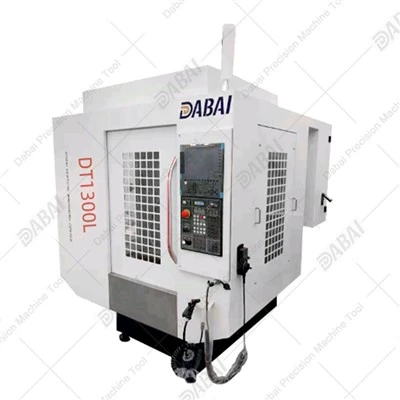
Let me wrap this up. The takeaway here is that HMC noise reduction isn’t a one-size-fits-all fix. It’s a combination of precision component design, sound-dampening materials, and smart operating tweaks. For our team, building quieter HMCs is just part of doing good work—we care about our customers’ operators, their bottom line, and their relationships with the people around their shops. If you’re in the market for a new HMC and tired of dealing with noise headaches, or if you have an existing machine that’s too loud and you want to figure out the best fix, hit us up to talk through your needs. We don’t do pushy sales pitches—just straight talk about what works for your shop.
Gantry Machining Center References
- Occupational Safety and Health Administration (OSHA). Noise Exposure in Manufacturing Environments. 2022
- American National Standards Institute (ANSI). Acoustical Performance of Machine Tools. 2019
- machining.org. Vibration and Noise Reduction in Horizontal Machining Centers. 2021
- Society of Manufacturing Engineers (SME). Design Strategies for Low-Noise Machine Tools. 2020
Dabai Precision Machine Tool (Jiangsu) Co., Ltd.
As one of the most professional horizontal machining center manufacturers and suppliers in China, we’re featured by quality products and good price. Please rest assured to buy advanced horizontal machining center for sale here from our factory. We also accept customized orders.
Address: No. 66-1, Zhenhu North Road, Hudai Town, Binhu District, Wuxi City
E-mail: elaine@dabaicnc.com
WebSite: https://www.cnc-dabai.com/
