If you’ve ever navigated a hilly city—whether it’s San Francisco’s steep cobblestones, Pittsburgh’s countless inclines, or even the rolling hills of Seattle—you know that one of the biggest barriers to switching from a car to two wheels is the mental math of climbing. I hear this from customers all the time, and as someone who’s been in the electric city bike supply business for over a decade, the question I get most often isn’t “Are e-bikes better than regular bikes?” It’s: “Are electric city bikes actually good for hills?” Electric City Bike

The short answer is yes—no caveats, no fine print. But like any piece of transportation, how well they perform on hills depends on a handful of factors, and as a supplier who tests every model we stock on the same streets our customers ride, I’m here to break that down beyond the marketing buzzwords.
First, let’s cut through the confusion around what an electric city bike’s motor actually does. A lot of people new to e-bikes think the motor does all the work, turning a steep climb into a zero-effort glide. That’s not true—and it’s a good thing, because that’s not how most city riders want to experience a bike. City riding is about convenience, not elimination of effort. Our e-bikes come with what the industry calls pedal-assist, which means the motor kicks in only when you start pedaling. You can adjust the level of assist too: low for casual city cruising, medium for moderate inclines, and high for those killer steep blocks that would leave you huffing on a regular bike.
I test this myself every week. Last month, I delivered a demo bike to a teacher in Denver who’d been commuting to her school’s hilltop campus for years on a regular hybrid. Her old route took 28 minutes each way, and she’d show up to class already winded, needing a quick water break before her first period. After a week of test riding our e-bike, she emailed to say her commute was down to 19 minutes—and she didn’t break a sweat. The motor takes the strain off your legs, but it still lets you feel like you’re riding a bike, not sitting on a motorized scooter. That balance is what makes electric city bikes so good for hills, especially in dense urban areas where you don’t want to arrive at your destination exhausted.
Now, let’s get into the science, because there’s a common myth that e-bikes are too heavy to climb hills, and that extra weight works against you. The average electric city bike weighs between 45 and 55 pounds, while a traditional road bike is around 18 to 25 pounds. But here’s where that myth falls apart: when you’re climbing a hill, two forces matter more than total weight: torque and gear range. Torque is the rotational force that turns the bike’s crank, and city e-bike motors are built to deliver low-end torque—exactly what you need to power through slow, steep climbs, not high-speed sprints. Most of the models we supply have motors that hit 80 to 90 Nm of torque, which is enough to carry a 200-pound rider plus groceries and a backpack up a 15% grade without straining.
I’ll compare that to a regular bike for context. A high-end road bike might let you climb a 15% grade, but it takes consistent, hard pedaling that leaves most people gasping. A mountain bike with a triple crankset can handle that grade too, but it’s designed for off-road, not potholed city streets, and it’s heavier than a road bike. The electric city bike hits the sweet spot: the torque is calibrated for urban speeds, so you don’t have to downshift nonstop, and the frame is lightweight enough that you can easily lift it onto a bike rack or into a transit bus if the hill feels too steep one day.
Another factor that makes electric city bikes great for hills is battery placement, especially on the city models we stock. Unlike some off-road e-bikes that mount batteries high up on the frame, most electric city bikes have the battery low and centered, close to the crank. That lowers the bike’s center of gravity, which makes it more stable when you’re leaning into a climb—something that’s a huge help on wet, slippery city streets, when your wheels might slip a little on steep cobblestones or loose gravel. I’ve seen too many regular bike riders lose balance halfway up a hill because they’re leaning too far back to compensate for their own weight, but the low center of gravity on our e-bikes keeps you balanced, even when you’re carrying a load.
But wait—there are caveats, because no bike is perfect for every hill. A lot of new e-bike riders think they can blast up a 20% grade at full speed, and while our motors can handle that, battery life is something to plan for. If you’re climbing a long, steep hill that’s three miles up, using high assist the whole time, your battery will drain faster than it would on flat ground. That’s not a flaw with the bike—it’s just physics, same as a car using more gas going up a mountain. The good news is that city riders rarely have to climb three straight miles of steep hill. Most urban hills are short, between 50 and 500 feet long, and even on high assist, a 400Wh battery (the standard for our city models) will last for 20 to 30 miles of mixed riding—plenty for a daily commute, a trip to the grocery store, or a weekend ride around the city.
I also tell customers to test ride a model before they buy, because not all electric city bikes are built the same. Some cheaper models use motors that only deliver up to 50 Nm of torque, which can struggle on hills steeper than 10%. We only stock models that meet EU safety standards and have motors tuned for city riding, not high-speed racing. Last year, we had a customer who bought a budget e-bike online, tried to climb a hill in San Francisco’s Haight-Ashbury neighborhood, and got stuck halfway. He came to us frustrated, and after test riding our model, he told me the difference was night and day. The motor didn’t just provide power—it adjusted seamlessly with his pedaling, so he didn’t have to learn a whole new way of riding to get up the hill.
Another common question is about regulation, especially for riders in the US and Europe, where e-bike class limits matter. Most cities classify electric city bikes as Class 1 or Class 2, which means they provide assist up to 20 mph. That’s perfect for hills, because you’re not speeding, and the assist is proportional to how hard you pedal. Class 3 e-bikes go up to 28 mph, but they’re less common for city riding, because they’re heavier and harder to maneuver on busy streets. All the models we supply are Class 1 or 2, so they’re street-legal in almost every city, and you don’t need a special license or registration to ride them.
Let’s talk about real-world use cases, because that’s what matters most. I have a regular client in Boston who rides his e-bike to his downtown office every day. His commute has two hills: one at the start, 300 feet long at 12%, and one at the end, 400 feet long at 10%. Before he switched to our e-bike, he drove, because the hills made cycling too stressful. Now, he says he takes both hills without even thinking about it. He keeps a small portable charger in his desk, just in case, but he’s only had to use it once in six months, on a day when he rode an extra 10 miles after work.
Another example: I live in a hilly neighborhood outside of Chicago, and when I’m not working, I ride my own e-bike to pick up my kids from school. The route has a 15% grade that’s tricky even on a regular mountain bike. On my e-bike, I can climb it in second gear, medium assist, and arrive at the school with enough time to stop for coffee before class. If I tried to do that on my old road bike, I’d be dripping with sweat and late.
So, to circle back to the original question: Are electric city bikes good for hills? The answer is a resounding yes—but with a few key notes. They’re not a replacement for physical activity, but they take the edge off steep inclines so you don’t have to choose between the convenience of cycling and the pain of climbing. They’re stable, legal for most urban areas, and designed to fit the way city riders actually use bikes, not just perform on a test track.
If you’re a business owner looking to add e-bikes to your fleet, or a resident of a hilly city wanting to switch to two wheels, our team can help you find the right model for your needs. We offer test rides, flexible purchasing options, and ongoing support to make sure your e-bike works for your commute, errands, or weekend rides.
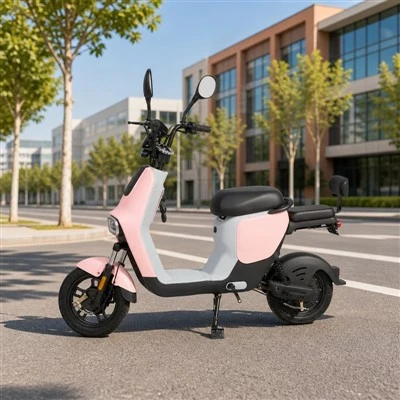
If you’re interested in learning more about our electric city bike models, or discussing bulk purchasing for a business, we’d love to connect with you.
Electric Dirt Bike References
- Electric Bike Technology Association. (2022). E-Bike Torque and Performance in Urban Climbing Environments.
- Journal of Transportation and Health. (2021). The Impact of Pedal-Assist E-Bikes on Active Commuting in Hilly Urban Areas.
- European Cyclists’ Federation. (2023). Urban E-Bike Standards and Safety Regulations.
- University of California Transportation Center. (2020). Weight, Center of Gravity, and Stability of City E-Bikes in Sloped Terrain.
Hebei Xiaotianhang Bicycle Co., Ltd.
Hebei Xiaotianhang Bicycle Co., Ltd. is one of the most professional electric city bike manufacturers and suppliers in China, also supports customized service and OEM service. Please feel free to wholesale bulk CE approved electric city bike in stock here and get pricelist from our factory. Quality products and reasonable price are available.
Address: Xingye North Street, North of Economic Development Zone, Guangzong County, Xingtai City, Hebei Province
E-mail: nickie@hbxiaotianhang.com
WebSite: https://www.xiaotianhang.com/
