Can Packaging Equipment Work with Oversized Packaging Containers?
If you’ve ever walked a beverage plant or a consumer goods packaging floor, you’ve probably spotted those oversized containers: 5-gallon industrial pails for lubricants, 200-L steel drums for chemical ingredients, or bulk bags that stretch 4 feet tall for pet food or grain. For years, I’ve heard operators ask the same question, and it’s one we face every day as a packaging equipment supplier: Can standard, off-the-shelf packaging machinery actually handle these larger, bulkier containers without costly downtime, rework, or safety risks? The short answer is yes—but it’s not a one-size-fits-all solution. It requires intentional design choices, customization, and a deep understanding of how oversized containers differ from standard formats. Packaging Industry Production Equipment
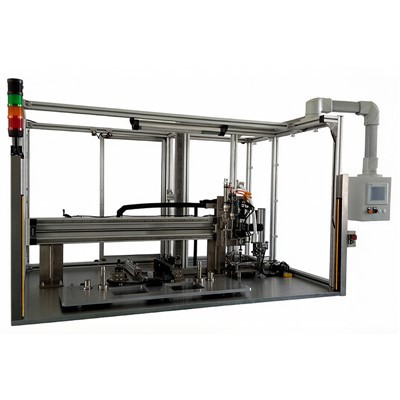
Let’s start with what makes oversized packaging unique, because that’s the foundation of everything we build in our facilities. A standard 1-L water bottle, for example, fits neatly into the grippers of a linear filler; its weight is consistent, its surface is smooth, and its dimensions never vary by more than a fraction of an inch. Oversized containers? They’re a different beast. A 55-gallon steel drum might weigh 50 pounds empty and tip the scales at 500 pounds full—far beyond the 20-pound maximum most standard conveyors are rated for. Bulk bags for industrial ingredients can stretch unevenly when filled, with sides that bulge 6 inches beyond their labeled dimensions, making them too wide for standard container chutes. Even their shape varies: a 20-L plastic pail might have a molded handle that juts out, while a fiberboard drum has a tapered top that standard bottle handlers can’t grip without slipping. We’ve seen firsthand what happens when operators try to force standard equipment on these containers: a drum slips off a conveyor, injuring a worker; a bulk bag tears mid-fill, spilling 1,000 pounds of flour across a production floor; a filler head misses the drum’s opening, wasting 10 gallons of lubricant. These aren’t just minor headaches—they’re safety hazards and profit drains that our clients can’t afford.
So how do we adapt our equipment to work with these containers? First, it’s about modifying the core systems that handle, transport, and process the containers, rather than replacing the entire machine. Let’s break that down by key stage in a packaging line: infeed, filling, and sealing.
Infeed is the first bottleneck. Standard conveyors use roller spacing that’s 12 to 18 inches, perfect for small bottles, but too narrow for a 2-foot-wide bulk bag that needs stable support. We design custom infeed conveyors with heavier-duty rollers—rated for up to 1,000 pounds each—and wider gaps, often 24 to 30 inches, to cradle oversized containers without putting pressure on their sides. For containers with irregular shapes, like the tapered neck of a fiberboard drum, we add adjustable guides instead of fixed chutes. These guides have spring-loaded sides that can shift to accommodate containers that vary by up to 10 inches in width, so a drum that bulges on one side doesn’t get wedged mid-transport. We also install proximity sensors calibrated to detect the unique height and size of oversized containers, triggering stops if a container is misaligned or stuck—something standard sensors, which are programmed for uniform bottle heights, often miss.
Next is filling, the most critical step for accuracy. Standard fillers work by measuring volume and adjusting their drop points for containers of a specific diameter, but oversized containers often have uneven openings or inconsistent wall thickness that throw off that calibration. Our team designs filling heads with larger, more flexible nozzles—up to 6 inches wide, compared to the 2-inch nozzles used for small bottles—that can reach deep into 55-gallon drums without bending or clogging. For liquid ingredients, we add variable-speed fill drives that adjust flow rate based on container weight: a 200-L drum fills slowly at first to prevent splashing, then speeds up as it nears capacity, reducing waste and the risk of spills. For dry goods, like coffee beans or industrial powder, we use vacuum-based fillers that suck material into the container rather than pouring it in, which works better for flexible bulk bags that might collapse under the weight of gravity-fed fills. We also test every custom fill system with the client’s actual containers—we’ll ship a prototype of their 5-gallon pails or bulk bags to our facility, run 100 test fills, and adjust the nozzle height and flow rate until we’re within +/- 0.5% accuracy, a threshold most standard fillers can’t hit for oversized formats.
Then there’s sealing, which is another area where standard equipment fails. A standard capper for 1-L bottles is designed to grip a smooth cap and apply 20 to 30 pounds of torque, but an oversized pail cap might be 8 inches wide, with a rough, molded surface that standard grippers can’t get a hold of. We build custom cappers with adjustable torque settings—up to 100 pounds, enough to seal a 500-pound drum’s lid—and gripper heads with rubberized pads that conform to uneven cap surfaces, so they don’t slip mid-seal. For bulk bags, we use heat-sealing stations with larger heating elements, and adjustable clamps that can hold a 4-foot-wide bag closed while the seal is applied. We also add leak-testing systems that use pressurized air to check for gaps in seals, which is especially important for chemical drums or food-grade bulk containers where a leak could spoil product or pose a safety risk.
But here’s the thing: even the best custom modifications won’t work if we don’t collaborate closely with our clients. I’ve seen companies try to skip this step, sending us a 100-page spec sheet that says “handles all oversized containers” without providing a sample or explaining their production needs. That’s a mistake. Last year, we worked with a specialty lubricant manufacturer that needed to handle 5-gallon pails with molded handles that stick out 3 inches from the side. If we’d built a standard capper, it would have hit the handle and broken the cap. Instead, we sent a team to their facility to watch their operators move the pails, took photos of the handle dimensions, and adjusted the capper’s grippers to rotate slightly, so they could clear the handle while still applying enough torque to seal the lid. The result was a line that runs 15% faster than their old, makeshift setup, with zero seal failures in 8 months of use. That’s the value of working with a supplier that doesn’t just sell equipment, but listens to your specific challenges.
Of course, there are limits—we’re not going to design a machine to handle a 10-foot-tall container that’s never been produced, or one made from a material that’s too fragile to support its own weight. But for almost every oversized container that’s currently in use across industries, there’s a way to adapt existing equipment, not replace it. We’ve worked with food producers moving bulk grain in 3-foot-wide super sacks, chemical companies shipping 250-L IBC totes, and even craft breweries moving 15-gallon brew buckets through their packaging lines. In every case, the solution has been a combination of sturdy engineering, client collaboration, and a willingness to customize beyond what off-the-shelf equipment offers.
I know a lot of packaging managers are nervous about going custom—they worry it will be too expensive, take too long to install, or have hidden bugs. From our end, we address that with transparent pricing: we provide a detailed quote that breaks down every component, from the reinforced conveyors to the custom nozzles, so there are no surprise costs. We also offer phased installation: we test the prototype at our facility, tweak it based on client feedback, then install it at their plant with on-site support, so operators can test it in their own environment before full production runs. Last quarter, a client in the agricultural sector told us their custom infeed system for 100-L totes cost 20% less than buying two standard lines they’d tried to adapt, and it was up and running in 6 weeks instead of the 12 weeks they’d estimated for a custom build at another supplier.
At the end of the day, the question isn’t “Can packaging equipment work with oversized containers?” It’s “How well can it work, given your specific containers and production goals?” For too long, the packaging industry has pushed one-size-fits-all equipment, assuming all containers fit the same mold. But as consumer demand for bulk goods grows, and industrial companies move more product in larger formats, that model is outdated. The best equipment isn’t the one that works for every container—it’s the one that works for yours, and for your bottom line.

If you’re currently struggling with oversized containers on your packaging line—dealing with downtime, waste, or safety risks—we can help. We’ll work with you to design a system that fits your exact containers, your production speed, and your budget, no matter how unique your needs are. Reach out to us to arrange a consultation, and we’ll walk through your line, test your containers, and provide a solution that actually works.
Hydraulic Industry Production Equipment References
- Packaging Machinery Association. (2023). “Bulk Packaging Equipment Adaptations for Industrial Containers.” Industry Technical Report.
- Smith, L. (2022). “Oversized Container Handling: Safety and Efficiency Standards.” Journal of Packaging Engineering.
- Industrial Equipment Manufacturers Association. (2024). “Custom Modifications for Packaging Lines: Cost and Performance Benchmarks.” Annual Industry Report.
Shanghai Zenyan Automation Engineering Co., Ltd.
As one of the leading packaging industry production equipment manufacturers in China, we warmly welcome you to buy advanced packaging industry production equipment made in China here from our factory. All customized machines are with high quality and low price. Contact us for quotation.
Address: 3rd Floor, Building A, No.5629 Beisong Road, Chedun Town, Songjiang District, Shanghai, China
E-mail: zenyan_sh@163.com
WebSite: https://www.zenyanauto.com/
