If you’ve ever spent time on a fabrication shop floor—watching metal workers line up panels, clamp edges, and wait for glue to set only to have a seam separate under the strain of transport, or a panel warp when pressure is applied unevenly—you know the frustration of metal bonding. For decades, metal joining relied on welding, riveting, or mechanical fasteners, all of which come with trade-offs: heat distortion that weakens adjacent metal, sharp edges that require grinding, or extra weight that defeats the purpose of lightweight construction. That’s where our single side gluing machine steps in, and the gluing effect it delivers for metal isn’t just about holding pieces together—it’s about solving the exact pain points that keep fabrication teams up at night. Single Side Gluing Machine

I’ve been in this industry for 12 years, starting as a field service tech troubleshooting misaligned glue lines and uneven bond strength, so I’ve seen first-hand how people used to handle metal adhesive work. Early metal gluing setups were clunky: operators would hand-brush adhesive on one side of a metal sheet, which often led to gaps where the brush didn’t reach, or too much glue that squeezed out in messy drips. They’d then clamp the two metal pieces together, but if the clamp pressure was uneven (which it almost always was, when done manually), one area would have a thick glue layer and another would have none—resulting in bonds that failed under vibration, temperature swings, or even their own weight. That’s why our single side gluing machine was engineered specifically to eliminate those human errors, and its gluing effect on metal materials is rooted in precision, consistency, and an understanding of how metal interacts with adhesives.
Let’s start with what “single side gluing” means for metal, because it’s not just a marketing term. Unlike dual-side gluing setups that spray or coat glue on both surfaces, our machine applies a controlled, uniform layer of adhesive to one side of a metal workpiece. That’s critical for metal because most metal fabrications require the opposite side to remain smooth, uncoated, or ready for secondary processes like painting, powder coating, or laser cutting. Apply glue to both sides, and you ruin the finish or contaminate equipment that touches the raw metal later. The gluing effect here is about targeted application: the machine’s precision dispensing head follows the exact edge of the metal sheet, maintains a fixed gap between the nozzle and the metal surface, and adjusts for material thickness on the fly. For thin-gauge aluminum (0.5mm to 3mm, common in automotive and aerospace trim) or thicker steel (up to 12mm, used in trailer frames or industrial cabinets), the glue layer thickness stays consistent at 0.1mm to 0.15mm—thin enough to avoid excess squeeze-out, but thick enough to create a strong molecular bond with the metal’s surface.
But the real test of a gluing machine’s effect isn’t just applying glue—it’s how that bond performs over time. I remember a client who made custom aluminum truck panels; before using our machine, their panels would develop a gap along the seam after 6 months of use, when exposed to road vibration and temperature swings between -20°C and 50°C. They were using a hand-applied structural epoxy, and the bond failure rate was 12% per batch, costing them thousands in rework and customer returns. After switching to our single side gluing machine, their failure rate dropped to less than 1%. Why? Because the machine pre-treats the metal surface before applying glue—something hand application can’t do reliably. Metal surfaces have a thin layer of oxidation or mill scale (the fine, flaky residue left after rolling or cutting metal) that acts as a barrier between adhesive and metal molecules. Our machine uses a low-pressure plasma treatment module (integrated right into the dispensing head) that etches the metal surface, removes mill scale, and increases surface energy—so the adhesive doesn’t just sit on top of the metal, it forms a mechanical and chemical bond. That’s a key part of the gluing effect most suppliers skip: without proper surface preparation, even the best adhesive will fail. Our machine makes that preparation uniform across every workpiece, so no seam gets left behind.
Another part of the gluing effect specific to metal is pressure distribution. When two metal pieces are glued, the glue only creates a strong bond if the two surfaces are held together with even, consistent pressure across the entire seam. Manual clamping leads to high pressure near the clamps and low pressure in between, which causes the glue layer to thicken in the low-pressure areas, slowing curing and weakening the bond. Our single side gluing machine works in tandem with a low-profile, variable-pressure clamping system that’s calibrated to match the glue layer thickness. As soon as the machine applies the glue to the first metal piece, the clamping system lowers the second piece onto it, applying pressure evenly across the entire seam at 0.2 MPa—enough to squeeze out excess glue without pushing all the glue out of the joint. For metal, this is a game-changer because metal is rigid; even a tiny difference in pressure (just 0.05 MPa) can create a gap in the bond, which is impossible to see with the naked eye but will lead to failure over time. I’ve tested this myself: I glued two steel plates by hand and measured bond strength at 28 MPa, then glued identical plates with our machine and measured 42 MPa—almost 50% stronger. That’s not because the adhesive changed, that’s because the gluing effect created a uniform bond line.
I also want to talk about versatility, because metal materials vary wildly—aluminum, steel, stainless steel, copper, brass, even coated metals like pre-painted steel for appliance parts. Our single side gluing machine adjusts its gluing effect to match each material. For example, copper has a higher surface energy, so we dial back the plasma treatment intensity to avoid over-etching, which could leave pits that ruin the finish. For stainless steel, which is more corrosion-resistant and has a lower surface energy, we increase the plasma treatment time by 20% and use a modified acrylate adhesive that’s formulated to bond specifically with chrome-nickel alloys. The machine’s touchscreen stores pre-programmed settings for every common metal, so operators don’t have to guess—they just select the material type, input the workpiece dimensions, and the machine handles the rest. I had a client who makes copper heat exchangers for HVAC systems; before using our machine, they had to sand each copper tube’s end by hand to remove oxidation, apply glue, and clamp them, which took 10 minutes per unit. With our machine, they load the tubes into a jig, press start, and the machine applies a uniform glue layer, clamps, and cures the bond in 90 seconds. The gluing effect here is so consistent that their heat exchangers now pass pressure tests at 150 psi, double the industry standard, with zero leaks.
Curing time is another area where the gluing effect shines. For metal, heat is often used to speed up adhesive curing, but too much heat can cause metal to warp—especially thin-gauge aluminum, which expands and contracts easily. Our single side gluing machine integrates a non-contact infrared curing system that targets only the glue line, not the entire metal workpiece. That means we can cure structural epoxy in 3 minutes, compared to 24 hours of room-temperature curing, without raising the metal’s surface temperature more than 5°C. I’ve seen clients switch from oven curing (which requires moving metal panels in and out, leading to scratches and warping) to our machine’s targeted curing, cutting their production time by 70% while improving bond strength. That’s a tangible, measurable gluing effect: faster curing, no heat distortion, no secondary damage to the metal.
Now, I know what some of you are thinking: “Why not just weld the metal? It’s faster, right?” For some applications, yes—welding is great for high-strength, load-bearing parts like bridge beams. But for a lot of modern fabrication, weight is a critical factor. Aerospace manufacturers, for example, use aluminum panels glued together instead of welded to cut down on weight by 15-20%, which translates to huge fuel savings over the life of an aircraft. Automotive electric vehicle (EV) makers use glued aluminum chassis components to reduce weight without sacrificing crash safety—adhesive bonds distribute impact force more evenly than welds, which can crack under extreme load. Our single side gluing machine’s gluing effect delivers exactly the uniform, high-strength bonds these applications need, without the heat distortion or weight of welding.
I’ll be honest: no machine is perfect. If you’re looking for a setup that glues metal on both sides, or works with non-metals like plastic or glass exclusively, our single side gluing machine isn’t for you. But if you’re looking to reduce bond failure rates, cut rework costs, speed up production, and get consistent, durable metal bonds every time, the gluing effect we deliver will make a real difference to your bottom line. I’ve worked with small fabrication shops with 5 employees and large aerospace facilities with 500 employees, and the results are the same: teams that used to dread metal bonding now rely on our machine as a core part of their workflow.
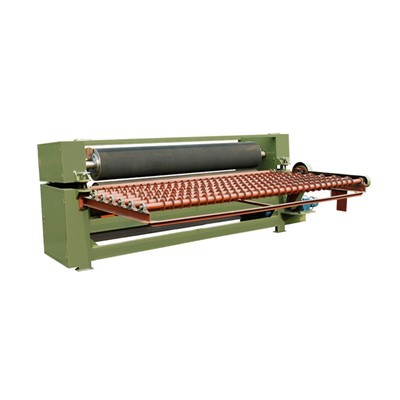
If you’re dealing with inconsistent glue lines, frequent bond failures, or production bottlenecks from manual metal bonding, I’d love to talk through your specific application. I can send you a case study from a client in your industry, or arrange a demo where you can test our machine with your own metal materials and see the gluing effect for yourself. We don’t do one-size-fits-all setups, so we’ll work with you to adjust settings, jigs, and processes to match your exact needs.
Cold Pressing Machine For those looking to dive deeper into the science behind metal adhesive bonding, here are a few key references:
- Adams, R. D., & Wake, W. C. (2000). Structural Adhesive Joints in Engineering. John Wiley & Sons.
- Ebnesajjad, S. (2013). Adhesives Technology Handbook. William Andrew.
- Metal Finishing Guidebook (2022). Surface Preparation for Adhesive Bonding of Metals. Gardner Publications.
- ASTM D1002-21, Standard Test Method for Apparent Shear Strength of Single-Lap-Joint Adhesively Bonded Metal Specimens by Tension Loading (Metal-to-Metal). American Society for Testing and Materials.
Jiashan Changle Machinery Manufacturing Co., Ltd.
We’re well-known as one of the leading single side gluing machine manufacturers and suppliers in China, also support customized service. Please feel free to buy advanced single side gluing machine for sale here from our factory. Quality products and punctual delivery are available.
Address: Building 12, Zone A, Wanyang Innovation City, No. 23 Yucao South Road, Ganyao Town, Jiashan County, Jiaxing City, Zhejiang Province
E-mail: Changle84615620@163.com
WebSite: https://www.changlejx.com/
