If you’ve ever stood beside a robotic arm perfectly welding a car chassis, a CNC mill carving a tiny medical implant, or a solar tracker adjusting its angle to within a fraction of a degree, you’ve witnessed the quiet work of a planetary reducer. As someone who’s supplied planetary reducers to manufacturers across industrial automation, aerospace, and medical device sectors for over a decade, I’ve lost count of how many times I’ve heard this: “My machine was precise enough—until we needed that extra level of accuracy. What changed?” Planetary Reducer
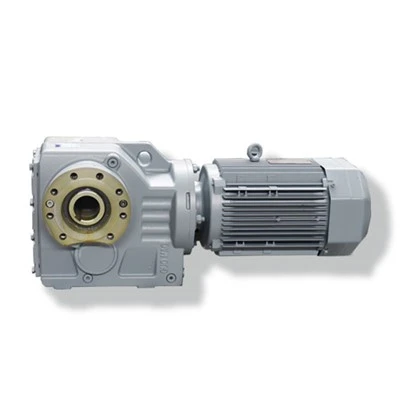
Nearly always, the answer traces back to the planetary reducer. This component sits between a motor and a load, amplifying torque while reducing speed, but its precision doesn’t come standard. Too many buyers assume all reducers are equal, only to end up with erratic movement, positional drift, or premature wear that derails their high-precision operations. Over the years, I’ve worked with engineers to refine their setup, and today I’m breaking down exactly how to achieve consistent, high-precision performance with a planetary reducer—no guesswork, no oversights.
First, let’s get one thing clear: precision in planetary reducers isn’t a single number. It’s a combination of three metrics that make or break performance. There’s backlash, the gap between mating gear teeth that lets a load move even when the motor reverses. Backlash for high-precision applications needs to sit at 1 arcminute or less—for context, that’s roughly the width of a human hair seen from 10 feet away, and enough to ruin a 0.5mm laser cut if unaccounted for. Then there’s backlash repeatability, or how consistently backlash occurs across thousands of operating cycles. A reducer with good nominal backlash but poor repeatability will never hit the same position twice, no matter how well your motor is calibrated. Finally, there’s torsional stiffness: the ability of the reducer’s gears and housing to resist twisting under load. Too little stiffness, and a heavy load will flex the reducer, leading to positional error mid-operation.
Many buyers skip the foundation: selecting the right reducer type for their application, not just the one with the lowest price. For high-precision work, two designs dominate: inline planetary reducers and right-angle planetary reducers, but their use cases are not interchangeable. Inline reducers have a simpler, coaxial design, making them stiffer and easier to calibrate for high accuracy in applications like 3D printer gantries or coordinate measuring machines (CMMs) where alignment is straightforward. Right-angle reducers, while more space-efficient for compact robotic wrists, require precision-machined bevel gears to avoid angular error at the 90-degree junction. I once worked with a small medical device manufacturer that tried to cut costs by using a standard right-angle reducer for a surgical robot’s end effector. The angular misalignment at the gear junction caused a 2mm error in tool positioning, leading to a batch of faulty knee implants. After switching to a precision-machined right-angle reducer designed for sub-0.5 arcminutes of angular backlash, they eliminated the error entirely.
Once you have the right reducer, the next step is to address the biggest hidden cause of poor precision: improper installation and integration. I’ve seen perfectly good reducers ruined by rushed, mismatched mounting, and it’s almost never the reducer’s fault. The most common mistake? Misalignment between the motor shaft, reducer input shaft, and load output shaft. Even a 0.1mm misalignment—about the thickness of a sheet of paper—can create uneven stress on the reducer’s gears, leading to increased backlash and premature wear. For high-precision setups, we use dial indicators to check shaft runout, and laser alignment tools for larger systems, which can measure misalignment down to 0.001mm. Another mistake is over-tightening coupling bolts. A flexible coupling is designed to absorb minor misalignment, but over-tightening compresses the coupling’s elastomeric insert, robbing it of that ability. We torque coupling bolts to the manufacturer’s specified settings, not just as tight as they’ll go.
Lubrication is another often-overlooked factor that directly impacts precision. Planetary reducers rely on a thin film of oil or grease between gear teeth to reduce friction and wear, but too much lubricant can cause windage loss, where excess oil sloshes around and adds drag to the system. Too little lubricant, and gear teeth grind against each other, leading to increased backlash as wear occurs over time. For high-precision applications, we use synthetic lubricants with consistent viscosity across operating temperatures, which prevents fluctuations in drag that can throw off position feedback. We also perform regular lubricant analysis, checking for metal particles that signal gear wear before it impacts precision. I once had an aerospace customer who ran a satellite antenna’s tracking reducer in a desert environment with extreme temperature swings. They switched to a temperature-stable synthetic grease and extended their precision calibration intervals from every 3 months to every 18 months.
Calibration and feedback integration are where the reducer meets the rest of your system, and this is where many precision gaps are closed. Even the best reducer will have minor residual backlash that your motor’s encoder can’t account for, unless you add a secondary encoder on the reducer’s output shaft. For applications requiring absolute precision—like semiconductor wafer handling, where a 1mm misalignment can destroy a $10,000 wafer—an output encoder creates a closed loop system, where the feedback device corrects for any positional error between the reducer’s output and the desired position. We also work with customers to calibrate the reducer’s backlash in their specific load condition, because backlash changes slightly depending on how much weight is on the output shaft. A 10kg load might result in 0.8 arcminutes of backlash, while a 50kg load on the same reducer could add 0.2 arcminutes, so calibrating for your actual operating load is non-negotiable.
Preventive maintenance is the final piece to sustaining high precision over the life of your reducer. Many manufacturers run their reducers until they fail, then replace them—this works for heavy industry, but not for high-precision work where downtime and error cost far more than proactive maintenance. We recommend a quarterly inspection for critical applications, checking for shaft runout, lubricant condition, and any unusual noise or vibration that could signal gear wear. For reducers operating in harsh environments—like food and beverage processing, where moisture and dust can get into the housing, or robotics, where constant motion creates cyclic stress—we recommend annual disassembly and inspection of the gear set, to measure backlash and torsional stiffness before they drift beyond acceptable limits. I’ve seen a large automotive manufacturer reduce their production line error rate by 40% after switching from reactive replacement of reducers to our scheduled preventive maintenance program, which included precision alignment checks and lubricant top-ups every six months.
Now, let’s talk about common myths that still trip up even experienced engineers. The first is: “Higher gear ratio equals higher precision.” That’s not true. A higher gear ratio amplifies torque, but it can also amplify backlash. A reducer with a 10:1 ratio might have 0.5 arcminutes of backlash, while a 100:1 ratio of the same model could have 2 arcminutes—because the smaller gear teeth in the higher ratio have more play. You have to balance torque requirements with the reducer’s inherent precision at your specific ratio. Another myth: “All planetary reducers have the same backlash rating.” Some suppliers advertise “nominal backlash” under no load, which is not representative of real-world operation. We supply reducers with load-dependent backlash ratings, tested under the exact torque and speed conditions of your application, so you’re not getting a number that only applies on a test bench.
If you’re still struggling with precision issues, here are the first steps I recommend taking: pull the last test data from your reducer’s supplier to confirm the backlash and torsional stiffness ratings match your application’s requirements, check your shaft alignment using a dial indicator, and review your lubricant schedule to make sure it’s matched to your operating environment. For many of our customers, just those three steps have cut their positional error by half.
At the end of the day, achieving high precision with a planetary reducer isn’t about buying the most expensive component on the market—it’s about matching the right reducer to your use case, installing it correctly, maintaining it consistently, and integrating it with a closed-loop feedback system that accounts for real-world conditions. I’ve worked with small startups building medical devices and Fortune 500 companies building industrial robots, and the principle is the same: precision is a system, not a single part.

If you’re ready to upgrade your system’s precision, or need help troubleshooting a persistent error with your current reducer, feel free to reach out for a no-obligation consultation to discuss your exact application requirements. We can review your current setup, help you select a reducer optimized for your needs, and provide guidance on installation and maintenance to ensure you get the high-precision performance you need.
G Series Geared Motor References
- International Organization for Standardization (ISO) 14570:2015, Mechanical drive systems – Planetary gear units – Vocabulary and presentation of performance characteristics
- DIN 3990-4:2019, Gear technology – Strength calculation of cylindrical gears – Part 4: Application to planetary gears
- Robotics Industries Association (RIA) R15.06-2012, Industrial robots and robot systems – Safety requirements
Shandong Guomao Guotai Reducer Co., Ltd.
We are one of the most professional planetary reducer manufacturers and suppliers in China, specialized in providing high quality products and efficient solutions to global clients. Welcome to buy durable planetary reducer for sale here from our factory. For price consultation, contact us.
Address: 55-1 Zhichu Road, Zhifu District, Yantai City, Shandong Province. Shandong Guomao Guotai Gearbox Sales Co., Ltd
E-mail: sales@cnspeedreducer.com
WebSite: https://www.sdguomaoreducer.com/
