When I field calls from new clients at my copper wire rod shop, the first question most ask isn’t about price or lead times—it’s about how to pick the right material for their project. I’ve been supplying copper wire rods for 12 years, and I’ve seen too many small-scale electrical contractors, automotive wiring specialists, and even solar farm installers make costly mistakes by grabbing the first rod that looks right on the shelf. Last year, a residential electrician nearly had to redo a dozen panel upgrades because he used a general-purpose rod for a high-load commercial space; the heat buildup from undersized conductivity would’ve been a fire hazard. That’s why I always stress: choosing the right copper wire rod isn’t just a checkbox for specs—it’s about matching every property to your project’s exact demands. Copper Wire Rod
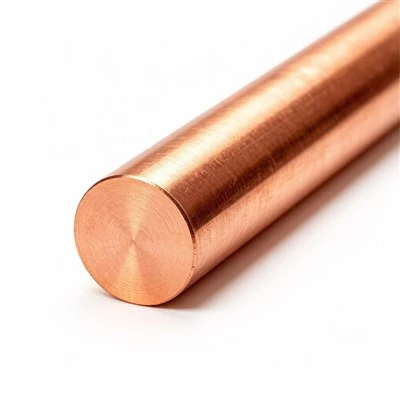
First, you need to start with the core material type, and that boils down to two main categories: oxygen-free copper (OFC) and electrolytic tough pitch (ETP) copper. A lot of folks mix these up, and it’s a critical error. ETP copper, which I offer in 99.9% purity, is the workhorse for most everyday projects—your residential wiring, low-voltage lighting, and basic appliance cords. It’s more malleable, easier to draw into thin wires, and cheaper, which makes it ideal for high-volume, low-stakes work. But here’s the catch: ETP has a small amount of oxygen left in its composition, around 0.05%, which can react with sulfur at high temperatures. That means it’s not the best for extreme environments—like solar inverters that run hot 12 hours a day, or automotive engine wiring that sees sudden spikes in heat from the engine bay.
Oxygen-free copper, on the other hand, is 99.99% pure, with oxygen content under 0.001%. It’s far more resistant to oxidation and high-temperature corrosion, which is why it’s the go-to for critical applications: high-voltage power lines, aerospace wiring, and electric vehicle (EV) battery packs. A few years back, a EV startup came to me because they’d tested a cheaper ETP rod for their power distribution harness and found it lost 8% of its conductivity after 6 months of operation in the car’s engine compartment. Swapping to OFC fixed that, and they’ve been a repeat client ever since. The tradeoff? OFC is 15-20% more expensive than ETP, so you don’t want to use it where it’s unnecessary. For a residential house, paying extra for OFC is just throwing money away; a 100-foot spool of ETP will work just fine and cut your material costs by nearly $50.
Once you’ve locked in the material type, the next step is to match the rod’s diameter and cross-sectional area to your project’s current load. This isn’t a guesswork game—you have to follow the National Electrical Code (NEC) guidelines, but I’ve seen contractors cut corners here all the time. Let’s say you’re running wiring for a 200-amp residential main panel. NEC calls for a 4/0 AWG copper wire, which corresponds to a rod cross-sectional area of 211.6 square millimeters. If you use a smaller rod, like a 3/0 AWG (167.5 mm²), it can’t handle the 200-amp load without overheating. Over time, that heat will degrade the insulation, leading to short circuits, which can destroy appliances or even cause fires. I once had a client who skipped this step for a small office building, using a 1 AWG rod instead of 2/0 AWG for a 150-amp circuit. Within a year, the wiring insulation melted, taking out three office computers and the building’s HVAC unit. That’s a $12,000 mistake, all from picking the wrong diameter. For projects that operate in variable or extreme conditions—like a solar farm in Arizona, where ambient temperatures regularly hit 110°F—you should size the rod even slightly larger than NEC’s minimum to account for heat expansion, which reduces conductivity.
Next, consider the rod’s temper or hardness. Copper wire rods come in three main tempers: soft (annealed), half-hard, and hard. Annealed copper is heated and slowly cooled to make it extremely malleable, perfect for applications where you need to bend or shape the wire repeatedly—like the intricate wiring in consumer electronics, or the loops used in electrical terminals. Half-hard copper is a middle ground; it’s stiffer than annealed but still flexible enough to be bent into frames or structural wiring for things like appliance cords. Hard temper, the stiffest of the three, is used in applications that need rigidity and tensile strength, like overhead power lines, where the wire has to hold its shape across long spans without sagging. I had a telecommunications contractor come to me a few years ago for a fiber optic cable supporting rod—they’d used half-hard copper before, and within a year, the wind in their test area had bent the rods so much that the fiber cables snapped. Swapping to hard temper fixed the sag and breakage issues immediately. The key here: don’t pick a harder temper than you need, because harder copper is less flexible, making it harder to work with and increasing installation time. A small electronics shop that’s soldering small components won’t benefit from hard temper; annealed will let them shape the wire easily and cut their assembly time by hours.
Then there’s the question of surface finish and coating, which most people overlook but can make a huge difference in durability and performance. Uncoated copper rods work great for indoor, low-moisture projects, but if your project is outdoors—like a backyard lighting system, a coastal solar array, or a marine electrical setup—you need a coated rod. Tin plating is the most common coating; it prevents copper from reacting with moisture and salt, which is critical in coastal areas where salt air can cause corrosion that eats through uncoated copper in just a few years. Another option is nickel plating, which is more durable than tin and better for high-wear applications, like wiring in heavy machinery that vibrates constantly. I had a boat repair specialist come to me last year; he’d been using uncoated ETP rod for his marine wiring, and within two years, the saltwater had corroded the copper, leading to a dead engine mid-cruise. Switching to tin-plated OFC rod fixed that, and he hasn’t had a corrosion issue since. For indoor projects, though, coating is unnecessary and adds cost—another $0.15 per foot that you can skip.
You also have to factor in environmental and regulatory requirements, especially for projects in regions with strict safety standards. In the European Union, for example, the RoHS (Restriction of Hazardous Substances) directive prohibits any copper wire rod with lead or other heavy metal additives, so you can’t just grab any rod off the shelf for EU-based projects. I keep a separate inventory of RoHS-compliant rods for my clients in Germany and France, and I make sure to label them clearly, so no one accidentally uses a non-compliant rod. Similarly, for projects in the construction industry, many municipalities require rods that meet ASTM B49 standards, which set purity, tensile strength, and conductivity benchmarks. If you’re working on a public school or hospital project, using a rod that doesn’t meet ASTM B49 can get your entire bid rejected, so it’s a non-negotiable spec to check.
Let’s walk through a real example to tie all this together. A client recently came to me asking for a wire rod for a 500-kilowatt solar farm in central Texas. First, we start with material type: solar inverters run at high temperatures, and Texas has extreme heat, so OFC copper is the right choice, not ETP. Next, diameter: the project needs to handle a 120-amp per string load, which requires a 2/0 AWG rod, sized slightly larger than NEC’s minimum to account for the 110°F ambient temperature, to prevent overheating. Temper: the rods need to be strung across 30-foot spans, so hard temper is needed to prevent sagging. Coating: the site is in a semi-arid area, so uncoated is fine, but we recommend a light tin coating just to protect against occasional dust and moisture. Regulatory checks: the project needs to meet ASTM B49 and RoHS, so I supplied the exact rods that fit both specs. That project’s installation has been running for 18 months with zero issues, and the client has ordered twice as much for a second solar farm nearby.
Now, let’s talk about common pitfalls to avoid. The biggest one I see is overspecifying—using a more expensive or more specialized rod than you need. A lot of contractors assume “better” means OFC or hard temper, but that’s not the case. For a small, low-voltage outdoor LED lighting project, ETP annealed uncoated rod is more than sufficient, and it cuts your material cost by 20% compared to OFC. The other big mistake is undersizing the diameter, which leads to overheating and early failure. I’ve also seen clients pick the wrong temper for bending-intensive projects; using hard temper for a custom appliance cord means you’ll spend twice as much time bending the wire, and it’ll have a higher rate of breakage during installation.
At the end of the day, choosing the right copper wire rod is all about matching each spec to your project’s specific needs, not just picking a random rod from a catalog. If you’re still not sure where to start, I always advise clients to come with a few details: what the project is (residential wiring, EV components, solar, etc.), where it’s located (indoor, outdoor, coastal, extreme heat?), and what load it needs to handle. I’ve spent 12 years working with all kinds of projects, and I can help you narrow down the right rod fast—no guesswork, no fluff, just practical advice based on what works for real-world jobs. Whether you’re a small electrician working on a house or a large contractor putting in a commercial solar array, I’m here to make sure you get the material that fits your project, not the other way around. If you’re ready to talk through your specific needs, get in touch to discuss your project details and find the perfect copper wire rod for your next job.
Connecting Rods References
- ASTM International. (2022). Standard Specification for Copper Wire Rods (ASTM B49-22). West Conshohocken, PA.
- National Electrical Manufacturers Association (NEMA). (2021). Copper Conductors for Electrical Applications. Arlington, VA.
- International Electrotechnical Commission (IEC). (2020). Oxygen-Free Copper for Electrical Purposes (IEC 61235:2020). Geneva, Switzerland.
- Copper Development Association. (2023). Choosing Copper Wire for Automotive and Renewable Energy Projects. New York, NY.
Zhejiang Jintai Copper Industry Co., Ltd.
We are one of the most professional copper wire rod manufacturers and suppliers in China, also support customized service. With abundant experience, we warmly welcome you to wholesale bulk high quality copper wire rod made in China here from our factory. For quotation, contact us now.
Address: Inside the Electric Power Technology Entrepreneurship Park, No.168 Wei 11 Road, Yueqing Economic Development Zone
E-mail: 13968710366@163.com
WebSite: https://www.jintaicopper.com/
