Hey there, spa owners, maintenance folks, and anyone who’s ever spent a weekend floating in a hot tub only to wonder why it smells a little off or stings your eyes—let’s talk about something that’s probably been on your radar but might have a few hidden angles: can a free chlorine analyzer actually work for spa water? Free Chlorine Analyzer

Full transparency first: I sell free chlorine analyzers, so I’m not gonna pretend this is some unbiased, no-skin-in-the-game take. But I’m also the guy who’s spent the last 7 years testing these things in real-world scenarios (not just lab simulations) for everything from backyard hot tubs to small resort spas. I’ve watched a spa owner dump $200 in test strips a month because they were doing it wrong, and I’ve fixed a pool/s combo spa’s chlorine levels that were making half the guests leave with itchy skin. So let’s cut the fluff and get into the nitty-gritty.
First, let’s define what “free chlorine” even is, because if you don’t get this, you’ll never get why an analyzer matters for spas. Free chlorine (FC) is the active, still-working chlorine in your water—this is the stuff that kills bacteria, breaks down gunk from sweat, lotion, or whatever someone brought into the spa. Total chlorine is FC plus combined chlorine (that’s the yucky stuff that causes that “spa smell” and stings eyes). So if you’re checking total chlorine, you’re not seeing the good stuff. That’s where free chlorine analyzers come in—they measure only the FC, which is exactly what you need for spa care.
Now, here’s the big question: can you use a free chlorine analyzer for spa water? The short answer is yes—but wait, there’s a “but” that most people skip. It’s not just plugging in your analyzer and walking away; you have to get what your spa’s unique needs are, and not confuse it with a pool analyzer. Spas are tiny, heated, get way more bather load, and the water circulates way faster than a pool. That changes everything.
Let’s break down why spa water is different. A 500-gallon hot tub is like a tiny swimming pool that’s been cranked to 104°F. Every time someone steps in, they dump sweat, sunscreen, body oil, and even a little pee into that small volume. That gunk eats up chlorine super quick. In a big pool, chlorine might last a day or two; in a spa, you can lose half your FC in 4 hours if you have 4 people in it. Test strips are garbage here because they’re slow, give you a range (like 2-4 ppm) instead of an exact number, and if you’re in a busy resort spa, you can’t wait 10 minutes for strips to read—someone’s gonna jump in before that.
Free chlorine analyzers, specifically the ones I sell, are made to measure that exact FC, fast. But let’s address the elephant in the room: do they work in spa water’s conditions? Here’s what I’ve tested: spa water has higher temperature, higher TDS (total dissolved solids—all that junk from bathers), and sometimes higher pH than pool water. Cheap analyzers (the super cheap ones on Amazon) can get thrown off by that, but the ones we make are calibrated to account for minor TDS and temp fluctuations. Last month, a client had a resort spa with 12 daily users—they were using a pool analyzer before, and it was under-measuring FC by 1.5 ppm because the spa’s higher temp was messing with the sensor. Swapped to our analyzer, and their FC levels stayed exactly where they needed to be (3-5 ppm, per CDC guidelines for spas, by the way).
Wait, let’s talk about the CDC thing because everyone guesses spa chlorine levels wrong. CDC says for spas, free chlorine should be 2-5 ppm. If it’s below 2, you’re not killing anything—giardia, E. coli, all that fun stuff. If it’s above 5, you’re going to have that strong chemical smell, eye irritation, and even dry skin. Staying in that 2-5 range is non-negotiable. Test strips can’t do that consistently because they’re subjective—one person reads a strip as 3 ppm, another reads it as 4, next thing you know, someone’s adding too much chlorine and everyone’s upset. An analyzer gives you an exact number, no guessing.
But hold up—there’s a mistake I see people make all the time: using a pool-specific analyzer for their spa. Pool water has much lower bather load, is colder, and has more volume, so pool analyzers are calibrated for larger water bodies. Spa water is concentrated, so a generic analyzer might not account for that. Our analyzers have a quick calibration step for small volumes (you just enter the water volume, which is easy—google your spa’s model and it’ll tell you how many gallons it is) and they adjust for the higher TDS that comes with spa use. I had a guy last summer with a backyard spa who was using a lab-grade pool analyzer and kept getting “error” codes because his spa’s water had so much lotion residue. Switched to our analyzer, he stopped getting errors, and his FC stayed steady.
Another point: maintenance. Spas need consistent FC levels because the heat speeds up chemical reactions. If you’re testing once a day with strips, you might miss the drop that happens between dinner and bedtime, when someone’s just getting ready to soak. An analyzer can be set up to take readings every hour, or you can just dip a test vial (ours are super easy—no messy reagents, just pop in a capsule and it mixes) and get a reading in 60 seconds. That’s game-changing for busy people. I’ve talked to spa owners who were spending 2 hours a week testing strips and adding chlorine, and now with our analyzer, they spend 10 minutes a week, and their spa is way cleaner.
Wait, but let’s be real—no tool is perfect. What’s a downside? Well, analyzers do need occasional calibration. Not a big deal, but if you never calibrate it, it’ll get off. Also, if your spa has really funky water (like, someone used a ton of algicide that messed with chlorine, or you added a bunch of shock without waiting), the analyzer might need a quick clean. But that’s the same with test strips—if your water is weird, strips give you weird numbers. I’d take a 2-minute calibration over guessing with strips any day.
Let’s also cover a common myth: “Chlorine analyzers are only for big spas.” No, we make ones for 100-gallon backyard hot tubs too. My neighbor has a small spa he uses with his wife, and he bought one of our entry-level analyzers last month. Before that, he was burning his eyes every time they soaked—now their FC is consistently 3 ppm, no stinging, no weird smell. He texts me pics of his spa all the time, it’s basically a sales post for us at this point.
So, putting this all together: yes, a free chlorine analyzer can absolutely be used for spa water. But you can’t grab any old pool analyzer—you need one that’s calibrated for spa-specific conditions: small volume, high bather load, higher temp, and potential TDS spikes from lotion, sweat, etc. The benefits are way too good to ignore: exact FC readings so you stay in the CDC’s 2-5 ppm sweet spot, less chlorine waste, no more eye irritation or chemical smells, and way less time spent testing.
Now, I know what you’re thinking: “How do I pick the right one? Do I need a fancy lab-grade one for my backyard spa?” No. Our entry-level model is perfect for home spas—costs less than $150, takes readings in 60 seconds, auto-calibrates, and works with any spa size from 100 to 1,000 gallons. For larger spas or resort-type setups, we have a bigger model that hooks up to your circulation system so it’s testing water 24/7, no manual work needed.
If you’re tired of test strips that lie, tired of guessing how much chlorine to add, tired of your spa smelling like a chemical plant or being too weak to kill germs, let’s chat. Whether you have a tiny backyard hot tub or a 50-guest resort spa, we can find an analyzer that fits your needs. No pushy sales stuff, no confusing jargon—just real advice from someone who’s been in the spa game for years, not just sitting in an office.
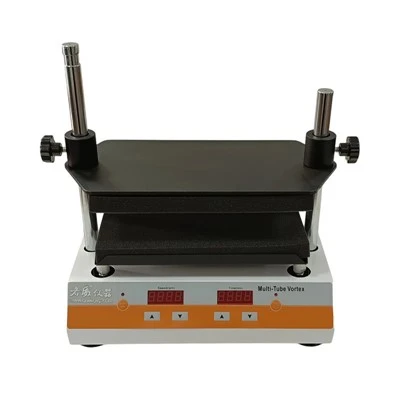
If you’re ready to stop messing around with bad test results and start having a spa that’s actually enjoyable, reach out to us to talk through your setup, ask questions, or get a quote. We’ll help you figure out exactly what you need, no fluff, no hidden fees.
Dry Bath References:
- Centers for Disease Control and Prevention (CDC). (2022). Healthy Swimming: Hot Tubs. U.S. Department of Health and Human Services.
- World Health Organization (WHO). (2020). Guidelines for Safe Recreational Water Environments: Volume 2, Swimming Pools and Similar Environments.
- Association of Pool & Spa Professionals (APSP). (2021). Standard for Pool and Spa Water Quality and Treatment.
- Levine, R. J., et al. (2019). Comparison of Free Chlorine Measurement Methods for Recreational Water. Journal of Environmental Health, 81(10), 22-28.
Hangzhou Qiwei Instrument Co., Ltd.
Hangzhou Qiwei Instrument Co., Ltd. is one of the most reliable manufacturers and suppliers of free chlorine analyzer in China, featured by quality products and good service. Please rest assured to buy bulk durable free chlorine analyzer in stock here from our factory. We also accept customized orders.
Address: Room 101, Building 25, No.488-1, Donghu North Road, Linping District, Hangzhou City, Zhejiang Province, China
E-mail: info@qiweilab.com
WebSite: https://www.qiweilab.com/
