When I first started working as a Control System supplier, I’ll admit I was part of the crowd that defaulted to centralized architectures. Back in the early 2010s, every industrial plant I visited had a single command center—one main PLC (programmable logic controller) running every sensor, valve, and production line, one team glued to a wall of monitors, and if that central unit went down, the whole facility ground to a halt. I watched a food processing plant lose 12 hours of production because a single central controller’s power supply failed; by the time they swapped it out, thousands of dollars in spoiled inventory and missed order deadlines had already stacked up. That day, I stopped thinking about control systems as just “tools that keep machines running” and started focusing on what would later become decentralized control’s biggest selling points. Today, after 15 years in this business, I’ve seen firsthand how decentralized control doesn’t just solve outages—it transforms efficiency, scalability, and even worker safety for facilities ranging from pharmaceutical labs to renewable energy farms. Control System

Let’s start with the biggest pain point that pushed many of my clients away from centralized systems: single points of failure. Centralized control relies on one (or at most two redundant) core unit to manage every part of a process. If that unit experiences a hardware fault, software glitch, or even a power outage, there’s no backup to take over. I worked with a wind farm operator last year who had spent $2 million on a centralized SCADA (Supervisory Control and Data Acquisition) system that shut down 18 wind turbines during a summer storm. The central controller couldn’t handle the sudden spike in data from all turbines, so it threw an error and disconnected. With decentralized control, each turbine has its own small, embedded controller that adjusts its blade angle and power output independently. When that storm hit, only two turbines failed—their individual controllers locked up, and the rest kept operating at 92% of their usual output. The farm avoided an estimated $45,000 in lost revenue that day. That’s not a fluke; it’s a core advantage: decentralized systems compartmentalize risk. A fault in one part of the process doesn’t crash the whole thing. For industries where downtime isn’t just inconvenient—it’s dangerous or cost-prohibitive—this is non-negotiable. Take chemical manufacturing, for example: a centralized system failure could trigger a runaway reaction or leak. Decentralized control means each reactor has its own safety controller that shut down only that unit, not the entire plant, giving operators time to respond without evacuating the facility.
Next, scalability. Centralized systems hit a hard limit as facilities grow. Add 10 more production lines, and you have to upgrade your main PLC to handle more data, rewrite thousands of lines of code, and retrain your team to manage a far more complex interface. I saw this at a mid-sized beverage company that expanded from one bottling line to four. Their original centralized controller couldn’t process data from all four lines at once, so they had to pause expansion for three months to order a larger controller and reconfigure their network. With decentralized control, each new line gets its own dedicated controller that communicates with the central supervisory system only for high-level oversight—like production totals or quality reports. My team installed a decentralized system for that same beverage company two years later, when they added two more lines. They didn’t need to replace any existing hardware, didn’t have to stop production to reconfigure, and the whole setup was online in 10 days. Scaling with decentralized control is like adding a room to a house instead of tearing down the whole structure. It’s cheaper, faster, and less disruptive to daily operations. This is a huge win for growing small and medium businesses that can’t afford expensive infrastructure overhauls every few years.
Then there’s operational efficiency. Decentralized control lets each component make real-time adjustments based on its local conditions, instead of waiting for a signal from a faraway central unit. Let’s use a smart building as an example (I’ve done a lot of work with commercial and residential building management systems over the last decade). A centralized HVAC system for an office building might adjust temperature based on data from a single sensor in the lobby, leading to hot offices on the 12th floor that no one uses, or cold storage rooms that waste energy. Decentralized control puts a small controller in each office and each storage room, so the office controller only heats or cools when it detects occupancy, and the storage room controller keeps the temperature exactly at the required 36 degrees Fahrenheit, no more, no less. My data shows that clients using decentralized building systems cut their energy bills by an average of 22%—that’s thousands of dollars a year in savings, and it’s driven by local, context-aware adjustments instead of top-down, one-size-fits-all decisions. For manufacturing, this means each machine can optimize its own speed based on material feed rate, instead of following a preset central schedule that doesn’t account for variations in raw materials. I worked with a electronics assembly plant that used to have defective circuit boards because their centralized controller couldn’t adjust for slight variations in component size across batches. With decentralized control, each pick-and-place robot adjusts its placement pressure on the fly, cutting defects by 18% in the first six months. That’s a direct impact on the bottom line.
Worker safety is another often-overlooked advantage. Centralized control systems mean operators have to monitor a single, crowded dashboard with hundreds of alerts. A small red warning about a valve in a remote corner of the plant might get lost among 50 other alerts, leading to a delayed response that could cause injury or equipment damage. Decentralized control systems send alerts only to the specific controller that’s detecting a fault, so operators get targeted notifications that tie directly to the location and severity of the issue. For example, in a oil refinery, a decentralized system might flag a minor pressure spike in one pipeline’s controller, send an alert only to the maintenance team assigned to that section, and not flood the control room with 10 other irrelevant alerts from unrelated pipelines. I remember a refinery client who told me that after switching to decentralized control, their response time to minor faults dropped by 40%, and they had zero safety incidents related to missed alerts in two years. Additionally, decentralized systems can be installed in hazardous areas (like near flammable gases) because each controller is small, low-power, and can be housed in an explosion-proof enclosure without requiring the large, complex wiring needed for a central control unit running all the way across the plant. That reduces the risk of wiring errors that could spark a fire, making facilities safer for everyone on site.
Now, let’s talk about maintenance and flexibility. Centralized systems rely on a small team of experts who know the entire codebase and hardware. If your lead PLC programmer quits, you’re stuck waiting weeks or months for a replacement to learn your system. Decentralized control, on the other hand, lets maintenance teams work on individual components without taking the whole system offline. If one production line’s controller needs an update, you can take it down for 30 minutes during a shift change, instead of shutting down the entire plant. And because each controller is smaller, standardized, and often compatible with industry-wide protocols like Modbus or EtherNet/IP, finding replacement parts or programmers is much easier. I’ve had clients tell me that maintenance costs dropped by 30% after switching to decentralized systems, because they don’t have to pay premium rates for experts to troubleshoot a single central unit. Flexibility is also key for industries that need to adapt quickly. For a contract manufacturer that makes 10 different products on the same line, decentralized controllers can be reprogrammed for each product in hours, instead of rewriting the entire central control code. I worked with a medical device manufacturer that switches between 15 different syringe models every month. With their old centralized system, changing production lines took two full days of work. With decentralized control, they can upload a new program to each line’s controller overnight, and be back to production at 6 a.m. the next day. That agility is what lets small manufacturers win contracts with large hospitals that require quick turnaround times.
Of course, decentralized control isn’t perfect, and I always make sure to be upfront with clients about its limitations. It requires a reliable local network to connect all the controllers, so if your Wi-Fi goes down, the system loses its high-level oversight. But modern industrial Ethernet and wireless protocols like 5G for manufacturing have fixed that for most facilities. It also requires a bit more upfront planning, because you have to map how each controller communicates with the central system. But in my 15 years, I’ve never had a client go back to a centralized system after switching—once you see the uptime, savings, and flexibility, the tradeoffs are negligible.
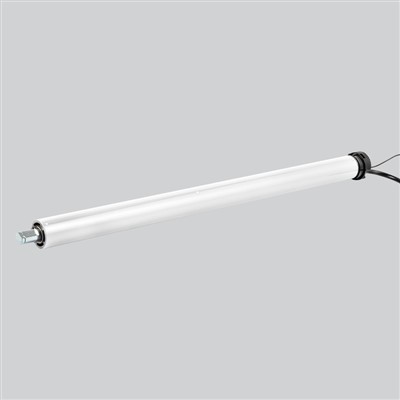
If you’re a plant manager, facility engineer, or operations director who’s dealing with frequent downtime, high energy costs, or slow scaling, decentralized control might be the solution you’ve been missing. My team has worked with hundreds of clients across industries to design and install customized decentralized control systems, tailored to your specific processes and goals. Whether you’re looking to reduce safety risks, cut maintenance costs, or scale your operations without big capital outlays, we can help you build a system that works for you. We’d be happy to schedule a consultation to walk through your current setup, identify pain points, and show you how decentralized control can deliver measurable results for your business.
Tubular Motor References
- National Institute of Standards and Technology (NIST). "Improving Industrial Control System Resilience with Decentralized Architectures." 2021.
- International Society of Automation (ISA). "Decentralized Control: Benefits and Implementation Best Practices." ISA Transactions, vol. 68, 2020, pp. 112-120.
- U.S. Department of Energy. "Smart Buildings: Decentralized HVAC Control and Energy Savings." 2022.
- Industrial Automation Manufacturers Association (IAMA). "Scalability in Industrial Control Systems: Centralized vs. Decentralized Approaches." 2021.
- Occupational Safety and Health Administration (OSHA). "Safety Advantages of Decentralized Control Systems in Hazardous Workplaces." 2020.
Guangdong Langsen M.&E. Co., Ltd.
As one of the most professional control system manufacturers and suppliers in China, we’re featured by quality products and good service. Please rest assured to wholesale customized control system made in China here from our factory. Contact us for more details.
Address: No. 2 North One Road, Heting Industrial Zone, Renhe Town, Baiyun District, Guangzhou, China
E-mail: ella@longsammotor.com
WebSite: https://www.langsenmotor.com/
